India set for 7% growth in FY27, says FM Sitharaman in Chicago
Synopsis
Finance Minister Nirmala Sitharaman told the Indian diaspora in Chicago that India is on track for 7% or more GDP growth in FY27 — even as the US-Iran conflict and Strait of Hormuz closure disrupted commodity supplies. India rerouted crude and fertiliser shipments, held farm prices steady through subsidies, and is now in active talks with global funds and multiple countries on bilateral investment and trade treaties.
Key Takeaways
FM Nirmala Sitharaman projected India's GDP growth at 7% or more in FY2026-27 , speaking in Chicago on 30 August .
India rerouted supplies of crude oil , petroleum products , and fertilisers after the Strait of Hormuz closure disrupted shipments.
The government maintained fertiliser subsidies to keep farm prices unchanged despite sharp rises in international prices.
India is actively engaging global funds for overseas capital, with the PM and multiple ministers involved in outreach across Canada and the US .
Bilateral investment and trade treaty talks are under way with several countries; Commerce Minister Piyush Goyal pushed for $60 billion in investments from Japan by 2035 .
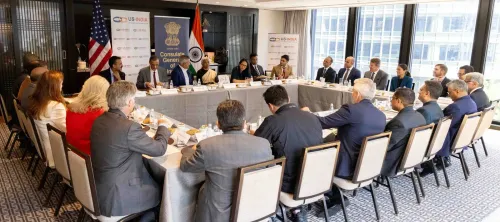
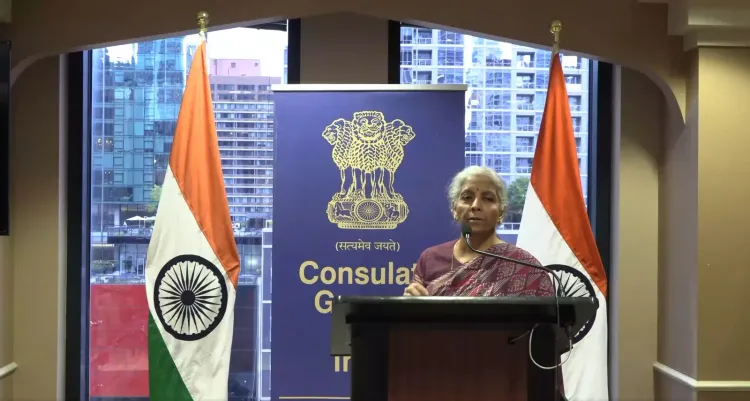
Finance Minister Nirmala Sitharaman on Sunday, 30 August projected that India would sustain an economic growth rate of 7 per cent or more in financial year 2026-27, maintaining the post-pandemic momentum that has made India one of the world's fastest-growing major economies. She made the remarks while addressing the Indian diaspora in Chicago during her ongoing visit to the United States.
Growth Outlook Despite Global Headwinds
Sitharaman acknowledged that geopolitical uncertainties — including the US-Iran conflict and the closure of the Strait of Hormuz — had introduced fresh supply-chain pressures. She said India had managed to reroute supplies of critical commodities, including crude oil, petroleum products, and fertilisers, despite initial disruptions. 'Continuously keeping in touch with global uncertainties as much as understanding India's own requirements have kept us floating. Whereas many countries are completely disturbed, their calculations have gone haywire,' she said.
Fertiliser Prices Held Steady for Farmers
The Finance Minister noted that the government had shielded farmers from a sharp rise in international fertiliser prices by maintaining subsidies and keeping domestic prices unchanged. She added that India was adequately stocked ahead of the upcoming agricultural season. 'The forthcoming season will also require fertilisers from November. We are adequately stocked,' Sitharaman said.
Capital Mobilisation and Investment Push
Sitharaman said India's expanding economy requires a sustained inflow of both domestic and international capital. While private investment has picked up on the back of the government's capital expenditure push, she underlined the need to attract global funds. 'Because of the ambitions that we have, we need capital. Therefore, on my trip to Canada and the US, and other ministers as well as the Prime Minister himself, all of us are talking to global funds,' she said. She added that the engagement includes 'showcasing what India has already achieved and hearing their expectations so that we can go back and provide clarity.'
Bilateral Treaties and Diplomatic Outreach
The Finance Minister also disclosed that India is in active discussions with several countries on bilateral investment treaties as well as bilateral trade agreements. This comes amid a broader diplomatic investment drive: Commerce and Industry Minister Piyush Goyal visited Japan last week, where he pushed to mobilise investments worth $60 billion by 2035. Notably, the simultaneous outreach by multiple senior ministers signals a coordinated effort to position India as the preferred destination for global capital amid a shifting geopolitical order.
What Comes Next
With systemic reforms continuing and overseas capital mobilisation a stated priority, the government's near-term focus will be on converting diplomatic engagements into binding investment commitments. The pace of bilateral treaty negotiations and the trajectory of global commodity prices — particularly crude oil — will be key variables shaping India's FY27 growth outcome.
Point of View
While active, has historically moved slowly. The more consequential detail in Sitharaman's Chicago remarks is the explicit acknowledgement that domestic capital alone cannot fund India's ambitions — a rare admission that structural reform must now be matched by external capital mobilisation at scale.
NationPress
30 Aug 2026
Frequently Asked Questions
What growth rate did FM Sitharaman project for India in FY27?
Finance Minister Nirmala Sitharaman projected India's GDP growth at 7 per cent or more in financial year 2026-27. She made the statement while addressing the Indian diaspora in Chicago on 30 August.
How did India manage the Strait of Hormuz supply disruption?
India rerouted supplies of crude oil, petroleum products, and fertilisers after the closure of the Strait of Hormuz disrupted normal shipment routes. The government also maintained fertiliser subsidies to prevent a rise in domestic farm input prices.
Why is India engaging global funds and foreign governments?
Sitharaman said India's economic ambitions require capital beyond what domestic private investment can provide. The government is in talks with global funds and pursuing bilateral investment and trade treaties with multiple countries to attract international capital.
What is the significance of Piyush Goyal's Japan visit?
Commerce and Industry Minister Piyush Goyal visited Japan last week as part of the same coordinated investment outreach drive, pushing to mobilise investments worth $60 billion by 2035. The simultaneous diplomatic activity by multiple senior ministers signals a structured, whole-of-government capital mobilisation effort.
What are the key risks to India's FY27 growth outlook?
The primary risks include prolonged geopolitical disruption in the Middle East affecting commodity prices, the pace of global fund commitments converting from talks to actual inflows, and the speed at which bilateral investment and trade treaties are finalised.