FM Sitharaman: Govt has buffer for petroleum, fertiliser subsidy surge in FY27

Synopsis
With fertiliser subsidies already breaching ₹1.71 lakh crore and oil marketing companies drawing nearly ₹1.23 lakh crore in support, Finance Minister Sitharaman insists the government's built-in buffers are sufficient — and no budget revision is coming. But a deficient monsoon and an unresolved Middle East conflict mean the pressure is far from over.
Key Takeaways
Finance Minister Nirmala Sitharaman on 26 July said the government has adequate buffers to manage the rising petroleum and fertiliser subsidy bill without revising FY27 Budget estimates .
The original FY27 fertiliser subsidy allocation was approximately ₹1.71 lakh crore ; actual requirements are projected to be significantly higher due to global price surges.
Indian Oil , BPCL , and HPCL have collectively received nearly ₹1.23 lakh crore in financial assistance to freeze retail fuel prices.
The LPG subsidy alone is projected to cross ₹1 lakh crore against modest initial budget assumptions.
A deficient monsoon linked to the El Nino effect adds a domestic inflation risk on top of import-driven price pressures.
The RBI projects 6.6% GDP growth for 2026-27 despite geopolitical and agricultural headwinds.
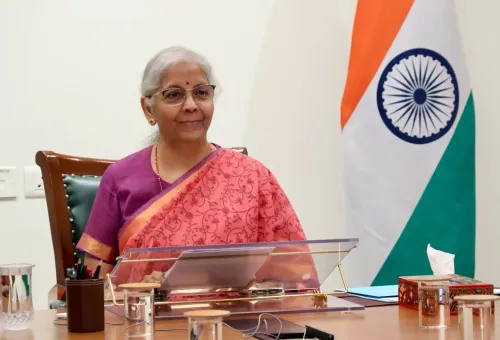
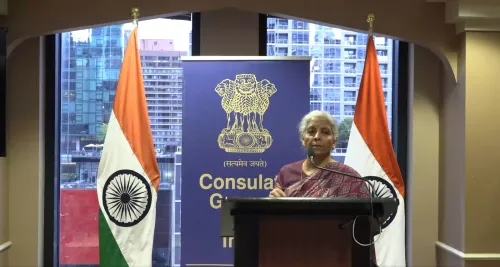
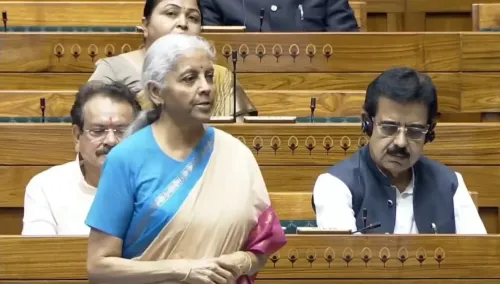
Finance Minister Nirmala Sitharaman on Sunday, 26 July said the government holds adequate resource buffers to absorb the rising petroleum and fertiliser subsidy burden triggered by the Middle East conflict, and does not anticipate revising the Budget estimates for 2026-27. She made the remarks at the NDTV Profit Business Leadership Awards in Mumbai.
What the Finance Minister Said
'I have kept buffers which can take care of it and therefore at this stage, I don't think I'll look at my budget number for readjusting,' Sitharaman said, referring to government support for oil and fertiliser imports at elevated prices. She added that the government has 'some resources kept aside' to meet the challenge of rising risk insurance premia as ships transit through active war zones in West Asia.
Dual Inflation Threat: Geopolitics and Monsoon
The Finance Minister flagged that the subsidy pressure is compounding with a domestic inflation risk. A deficient monsoon linked to the El Nino effect is straining food supply, adding a homegrown dimension to the price surge. 'Inflation therefore cannot be just imported. It is also our own want of rain and the monsoon being less-than-normal that could also add to price pressures,' she said.
This comes amid broader concerns that supply chain disruptions from the ongoing Iran war are rippling through global energy and commodity markets, with direct consequences for India's import-heavy subsidy architecture.
Scale of the Subsidy Burden
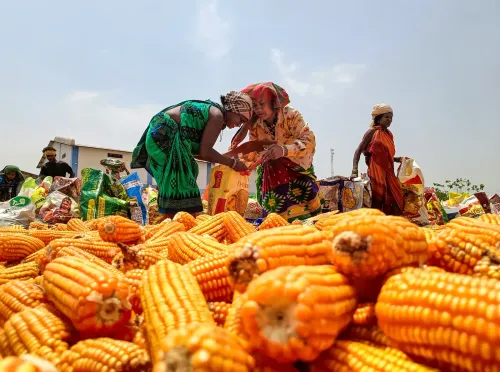
The fiscal exposure is substantial. The original FY27 budget allocation for fertiliser subsidies stood at approximately ₹1.71 lakh crore, but surging global prices for urea, DAP, and key raw materials such as natural gas have pushed projected requirements considerably higher.
State-run oil marketing companies — Indian Oil, BPCL, and HPCL — have received nearly ₹1.23 lakh crore in financial assistance to absorb price shocks and keep retail fuel prices frozen, shielding consumers from volatile global energy markets. The LPG subsidy component alone is projected to exceed ₹1 lakh crore, well above initial budget assumptions.
Growth Outlook Remains Resilient
Despite these pressures, Sitharaman pointed to robust economic indicators, including strong goods and services tax (GST) collections, as evidence of underlying economic resilience. The Reserve Bank of India (RBI) has projected 6.6% GDP growth for 2026-27, even accounting for supply chain disruptions and the anticipated drag on agriculture from the deficient monsoon.
Notably, this is the third successive year in which geopolitical shocks have forced the government to deploy off-budget or buffer resources to manage energy-linked subsidy overruns — a pattern that raises longer-term questions about fiscal headroom.
What to Watch Next
Markets and fiscal analysts will closely track whether the buffers cited by the Finance Minister prove sufficient as the monsoon season progresses and the West Asia conflict shows no near-term resolution. Any material escalation in global crude prices could force a mid-year budget review, despite Sitharaman's current assurances.
Point of View
The cumulative exposure is not trivial. A deficient monsoon layered on top of a Middle East conflict is precisely the kind of dual shock that stress-tests fiscal buffers built for normal-year assumptions. The RBI's 6.6% growth projection provides political cover, but growth numbers do not automatically translate into revenue buoyancy fast enough to offset subsidy overruns within the same fiscal year. If crude prices spike further or the monsoon shortfall deepens, a quiet mid-year supplementary demand for grants becomes increasingly likely — regardless of today's assurances.
NationPress
25 Oct 2026
Frequently Asked Questions
What did Finance Minister Nirmala Sitharaman say about the subsidy burden?
Sitharaman said the government has built-in resource buffers sufficient to manage the rising petroleum and fertiliser subsidy bill caused by the Middle East conflict, and does not plan to revise the FY27 Budget estimates at this stage. She made the remarks at the NDTV Profit Business Leadership Awards in Mumbai on 26 July.
How large is India's fertiliser subsidy bill for FY27?
The original FY27 budget allocation for fertiliser subsidies was approximately ₹1.71 lakh crore. Surging global prices for urea, DAP, and natural gas have pushed projected requirements well above that figure, though the government has not disclosed a revised estimate.
How much financial support have oil marketing companies received?
State-run oil marketing companies — Indian Oil, BPCL, and HPCL — have collectively received nearly ₹1.23 lakh crore in financial assistance to absorb global price shocks and keep retail fuel prices frozen for consumers.
What is the projected LPG subsidy for FY27?
The LPG subsidy component is projected to comfortably exceed ₹1 lakh crore in FY27, significantly above initial budget assumptions, as global energy markets remain volatile amid the West Asia conflict.
What is India's GDP growth forecast for 2026-27 despite these pressures?
The Reserve Bank of India has projected 6.6% GDP growth for 2026-27, even accounting for supply chain disruptions from the Iran war and the expected drag on agriculture from a deficient monsoon linked to the El Nino effect.