FM Sitharaman: India's economy resilient, fear mongering unaffordable
Synopsis
At SIDBI's Foundation Day in Mumbai, Finance Minister Sitharaman went on the offensive — dismissing 'fear mongering' around India's economy while quietly acknowledging real risks: Middle East-driven fuel and shipping pressures, a ₹1 lakh crore FY27 revenue hit from fuel duty cuts, and tightening working capital cycles for exporters. The bullish rhetoric and the cautionary fine print together reveal the tightrope India's economic management is walking.
Key Takeaways
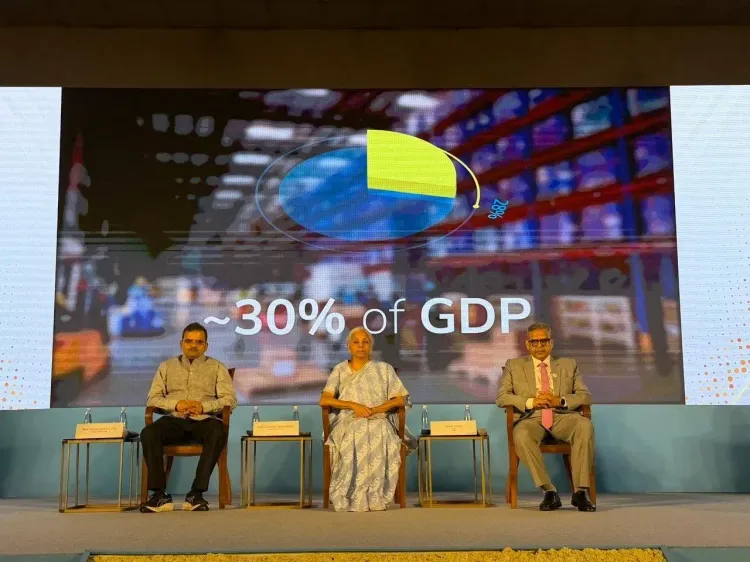
Finance Minister Nirmala Sitharaman on 25 May rejected 'pessimistic' economic narratives at the SIDBI Foundation Day in Mumbai .
GST collections stayed strong post-September 2025 rate cuts; private capex rose 67% year-on-year per CII data.
The Middle East conflict poses risks via higher fuel prices, shipping costs, and export disruptions, she acknowledged.
ECLGS 5.0 approved by the Cabinet, enabling up to ₹2.55 lakh crore in MSME loans.
A new micro credit card under CGTMSE offers collateral-free loans up to ₹5 lakh for Udyam-registered MSMEs.
Government expects a revenue loss of nearly ₹1 lakh crore in FY27 due to excise duty cuts on petrol and diesel.
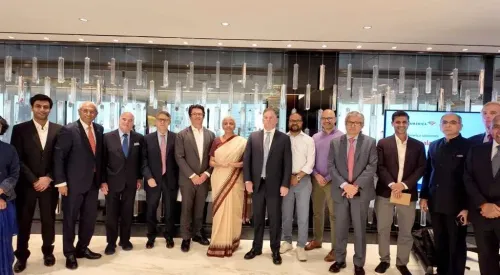
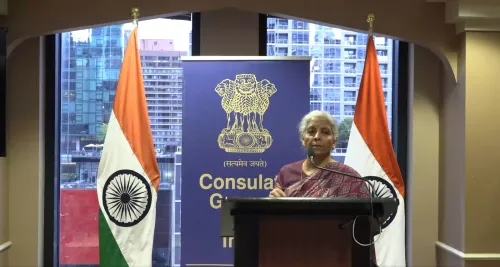
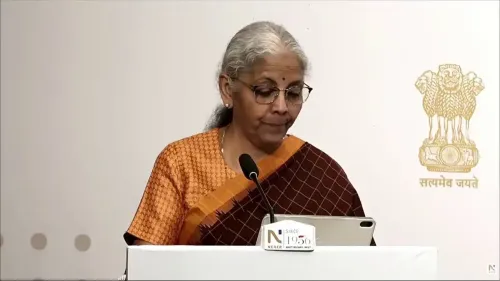
Finance Minister Nirmala Sitharaman on Monday, 25 May pushed back firmly against what she called a 'pessimistic and cynical narrative' around India's economic trajectory, asserting that the country's fundamentals remain strong despite mounting global headwinds. Speaking at the SIDBI Foundation Day event in Mumbai, she warned that 'India cannot afford fear mongering that damages public confidence.'
Economy Showing Resilience, High-Frequency Data Holds
Sitharaman pointed to a range of high-frequency indicators to support her case. GST collections have remained robust even after rate cuts in September 2025, while vehicle sales and credit growth across retail, agriculture, and MSME segments continue to trend healthily. She also cited CII data showing that private sector expenditure rose 67 per cent year-on-year in September 2025, with corporate profit margins reaching their highest level in the March quarter.
Middle East Conflict Poses Risks to Fuel, Shipping, Exports
The finance minister acknowledged that the ongoing conflict in the Middle East presents tangible risks for the Indian economy. Higher fuel prices, elevated shipping costs, and disruptions to export cargo are among the primary concerns. 'The conflict could affect fuel cost further, leading to costly shipping,' she said, adding that Indian export cargo had already faced disruptions. In response, the government has simplified customs procedures and allowed exporters to reroute or bring back affected cargo.
She also flagged that geopolitical tensions could tighten working capital cycles for businesses and introduce uncertainty around export orders. Separately, she highlighted Prime Minister Narendra Modi's recent call for austerity, citing rising global prices for crude oil, fertilisers, and gold as factors with implications for both inflation and India's foreign exchange reserves.
MSME Credit Push: Co-Lending, Micro Cards, ECLGS 5.0
Sitharaman unveiled a series of measures targeted at small businesses. A new co-lending platform between Small Industries Development Bank of India (SIDBI) and regional rural banks has been introduced to widen credit access. The government has also launched a special micro credit card under the CGTMSE scheme, enabling Udyam-registered MSMEs to access collateral-free loans of up to ₹5 lakh.
Additionally, the Cabinet has approved ECLGS 5.0, which will make available up to ₹2.55 lakh crore in loans for MSMEs — the latest iteration of the emergency credit line that was first launched during the pandemic.
₹1 Lakh Crore Revenue Hit Expected in FY27 on Fuel Duty Cuts
The finance minister disclosed that the government is likely to absorb a revenue shortfall of nearly ₹1 lakh crore in FY27 as a result of reductions in excise duty on petrol and diesel. The move is designed to cushion consumers and businesses from the impact of surging global energy prices, even as it weighs on the fiscal position.
With ECLGS 5.0 in motion, MSME credit infrastructure expanding, and the government absorbing significant fuel-duty losses, the policy direction signals a deliberate effort to insulate domestic demand — a posture that will be tested against the durability of global commodity pressures in the months ahead.
Point of View
Yet the government's own admission of a ₹1 lakh crore FY27 revenue hole from fuel duty cuts signals that the fiscal buffer is narrowing. The ECLGS has now reached its fifth iteration, raising questions about whether successive emergency credit lines are plugging a structural gap in MSME financing rather than solving it. The Middle East risk she flagged is real and underappreciated: India's export sector is already rerouting cargo, and any sustained oil spike will stress both the current account and the subsidy bill simultaneously.
NationPress
21 Oct 2026
Frequently Asked Questions
What did FM Sitharaman say about India's economy at the SIDBI event?
Finance Minister Nirmala Sitharaman said India's economy remains resilient and warned against 'fear mongering that damages public confidence.' She cited strong GST collections, vehicle sales, credit growth, and a 67% year-on-year rise in private sector expenditure as evidence of underlying strength.
What is ECLGS 5.0 and how much credit does it offer MSMEs?
ECLGS 5.0 is the latest version of the Emergency Credit Line Guarantee Scheme, approved by the Cabinet to provide up to ₹2.55 lakh crore in loans to MSMEs. It builds on earlier iterations launched to support small businesses through economic disruptions.
How will the Middle East conflict affect India's economy?
Sitharaman flagged risks including higher fuel prices, elevated shipping costs, and disruptions to export cargo. She noted that geopolitical tensions could also tighten working capital cycles for businesses and create uncertainty around export orders.
What is the new CGTMSE micro credit card for MSMEs?
The government introduced a special micro credit card under the CGTMSE scheme that allows Udyam-registered MSMEs to access collateral-free loans of up to ₹5 lakh. It is part of a broader push to expand formal credit access for small businesses.
What revenue impact will the fuel excise duty cuts have on the government?
The government expects to absorb a revenue shortfall of nearly ₹1 lakh crore in FY27 as a result of reductions in excise duty on petrol and diesel. The cuts are aimed at shielding consumers and businesses from rising global energy prices.