Chirag Paswan Addresses Food Processing Sector Live
Synopsis
Union Food Processing Minister Chirag Paswan broadcast a live address on X on 5 July 2026, spotlighting the ministry's ongoing engagement with India's food processing sector, its flagship credit-subsidy schemes, and the broader Atmanirbhar Bharat agro-processing agenda.
Key Takeaways
Chirag Paswan , Union Minister of Food Processing Industries, delivered a live broadcast on X on 5 July 2026 .
The ministry oversees flagship schemes including the PM FME Scheme (2020) and PM Kisan Sampada Yojana (2017) .
The food processing sector is a priority under the Atmanirbhar Bharat framework, linking agro-processing with manufacturing and logistics support.
Primary beneficiaries include micro food processing enterprises and small and marginal farmers across India.
Implementation progress of food processing clusters and upcoming Union Budget allocations remain key watchpoints for the sector.
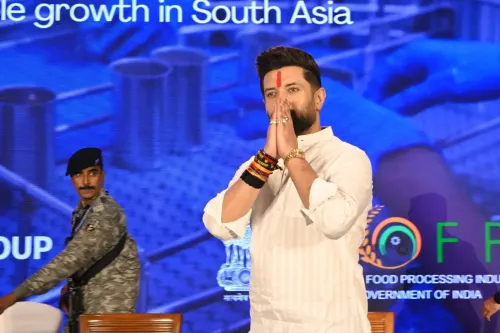
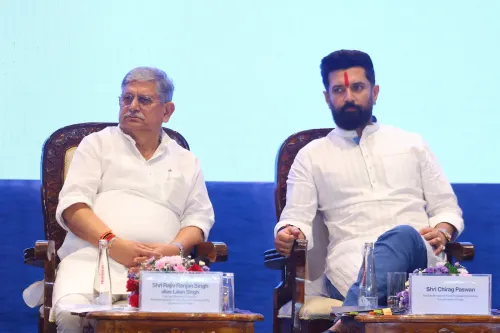
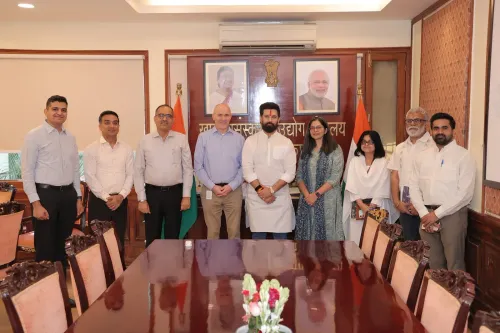
Union Food Processing Minister Chirag Paswan took to X on Sunday, 5 July 2026, to share a live broadcast address focused on the food processing sector, signalling continued ministerial engagement with the industry ahead of key policy milestones.
Context
The broadcast, shared via Chirag Paswan's official X account, drew attention to the ministry's ongoing communication with stakeholders in the food processing ecosystem. As national president of the Lok Janshakti Party (Ram Vilas) and a cabinet minister, Paswan has used social media platforms actively to amplify policy outreach since assuming charge following the 2024 general election.
The post linked to a live X broadcast, indicating a direct address rather than a pre-recorded statement — a format that has grown in use among Union ministers seeking unmediated engagement with citizens, industry representatives, and farmers.
Policy Backdrop
The Ministry of Food Processing Industries sits at the intersection of agriculture and manufacturing policy, tasked with reducing post-harvest losses and raising value addition across the agri-supply chain. Its flagship instrument, the Pradhan Mantri Formalisation of Micro Food Processing Enterprises (PM FME) Scheme, launched in 2020, provides credit-linked capital subsidies and formalisation support to micro food processing units across the country.
An earlier anchor scheme, the PM Kisan Sampada Yojana, launched in 2017, built out modern cold-chain and processing infrastructure. Together, these programmes form the backbone of the government's push to integrate small farmers into formal agro-processing value chains under the broader Atmanirbhar Bharat framework.
The ministry has maintained policy continuity across successive NDA administrations, with incremental expansion of cluster-based processing hubs and credit-support windows. Budget allocations and parliamentary committee scrutiny of implementation progress remain closely watched indicators of the sector's trajectory.
Stakeholders and Impact
The food processing sector directly affects small and marginal farmers, who stand to gain from reduced post-harvest losses and better price realisation when surplus produce is channelled into processing units. Micro food processing enterprises — many of them informal, women-led, or rural — are the primary beneficiaries of the PM FME scheme's subsidy and formalisation pipeline.
Industry bodies representing agro-processing clusters, cold-chain logistics operators, and export-oriented food manufacturers also track ministerial communications closely, given that policy signals from the ministry influence investment decisions and cluster approvals. A live broadcast by the minister carries the implicit promise of direct answers to sector-specific concerns.
What's Next
Observers will watch for any concrete announcements emerging from the broadcast — including updates on approved food processing clusters, fresh credit-support allocations, or scheme expansion targets. The next Union Budget cycle and parliamentary standing committee reports on the ministry's expenditure will be key checkpoints for whether the sector receives supplementary support. Sustained ministerial visibility, including direct broadcasts of this kind, is increasingly seen as a signal of political priority attached to the food processing agenda.
Point of View
Unmediated communication that bypasses traditional press channels. For a minister who leads both a cabinet portfolio and a coalition partner party, such broadcasts serve a dual purpose — reinforcing policy credibility while maintaining political visibility within the NDA alliance. The food processing sector, long seen as underleveraged relative to India's agricultural output, has gained renewed institutional attention under successive NDA governments, and sustained ministerial engagement is a signal that the political cost of inaction in this space is rising. How the ministry translates broadcast momentum into measurable scheme outcomes will be the sharper test of intent.
NationPress
5 Jul 2026
Frequently Asked Questions
Who is Chirag Paswan and what ministry does he head?
Chirag Paswan is the Union Minister of Food Processing Industries and the national president of the Lok Janshakti Party (Ram Vilas). He assumed the cabinet role after the 2024 general election.
What is the PM FME Scheme?
The Pradhan Mantri Formalisation of Micro Food Processing Enterprises (PM FME) Scheme, launched in 2020, provides credit-linked capital subsidies and formalisation support to micro food processing units across India.
What did Chirag Paswan say in his July 2026 broadcast?
The specific content of the broadcast has not been independently verified. The minister shared a live X broadcast link on 5 July 2026 addressing the food processing sector; detailed announcements, if any, are yet to be confirmed.
What is PM Kisan Sampada Yojana?
PM Kisan Sampada Yojana, launched in 2017, is a central scheme aimed at building modern food processing infrastructure including cold chains, logistics hubs, and processing clusters to reduce post-harvest losses.
Why is the food processing sector important for Indian farmers?
Food processing reduces post-harvest losses, enables better price realisation for surplus farm produce, and integrates small farmers into formal value chains — directly supporting rural incomes and agricultural sustainability.