Chirag Paswan: Cabinet extends PM-KISAN to 2030-31
Synopsis
The Union Cabinet has approved the continuation of PM-KISAN through 2030-31, committing ₹3.15 lakh crore in fresh outlay. More than ₹4.47 lakh crore has already been transferred to farmer accounts since the scheme launched in 2019, Union Minister Chirag Paswan announced on July 31, 2026.
Key Takeaways
The Union Cabinet approved the extension of PM-KISAN through 2030–31 , announced on July 31, 2026 .
A fresh outlay of ₹3.15 lakh crore has been provisioned for the extended period.
More than ₹4.47 lakh crore has been transferred directly to farmers' bank accounts since the scheme's launch in February 2019 .
PM-KISAN provides ₹6,000 per year to eligible landholding farmer families via Direct Benefit Transfer in three instalments.
The extension reinforces the central government's reliance on DBT as its primary agricultural welfare delivery mechanism.
Small and marginal farmers remain the primary beneficiaries of the scheme.
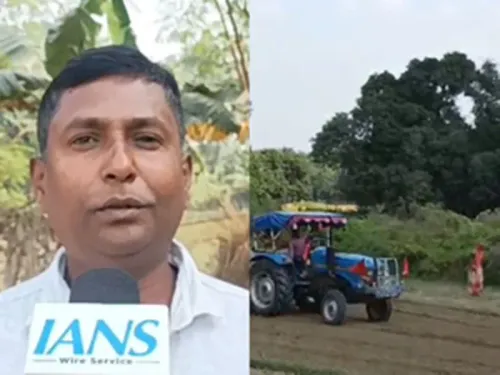
A scheme that has quietly reshaped the economic floor for millions of Indian farming families just got a decade-long runway. Union Food Processing Minister Chirag Paswan announced on Friday, July 31, 2026, that the Union Cabinet has approved the continuation of the PM-KISAN scheme through 2030–31, backed by a fresh outlay of ₹3.15 lakh crore.
PM-KISAN's ₹4.47 lakh crore journey so far
Launched in February 2019, the Pradhan Mantri Kisan Samman Nidhi was built on a single, powerful idea: put cash directly in the farmer's hand, no middleman, no leakage. Under the scheme, eligible landholding farmer families receive ₹6,000 per year in three equal instalments, transferred straight to their bank accounts via Direct Benefit Transfer (DBT).
The numbers tell the story of scale. Paswan noted that more than ₹4.47 lakh crore has already been transferred to farmers' accounts since the scheme's inception — a cumulative direct-cash injection into rural India that few welfare programmes in the country's history can match.
What the Cabinet's extension signals for rural India
The Cabinet's decision to extend PM-KISAN to 2030–31 is not merely an administrative renewal. It is a signal of policy predictability — something rural households, whose incomes swing with monsoons and market prices, have historically lacked. The ₹3.15 lakh crore provision locks in a financial commitment across five more years of instalments.
Paswan framed the decision as advancing Prime Minister Narendra Modi's 'kisan-hitaishi vision' — farmer-welfare vision — connecting the Cabinet move to a broader government emphasis on direct transfers as the backbone of agricultural support. The primary beneficiaries remain small and marginal farmers, the segment most exposed to income volatility and least served by traditional credit and subsidy pipelines.
DBT as the government's preferred policy instrument
Since 2014, direct benefit transfers have become the central government's preferred tool for welfare delivery — cutting out intermediaries and, in theory, reducing leakage. PM-KISAN is among the largest and most visible DBT programmes in operation. Its extension through 2031 effectively cements DBT as a long-term structural feature of India's agricultural policy, not a transitional measure.
What to watch next: Parliamentary approval for the extended outlay and how the phased release of instalments is built into successive Union Budgets will be the real test of the commitment behind today's announcement.
For India's farmers, the message from the Cabinet is clear — the floor holds, and it holds for five more years.
Point of View
The government is betting that predictable cash transfers — rather than price supports or input subsidies — will remain its most politically durable and administratively efficient tool for rural welfare. The cumulative ₹4.47 lakh crore already disbursed gives the scheme a record that is difficult to dismantle politically. The real policy question going forward is whether income transfers alone, without commensurate investment in productivity and market linkages, can sustainably lift agricultural incomes — or whether PM-KISAN becomes a permanent income supplement rather than a transitional support.
NationPress
31 Jul 2026
Frequently Asked Questions
What is PM-KISAN and who is eligible?
PM-KISAN (Pradhan Mantri Kisan Samman Nidhi) is a central government scheme that provides ₹6,000 per year in three equal instalments directly to eligible landholding farmer families via Direct Benefit Transfer. It was launched in February 2019.
How long has the PM-KISAN scheme been extended?
The Union Cabinet approved the extension of PM-KISAN through 2030-31, announced on July 31, 2026, with a provisioned outlay of ₹3.15 lakh crore for the extended period.
How much money has been transferred under PM-KISAN so far?
More than ₹4.47 lakh crore has been transferred directly to farmers' bank accounts since PM-KISAN was launched in February 2019, according to the announcement by Union Minister Chirag Paswan.
What is the new budget outlay for PM-KISAN after the Cabinet decision?
The Cabinet has provisioned ₹3.15 lakh crore for the continuation of PM-KISAN from the current period through 2030-31.
Who announced the PM-KISAN extension on July 31, 2026?
Union Food Processing Minister Chirag Paswan announced the Cabinet's decision to extend PM-KISAN through 2030-31 via a post on X (formerly Twitter) on July 31, 2026.