Vriksh Mitra Parivar to get national structure, says Shivraj Singh Chouhan
Synopsis
Agriculture Minister Shivraj Singh Chouhan has given India's tree-planting volunteer network a structural upgrade — proposing five-tier Vriksh Mitra Parivar committees from national to village level, tying government schemes to mandatory tree-planting, and setting 12 August (Hariyali Amavasya) as the deadline to build a 17,000-strong national network. The move signals an attempt to institutionalise green volunteerism within India's existing rural development machinery.
Key Takeaways
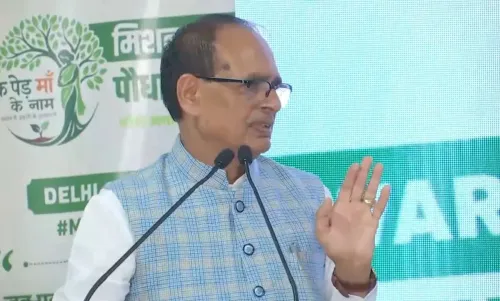
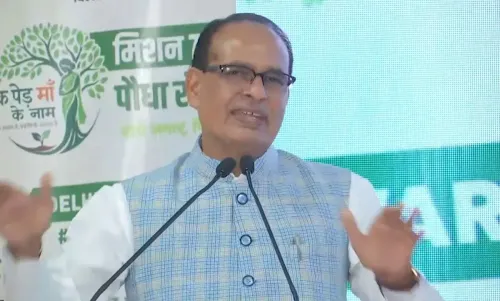
Agriculture Minister Shivraj Singh Chouhan addressed nearly 17,000 Vriksh Mitras at Pusa Complex, New Delhi on 12 July .
He proposed Vriksh Mitra Parivar committees at five levels : national, state, district, block, and village.
Every Vriksh Mitra is to plant at least one tree per year and recruit at least five new members , with public pledges via social media.
Government schemes including Pradhan Mantri Gram Sadak Yojana and Pradhan Mantri Awas Yojana are proposed to begin only after tree-planting at fixed sites.
The network-building deadline is 12 August (Hariyali Amavasya) .
Chouhan cited rising sea levels, heat, air pollution, and biodiversity loss as existential threats requiring urgent action.
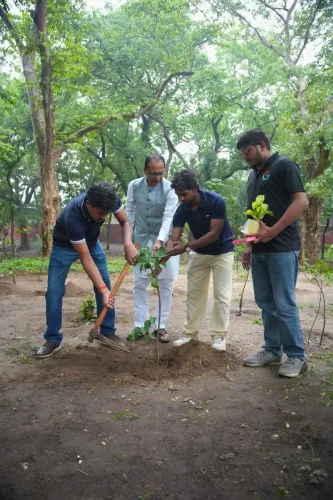
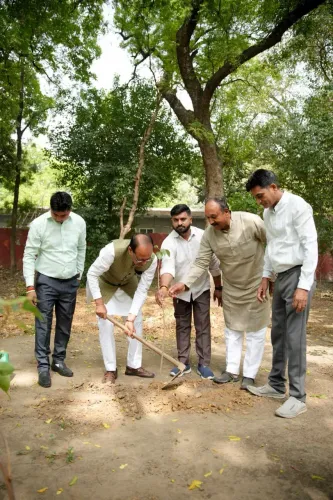
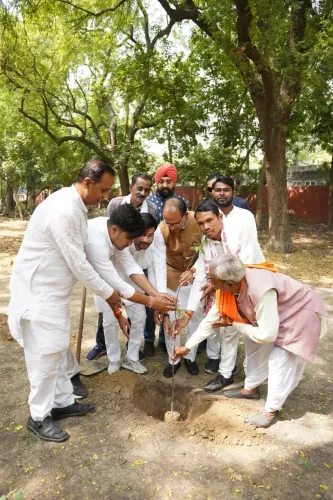
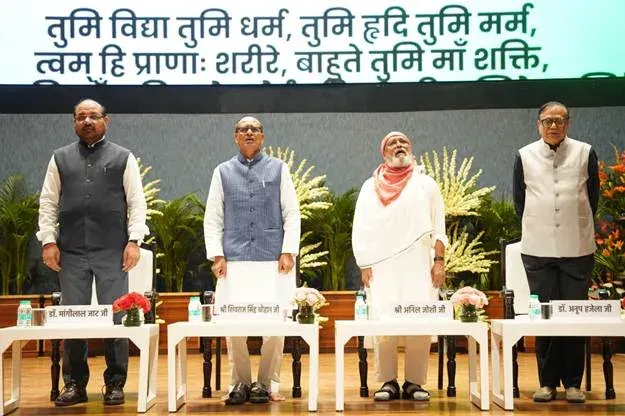
Agriculture Minister Shivraj Singh Chouhan on Sunday, 12 July called on nearly 17,000 Vriksh Mitras — tree-planting volunteers drawn from across India — to transform environment protection into a structured national mass movement. Speaking at the Environment Protection Resolve Programme and Vriksh Mitra Samvad at Pusa Complex, New Delhi, Chouhan outlined a detailed roadmap to formalise and scale the campaign.
A Five-Tier Organisational Structure
Chouhan proposed establishing Vriksh Mitra Parivar committees at the national, state, district, block, and village levels, with the overarching network to be formally registered. He also called for identifying fixed plantation sites within panchayats and urban local bodies. Under the proposal, every auspicious occasion and government scheme — including Pradhan Mantri Gram Sadak Yojana, Pradhan Mantri Awas Yojana, and Lakhpati Didi Yojana — would commence only after planting a tree at the designated site.
Trees at Every Milestone
The minister urged every family to plant a tree on personal milestones such as birthdays, wedding anniversaries, the birth of children, and in memory of parents — converting these moments into what he termed 'Tree Festivals'. The intent, he said, is to gradually embed tree-planting as a household tradition rather than a one-off gesture.
The Hariyali Amavasya Deadline
Each Vriksh Mitra has been asked to plant at least one tree per year and recruit at least five new participants into the campaign. Crucially, every such pledge is to be announced publicly through a social media post, creating a verifiable chain of commitment. Chouhan set 12 August (Hariyali Amavasya) as the target date by which a strong national network should be in place — giving the movement a concrete, near-term deadline.
The Urgency Behind the Push
Chouhan framed the initiative not merely as an environmental cause but as a crisis of human survival. Citing global developments and scientific evidence, he warned that rising sea levels, increasing heat, polluted air, deteriorating water quality, and rapidly disappearing biodiversity pose direct threats to future generations. He cautioned that without concrete action now, projections for 2050 and beyond could be deeply alarming.
What Comes Next
The roadmap draws on suggestions gathered directly from Vriksh Mitras through dialogue, lending it a consultative legitimacy. With formal registration of the Vriksh Mitra Parivar structure on the agenda and a network-building deadline of 12 August, the campaign is moving from intent to institutional form. Whether the five-tier structure translates into measurable plantation outcomes will be the real test of the initiative's ambition.
Point of View
Not just planting counts, are built into the framework from the start.
NationPress
11 Oct 2026
Frequently Asked Questions
What is Vriksh Mitra Parivar?
Vriksh Mitra Parivar is a proposed national organisation of tree-planting volunteers, structured across five levels — national, state, district, block, and village — announced by Agriculture Minister Shivraj Singh Chouhan on 12 July. It aims to formalise and scale India's existing Vriksh Mitra volunteer network of nearly 17,000 members.
What is the significance of Hariyali Amavasya in this campaign?
Hariyali Amavasya, falling on 12 August, has been set as the target date by which the Vriksh Mitra Parivar network should be fully mobilised. Each volunteer is expected to have planted a tree and recruited five new members by this date, with public pledges made via social media.
How will government schemes be linked to tree-planting?
Under Chouhan's proposal, schemes such as Pradhan Mantri Gram Sadak Yojana, Pradhan Mantri Awas Yojana, and Lakhpati Didi Yojana would begin only after a tree is planted at a fixed, pre-identified site in the respective panchayat or urban local body area.
Why did Chouhan frame this as a survival crisis rather than just an environmental issue?
Chouhan cited rising sea levels, increasing heat, air and water pollution, and rapidly disappearing biodiversity as direct threats to future generations. He warned that without concrete action now, conditions by 2050 and beyond could be severely alarming, citing global events and scientific data to underscore the urgency.
Who are Vriksh Mitras and how many are involved?
Vriksh Mitras are environment volunteers connected from across India who are committed to tree-planting and green awareness. Nearly 17,000 such volunteers participated in the Vriksh Mitra Samvad at Pusa Complex, New Delhi, where Chouhan outlined the new national structure.