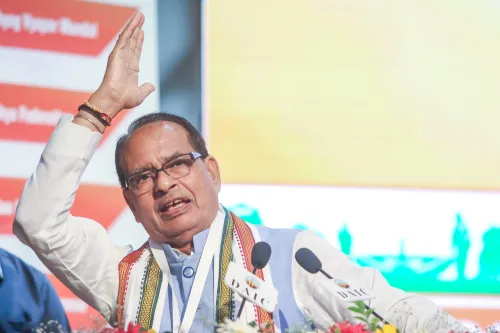
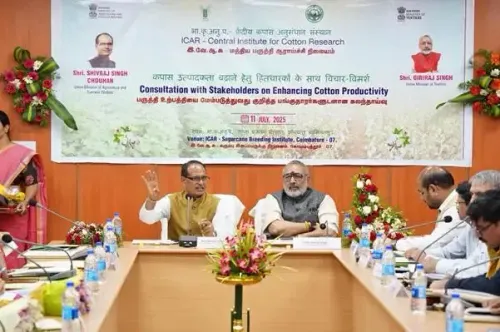
Chouhan: States Must Gear Up for Export-Quality Farm Produce

Synopsis
Union Agriculture Minister Shivraj Singh Chouhan on 29 September 2026 called on state governments to prepare for producing export-quality farm produce, arguing India's bilateral agricultural agreements can deliver real gains to farmers only if states meet global quality and phytosanitary standards.
Key Takeaways
Shivraj Singh Chouhan stated on 29 September 2026 that India's bilateral agricultural agreements with multiple countries are 'very useful' for farmers.
He placed direct responsibility on state governments to produce agricultural output meeting export-quality standards.
The call aligns with the Agricultural Export Policy of 2018 , which aimed to double India's farm exports through market diversification and quality compliance.
Export-readiness requires states to build quality certification infrastructure, export clusters, and farmer training programmes aligned with international phytosanitary norms.
The message signals that central-level agreements need state-level execution to translate into higher farm-gate incomes for Indian farmers.
India's bilateral agricultural agreements are sitting on untapped potential — and Union Agriculture Minister Shivraj Singh Chouhan is now calling on states to step up and claim it. On Tuesday, 29 September 2026, the Minister posted a direct challenge to state governments: if India's farm cooperation deals with multiple countries are to deliver real benefit to Indian farmers, the country must first be capable of producing agricultural output that meets global export standards.
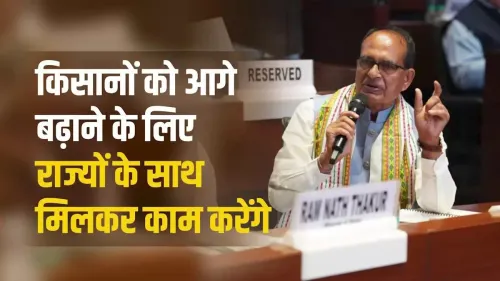
In the post, Chouhan stated plainly: 'हमारे कृषि समझौते विभिन्न देशों से हुए हैं, वह भारत के किसानों के लिए बहुत उपयोगी हैं। अब राज्यों को तैयार होना पड़ेगा कि हम एक्सपोर्ट क्वालिटी के कृषि उत्पाद पैदा करें।' — 'Our agricultural agreements with various countries are very useful for India's farmers. Now states will have to prepare to produce export-quality agricultural products.'
Agreements in Hand, Quality Infrastructure Still Missing
India has pursued a wide network of bilateral trade and agricultural cooperation agreements designed to open overseas markets for farm produce. The logic is straightforward: international buyers need consistent standards — phytosanitary compliance, grading, packaging, traceability — and without them, even the most favourable deal on paper delivers nothing to the farmer.
The Agricultural Export Policy of 2018 laid this foundation at the central level, targeting a doubling of agricultural exports and explicitly requiring alignment with global quality norms. But the policy's reach depends heavily on state governments, which control land records, warehousing, primary processing, and the local extension networks that actually reach farmers in the field. Chouhan's message is that the gap between a signed agreement and a shipment of certified produce lives at the state level — and that gap needs closing now.
The State-Centre Compact That Must Deliver
The Minister's call is not ceremonial. It frames export-readiness as an active responsibility for state agriculture departments — setting up export clusters, building quality certification infrastructure, and training farmers on the standards their produce must meet. States that move quickly stand to direct new export revenue toward their farming communities. Those that lag will watch the opportunity pass.
India's agriculture sector has long been central to debates about farmer income, with export diversification seen as one of the most durable routes to better prices at the farm gate. A bilateral deal creates the legal and diplomatic corridor; export-quality production fills it with actual commerce. Chouhan's signal is that the corridor is ready — the freight needs to start moving.
Point of View
But delivery lives in the states. By publicly framing export-quality production as a state obligation, he is effectively distributing political accountability downward — states that fail to build certification and cluster infrastructure will share ownership of any gap between India's trade ambitions and actual export performance. The message also reinforces the BJP-led government's sustained narrative of farmer-income growth through market access rather than procurement-price revision alone. With bilateral deals already in place, the shift of emphasis to supply-side quality readiness suggests the Ministry sees logistics and standards compliance as the next genuine bottleneck — a consequential diagnosis if it drives targeted funding and actionable timelines.
NationPress
29 Sept 2026
Frequently Asked Questions
What did Agriculture Minister Shivraj Singh Chouhan say about agricultural exports?
On 29 September 2026, Chouhan stated that India's bilateral agricultural agreements with various countries are very beneficial for farmers, and urged state governments to prepare to produce export-quality agricultural products to fully leverage these agreements.
What is India's Agricultural Export Policy 2018?
The Agricultural Export Policy 2018 is a central government initiative aimed at doubling India's agricultural exports by diversifying markets, aligning farm production with global quality and phytosanitary standards, and creating export clusters across states.
Why are states responsible for export-quality farm produce in India?
State governments control critical on-ground infrastructure such as warehousing, primary processing, farmer extension services, and land administration, making them the key implementers of any export-readiness strategy regardless of central policy.
How can Indian farmers benefit from bilateral agricultural agreements?
Bilateral agreements open international markets for Indian farm produce, potentially raising farm-gate prices. However, farmers can access these markets only if their produce meets the quality, grading, and phytosanitary standards required by the importing countries.
What does 'export-quality agriculture' mean for Indian states?
It means building quality certification infrastructure, setting up export clusters, training farmers on international food safety and grading norms, and ensuring produce traceability — all areas where state agriculture departments play a direct role.