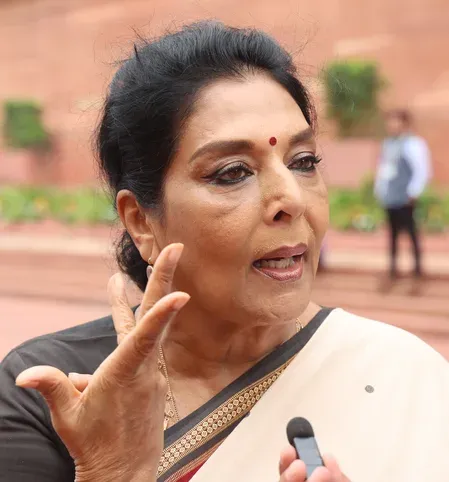
Renuka Chowdhury: BJP using Vande Mataram to push divisive agenda
Synopsis
Congress veteran Renuka Chowdhury pulls no punches — accusing BJP of manufacturing a Vande Mataram controversy to bury NEET failures and communalise national symbols, while dismissing attacks on Sonia Gandhi's patriotism as gendered politics. Her sharpest line: 'To spread hatred, they are stretching the Vande Mataram issue.'
Key Takeaways
Renuka Chowdhury accused the BJP of using the Vande Mataram row to distract from governance failures including the NEET paper leak .
She criticised PM Modi's 'dimagi naxal' remark during his Independence Day address , calling it unbecoming of the 80th anniversary of India's independence.
Chowdhury dismissed allegations against Sonia Gandhi over the Independence Day event at Congress headquarters as 'politics of allegations.' She rejected HD Kumaraswamy's comments questioning Sonia Gandhi's patriotism on grounds of Italian origin, calling it a gendered attack.
On the Ram temple SIT report clearing Champat Rai , she alleged 'small individuals will be punished, and big names will be saved.' She welcomed Smriti Irani's reinduction into the BJP team, calling her a 'talented woman' who had been removed 'wrongly earlier.'
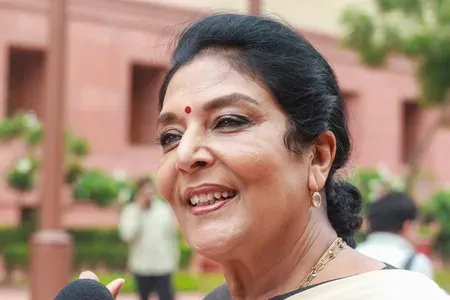
Senior Indian National Congress leader Renuka Chowdhury on Wednesday, 19 August launched a sharp attack on the Bharatiya Janata Party (BJP)-led government, accusing it of weaponising the national song Vande Mataram to deepen communal divisions while deflecting attention from pressing public issues such as the NEET paper leak controversy. Speaking in an interview, Chowdhury addressed a range of political flashpoints, from Prime Minister Narendra Modi's 'dimagi naxal' remarks to allegations against Sonia Gandhi over the Independence Day celebration at the Congress headquarters.
On PM Modi's 'Dimagi Naxal' Remarks
Chowdhury responded critically to Modi's use of the phrase 'dimagi naxal' during his Independence Day address from the Red Fort, calling it unbecoming of the occasion. 'By making such claims, he is admitting that those who are on the opposite side have brains,' she said, adding that spreading 'false narratives' on a platform as significant as the 80th anniversary of India's independence reflected poorly on the Prime Minister's own thinking.
She drew a pointed contrast with past leaders, noting that former Prime Ministers Jawaharlal Nehru, Lal Bahadur Shastri, Atal Bihari Vajpayee, and Manmohan Singh used Independence Day addresses to inspire the nation. 'We used to listen to such big personalities on I-Day,' she said, implying that the current discourse has markedly deteriorated.
Vande Mataram Row and Allegations Against Sonia Gandhi
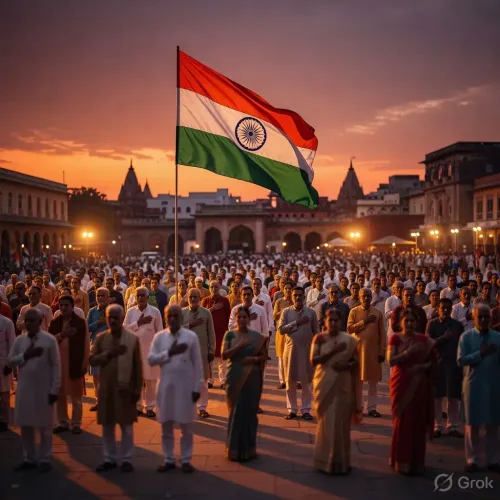
On allegations that Sonia Gandhi attempted to stop the full rendition of Vande Mataram at the Congress headquarters, Chowdhury dismissed the charge as politically motivated distraction. 'This is the politics of allegations,' she said, questioning whether anyone had actually heard what Sonia Gandhi said. She argued that the BJP was using the Vande Mataram controversy to divert attention from its own governance failures, including unresolved concerns over the NEET paper leak and student welfare.
Responding to actor-turned-politician Kangana Ranaut's claim that Congress was 'worse than Pakistan in terms of patriotism,' Chowdhury countered by pointing out that the Rashtriya Swayamsevak Sangh (RSS) headquarters had historically not hoisted the Tricolour, and that Vande Mataram had not been a consistent part of their public discourse until recently. 'To spread hatred, they are stretching the Vande Mataram issue,' she said.
On HD Kumaraswamy's Remarks About Sonia Gandhi
Chowdhury reacted sharply to HD Kumaraswamy's comment questioning Sonia Gandhi's patriotism on the grounds of her Italian origin. 'This is what happens with the daughters-in-law. Their blood is questioned in this way,' she said, calling out what she described as a gendered and regressive line of attack. She challenged Kumaraswamy directly, asking him to reflect on his own 'blood type' before making such remarks.
Ram Temple Donations, Rahul Gandhi, and 2029 Elections
On the Ram temple donation embezzlement case, Chowdhury expressed scepticism over the Special Investigation Team (SIT) report that cleared Champat Rai, saying 'small individuals will be punished, and big names will be saved.' She alleged that real silver had been stolen and replaced with fake silver, calling it a betrayal of religious trust.
Asked about the 2029 general elections and whether Rahul Gandhi would be Prime Minister, she declined to speculate, noting that Gandhi had never made such a claim himself. She did, however, defend his political credibility, citing his Bharat Jodo Yatra — a walk from Kashmir to Kanyakumari — as evidence of his ground-level connect with the country. On US President Donald Trump's praise of India's electoral system, Chowdhury was dismissive, saying India should not seek validation from a country that extended voting rights to women far later than India did.
On Opposition Splits and BJP's Internal Changes
Chowdhury attributed the fractures in parties like Trinamool Congress and Uddhav Thackeray's Shiv Sena to pressure from central investigative agencies, arguing that the Enforcement Directorate (ED) and the Election Commission of India (ECI) were being deployed as instruments of political coercion. On BJP's internal reshuffle — including the reported removal of Amit Malviya as BJP IT cell chief and the reinduction of Smriti Irani — she called the latter a positive development, saying Irani was a 'talented woman' who had been 'removed wrongly earlier.'
As the political temperature around national symbols and minority representation continues to rise ahead of state elections, Chowdhury's remarks signal that the Congress intends to contest the BJP's framing of patriotism on every front.
Point of View
Substantive debates on NEET, unemployment, and temple fund accountability get crowded out. Notably, Chowdhury's defence of Sonia Gandhi sidesteps the specifics of what happened at the Congress headquarters, which leaves the allegation only partially addressed. Her dismissal of Trump's praise as irrelevant is the sharpest line — and the one most likely to be clipped out of context.
NationPress
3 Oct 2026
Frequently Asked Questions
What did Renuka Chowdhury say about the Vande Mataram controversy?
Chowdhury called the Vande Mataram row 'politics of allegations,' accusing the BJP of stretching the issue to spread communal hatred and divert attention from failures like the NEET paper leak. She argued that BJP and RSS had not historically championed Vande Mataram until it became politically convenient.
How did Renuka Chowdhury react to PM Modi's 'dimagi naxal' remark?
Chowdhury said the remark was inappropriate for the occasion of India's 80th Independence Day, calling it 'mean' and reflective of the Prime Minister's own thinking. She contrasted it with the statesmanlike addresses of former Prime Ministers Nehru, Shastri, Vajpayee, and Manmohan Singh.
What did Chowdhury say about the allegations against Sonia Gandhi?
She dismissed the allegations — that Sonia Gandhi tried to stop the full Vande Mataram at the Congress headquarters — as baseless, questioning whether anyone actually heard what Gandhi said. Chowdhury called it a tactic to hide the BJP's own governance failures.
What is Renuka Chowdhury's view on the Ram temple donation SIT report?
Chowdhury expressed scepticism, saying the SIT report clearing Champat Rai was predictable, alleging that 'small individuals will be punished, and big names will be saved.' She claimed real silver was stolen and replaced with fake silver, calling it a betrayal of religious trust.
Did Renuka Chowdhury comment on the 2029 elections and Rahul Gandhi as PM?
She declined to speculate, noting that Rahul Gandhi had never personally claimed he wanted to be Prime Minister. She defended his political credibility by citing his Bharat Jodo Yatra from Kashmir to Kanyakumari as evidence of his grassroots connect with India.