NEET leak row: Gujarat BJP chief slams Rahul Gandhi for 'misleading youth'
Synopsis
Gujarat BJP president Jagdish Vishwakarma went on the offensive over the NEET paper leak row, accusing Rahul Gandhi of 'misleading youth' for political gain rather than debating the issue in Parliament. With PM Modi announcing fast-track courts and a CBI probe already under way, the BJP is framing the controversy as a law-and-order response — not a governance failure.
Key Takeaways
Gujarat BJP president Jagdish Vishwakarma on 23 July accused Rahul Gandhi and Congress of exploiting the NEET paper leak issue to mislead students for political gain.
The BJP-led Centre has referred the NEET case to the CBI , constituted an SIT , and arrested the accused, according to Vishwakarma.
Prime Minister Narendra Modi announced the establishment of fast-track courts to expedite punishment in paper leak cases.
A decision has been taken to shift NEET to a computer-based examination system for greater transparency and security.
Vishwakarma alleged paper leak incidents have also occurred in states governed by Congress or its alliance partners, naming 9 states .
A Rule 193 notice for parliamentary discussion on NEET was submitted, but the Opposition reportedly stayed away from the debate, he claimed.
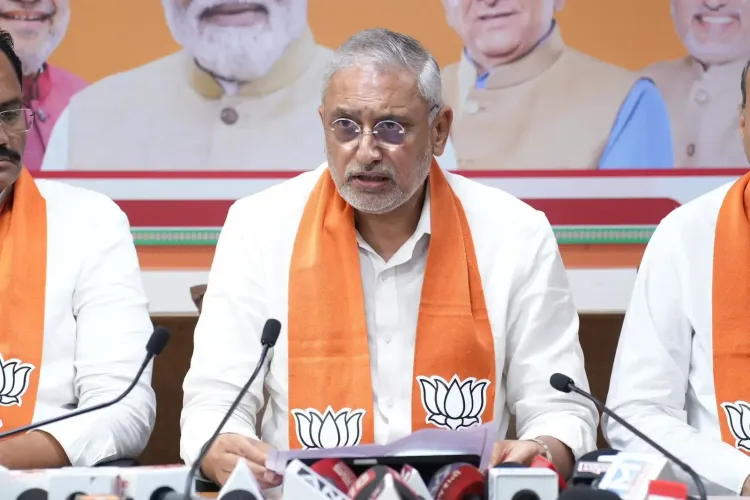
Gujarat Bharatiya Janata Party (BJP) president Jagdish Vishwakarma on Thursday, 23 July accused Congress leader Rahul Gandhi and his party of pursuing a 'dangerous trend' of misleading students over the examination paper leak controversy, alleging that the Opposition was exploiting the crisis for political gain rather than engaging in substantive parliamentary debate. The accusations were made at a press conference held at the BJP state headquarters in Gandhinagar, in the presence of Agriculture Minister Jitu Vaghani.
Key Accusations Against Congress
Vishwakarma charged that the Opposition's conduct had strayed beyond legitimate democratic protest. 'A dangerous trend of misleading the youth of the country is being adopted by Rahul Gandhi and the Congress. Their objective is not to secure justice for students but to mislead them for political gain. Instead of making a serious issue like paper leaks a political matter, there should be meaningful discussion in Parliament, but the Opposition is trying to provoke the youth instead,' he said.
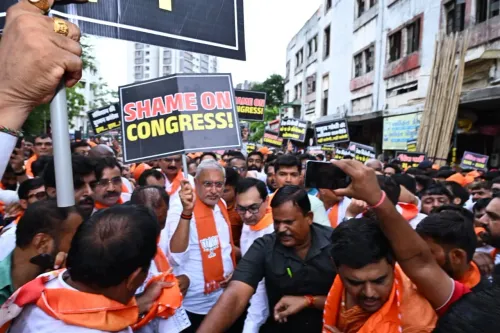
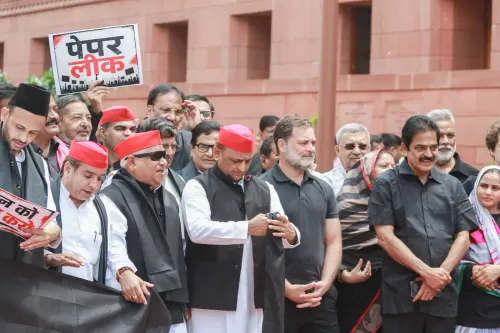
He further alleged that Rahul Gandhi and the Congress had 'crossed the limits of democracy and the Constitution' by attempting to march towards the Prime Minister's residence — a move he termed 'highly condemnable.' Vishwakarma also claimed that a notice had already been submitted under Rule 193 for a parliamentary discussion on the NEET issue, but the Opposition had chosen to stay away from the debate while 'attempting to spread confusion across the country.'
Government's Response to the NEET Crisis
Vishwakarma defended the BJP-led Central Government's handling of the controversy, listing a series of steps taken after the NEET paper leak surfaced. These included registering complaints through the Ministry of Education, handing the investigation to the Central Bureau of Investigation (CBI), constituting a Special Investigation Team (SIT), and arresting the accused. The government had also sought daily court hearings to expedite punishment, he said.
He added that the re-examination was conducted within the stipulated timeframe and that results were declared on schedule. According to Vishwakarma, a large number of candidates — including a significant proportion of female students — qualified in the examination.
Fast-Track Courts and Future Safeguards
Vishwakarma also cited an announcement made by Prime Minister Narendra Modi on the same day regarding the establishment of fast-track courts for paper leak cases. 'The Prime Minister has announced that Fast Track Courts will be established so that those guilty in paper leak cases receive the strictest possible punishment at the earliest and such cases are disposed of swiftly. This is an important decision in the series of measures being taken to safeguard students' interests. No one who tampers with the future of the youth will be spared under any circumstances,' he said.
He also noted that a decision had been taken to introduce a computer-based examination system for NEET to make the process more transparent and secure going forward.
BJP Cites Congress-Ruled States in Paper Leak Cases
Turning the spotlight on the Opposition's own record, Vishwakarma alleged that examination irregularities and paper leak incidents had occurred under Congress governments and in states governed by Congress or its alliance partners. He named Jammu and Kashmir, Himachal Pradesh, Jharkhand, Telangana, Tamil Nadu, West Bengal, Punjab, Kerala, and Karnataka as states where such incidents had reportedly surfaced — though he did not provide specific case details.
Vishwakarma framed the paper leak problem as a national concern, not one attributable to any single state or party, and called on all stakeholders to work together in the national interest rather than 'give it a political colour.' He appealed to young people to stay away from what he termed 'misleading politics and the politics of anarchy' and to continue contributing to nation-building. With fast-track courts now announced and a CBI probe under way, the coming weeks will test whether the government's institutional response translates into convictions — and whether that is enough to satisfy students demanding accountability.
Point of View
But it sidesteps the harder accountability questions — how the NEET paper leaked in the first place and whether systemic exam-security failures predate any one government. Fast-track courts are a credible deterrent signal, but courts require convictions, and India's track record on white-collar exam fraud prosecutions is thin. The Opposition's street protests may be politically motivated, as the BJP alleges, but that does not automatically validate the government's institutional response. The real test of both sides' sincerity is whether Parliament gets a structured, substantive debate — something neither the BJP's press conferences nor the Congress's marches are substituting for.
NationPress
22 Oct 2026
Frequently Asked Questions
What did Gujarat BJP chief Jagdish Vishwakarma say about Rahul Gandhi and the NEET row?
Vishwakarma accused Rahul Gandhi and the Congress of adopting a 'dangerous trend' of misleading youth over the NEET paper leak issue, alleging the Opposition sought political gain rather than meaningful parliamentary debate. He made these remarks at a press conference in Gandhinagar on 23 July.
What steps has the Central Government taken on the NEET paper leak case?
According to Vishwakarma, the Centre registered complaints through the Ministry of Education, handed the investigation to the CBI, constituted an SIT, arrested the accused, and sought daily court hearings. A re-examination was also conducted and results declared on schedule.
What did PM Modi announce regarding NEET fast-track courts?
Prime Minister Narendra Modi announced on 23 July the establishment of fast-track courts to ensure the swiftest possible punishment for those found guilty in paper leak cases. Vishwakarma described it as a key step in a series of measures to protect students' interests.
Is NEET moving to a computer-based format?
Yes, a decision has been taken to introduce a computer-based examination system for NEET to make the process more transparent and secure, according to Vishwakarma. No specific implementation date was announced at the press conference.
Did the BJP claim paper leaks happened under Congress governments too?
Yes, Vishwakarma alleged that examination irregularities and paper leak incidents had occurred in states governed by Congress or its alliance partners, citing Jammu and Kashmir, Himachal Pradesh, Jharkhand, Telangana, Tamil Nadu, West Bengal, Punjab, Kerala, and Karnataka — though he did not provide specific case details at the press conference.