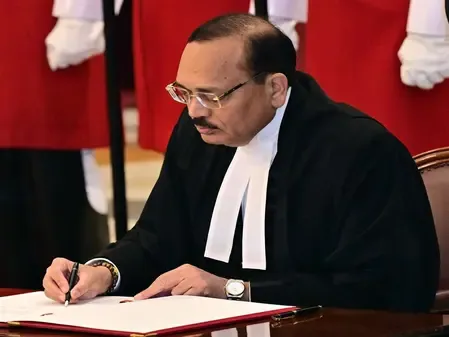
CJI Surya Kant's office condemns fake X post with fabricated quote
Synopsis
The Supreme Court took the rare step of issuing a formal press condemnation after a fabricated, caste-charged quote was falsely attributed to Chief Justice Surya Kant on X. The fake graphic, traced to the account @UnreservedMERIT, was designed to inflame social tensions — prompting the CJI's office to call it 'deliberate social incitement' and demand platforms stop amplifying it.
Key Takeaways
The Office of CJI Surya Kant issued a formal press statement on 10 May condemning fabricated social media posts falsely attributing remarks to him.
The account @UnreservedMERIT on X was specifically named as having circulated the fake graphic.
The fabricated quote was a divisive, caste-charged statement in Hindi — described by the CJI's office as "wholly baseless, malicious, and demonstrably false" .
The Supreme Court called the act "rank dishonesty, deliberate social incitement, and contempt for constitutional values" .
Citizens, media organisations, and social media platforms were urged to refrain from amplifying "false and contrived content" .
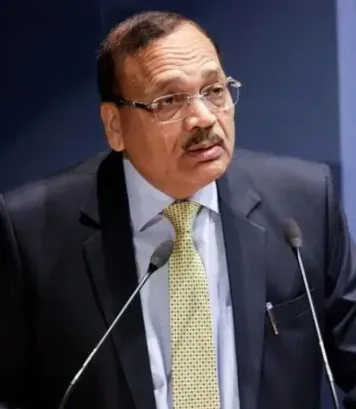
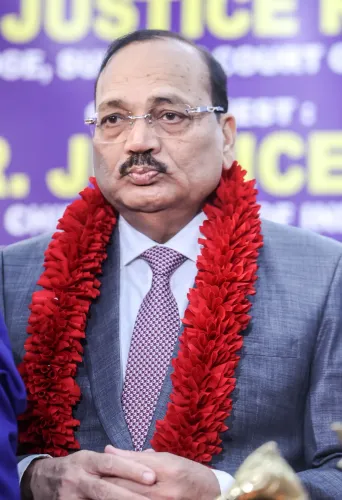
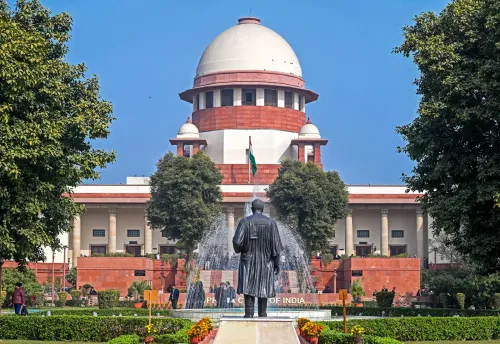
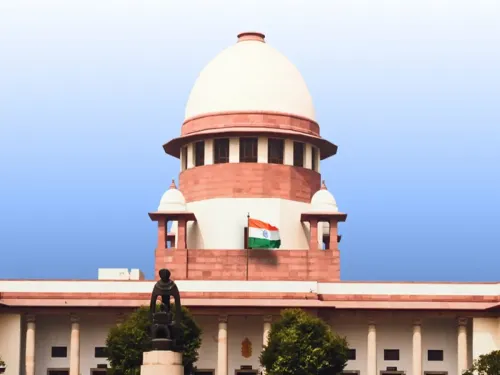
The Office of the Chief Justice of India (CJI) on 10 May strongly condemned the circulation of fabricated social media posts falsely attributing inflammatory remarks to Chief Justice Surya Kant, calling the act "malicious", "mischievous", and a direct attack on public trust in the judiciary. The condemnation came through an official press statement issued from the Supreme Court of India in New Delhi.
The Fabricated Post
The CJI's office specifically named the account @UnreservedMERIT on X (formerly Twitter) as having circulated a fabricated graphic falsely attributing a statement to Chief Justice Surya Kant. The fake quote, written in Hindi, read: "Agar ek samaj khud ko IAS, IPS, CJI, President, PM bankar bhi khud ko shoshit hi rakhna chata hai, to isme ghalti Brahmino ki nahi balki uski apni mansikta ki hai" — loosely translated as suggesting that if a society, even after producing senior officials and constitutional office-holders from its ranks, still chooses to remain exploited, the fault lies not with Brahmins but with its own mentality. The Office of the CJI clarified that these attributed remarks were "wholly baseless, malicious, and demonstrably false".
What the Supreme Court Said
The official press release from the CJI's office did not mince words. "The Office of Hon'ble the Chief Justice of India condemns in the strongest possible terms this vile, brazen, and mischievous concoction," it stated. It further described the act of manufacturing a fictitious quote and attributing it to the highest judicial office in the country as "an act of rank dishonesty, deliberate social incitement, and contempt for constitutional values." The statement warned that such conduct "strikes at the very foundation of public trust in the judiciary and the rule of law."
Call for Restraint
The CJI's office urged citizens, media organisations, and social media platforms to refrain from amplifying unverified and misleading content. The statement called upon all responsible parties to avoid sharing "false and contrived content" that could inflame social tensions and erode institutional credibility. The appeal is notable given the caste-sensitive nature of the fabricated quote, which was clearly designed to provoke communal discord.
Why This Matters
This is not an isolated incident — fake quotes attributed to senior constitutional figures have increasingly been used as tools of disinformation in India's polarised social media landscape. The fact that the Supreme Court felt compelled to issue a formal press condemnation underscores the severity with which the judiciary views such attempts at reputational sabotage. Notably, the fabricated quote was crafted to appear as though the CJI — the head of India's independent judiciary — was making a divisive caste-based remark, a framing that could seriously damage public confidence in the institution's impartiality. The explicit naming of the offending account signals that legal action cannot be ruled out.
Point of View
A framing with maximum potential for institutional damage. What is missing from the statement is any indication of legal follow-up, which limits its deterrent value. India has no shortage of laws — from IT Act provisions to contempt of court — that could apply here. Without enforcement, condemnations, however strongly worded, risk becoming a template that bad actors learn to ignore.
NationPress
24 Sept 2026
Frequently Asked Questions
What fake quote was falsely attributed to CJI Surya Kant?
A fabricated graphic circulated on X falsely attributed a divisive, caste-charged Hindi statement to Chief Justice Surya Kant, suggesting that a community's continued exploitation was its own fault rather than that of Brahmins. The CJI's office confirmed the quote was entirely false and never made by the Chief Justice.
Which account spread the fake CJI quote?
The account @UnreservedMERIT on X (formerly Twitter) was specifically named by the Office of the CJI as having circulated the fabricated graphic falsely attributing the statement to Chief Justice Surya Kant.
How did the Supreme Court respond to the fake post?
The Office of the CJI issued a formal press statement condemning the post in the strongest terms, calling it 'rank dishonesty, deliberate social incitement, and contempt for constitutional values'. It also urged citizens, media, and social media platforms to stop amplifying false content.
Why is this fake quote considered especially serious?
The fabricated quote was caste-sensitive and designed to make the head of India's judiciary appear to endorse a divisive social view, which could severely damage public confidence in the impartiality of the Supreme Court. The CJI's office warned it 'strikes at the very foundation of public trust in the judiciary and the rule of law.'
What action has been called for in response?
The CJI's office has called upon all responsible citizens, media organisations, and social media platforms to refrain from sharing the false content. No specific legal action has been publicly announced as of the statement's release.