Indraprastha Nritya Mahotsav 2026: Classical dance stars light up Purana Qila
Synopsis
At the historic Purana Qila in Delhi, the second edition of the Indraprastha Nritya Mahotsav brought together Padma Bhushan laureates, a Padma Shri from Malaysia, and ensembles from Chennai, Bengaluru, and Mumbai — all under a free-entry format — as the Delhi government signals its intent to make the festival an annual fixture and reposition the capital as India's cultural heartland.
Key Takeaways
The Indraprastha Nritya Mahotsav ran from 2 to 4 October 2026 at Purana Qila , New Delhi, with free public entry.
The festival was organised by the Delhi Tourism Department under the theme 'Vikas Bhi, Virasat Bhi' .
Padma Bhushan awardees Guru Raja and Radha Reddy and Padma Shri Ramli Ibrahim of Malaysia were among the headline performers.
Eight classical dance forms — Kuchipudi, Odissi, Bharatanatyam, Kathak, Sattriya, Mohiniyattam, Kathakali , and Manipuri — were represented.
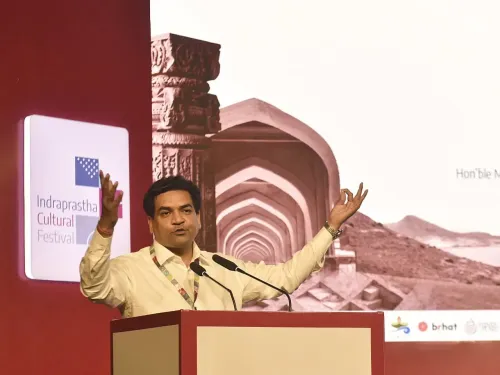
Delhi Minister Kapil Mishra confirmed this was the second edition and said efforts would be made to organise it regularly.
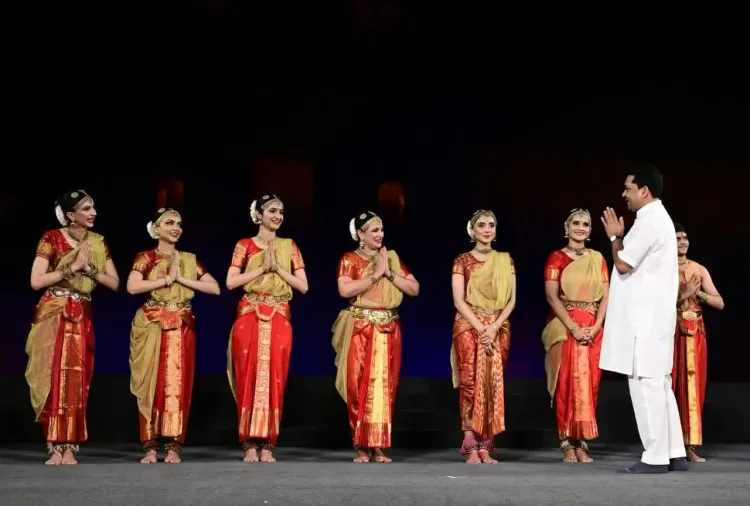
The closing ceremony featured a special Bharatanatyam production by Sangeet Natak Akademi Awardee Guru Vaibhav Arekar .
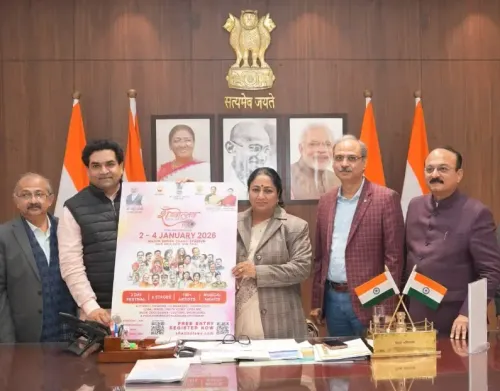
Eminent artistes from India and abroad came together for the Indraprastha Nritya Mahotsav, a three-day classical dance festival that concluded on Sunday, 4 October at the historic Purana Qila in New Delhi. Organised by the Delhi Tourism Department, the festival ran from 2 to 4 October, drawing audiences with free entry and daily performances from 6:30 pm onwards.
Festival Theme and Scale
The festival was held under the theme 'Vikas Bhi, Virasat Bhi' (Development as well as Heritage), reflecting the state government's intent to blend cultural preservation with progress. This was the second edition of the Mahotsav, with officials indicating it is now being positioned as a recurring annual event on Delhi's cultural calendar.
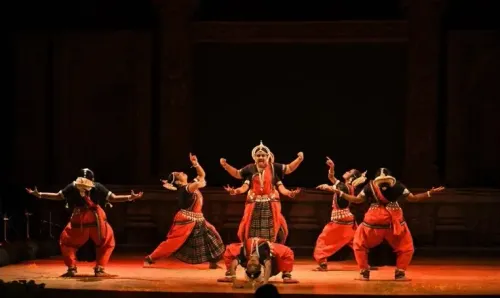
Performances spanned eight major Indian classical dance forms: Kuchipudi, Odissi, Bharatanatyam, Kathak, Sattriya, Mohiniyattam, Kathakali, and Manipuri — a breadth of traditions rarely assembled on a single stage.
Star Performers Across Three Evenings
The opening evening featured Padma Bhushan awardees Guru Raja and Radha Reddy and their group from Delhi presenting Kuchipudi, and Padma Shri Ramli Ibrahim of Malaysia representing the international dimension of the festival. Sangeet Natak Akademi awardee Guru Vaswati Mishra (Delhi) performed Odissi, while Kalakshetra from Chennai showcased Bharatanatyam and Dhwani from Delhi presented Kathak.
The concluding evening brought performances by Lok Chhanda (Delhi), Nrityagram and Guru Surupa Sen from Bengaluru, and Guru Latasana Devi and group from Mumbai. The closing ceremony was anchored by a special Bharatanatyam production conceptualised by Sangeet Natak Akademi Awardee Guru Vaibhav Arekar.
What the Government Said
Delhi Minister Kapil Mishra described the choice of Purana Qila as a deliberate and meaningful one, calling the venue's historical depth an ideal backdrop for celebrating India's artistic traditions. 'The festival provided an important platform to showcase Delhi's historical heritage and India's rich cultural traditions together,' he said.
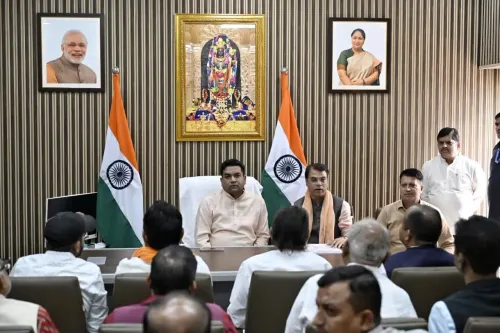
Mishra noted that the decision to hold the festival again was taken following discussions with Chief Minister Rekha Gupta, and that efforts would be made to regularise such cultural programming going forward. He also invited ideas and proposals from artistes, gurus, and cultural practitioners from across the country to help shape future editions.
Broader Cultural Ambition
The Delhi government has stated its ambition to position the national capital not only as India's political hub but also as its cultural capital. This comes amid a wider national push to revive heritage-linked public events at iconic archaeological sites, with Purana Qila — which dates back to the era of the Pandavas in legend and the Mughal Emperor Humayun in recorded history — serving as a powerful symbolic stage. Notably, the festival's free-entry format is a deliberate attempt to broaden access beyond ticketed audiences, reaching first-time visitors to classical dance.
Point of View
But its real significance lies in what it signals about the Delhi government's positioning strategy. Hosting world-class classical dance at Purana Qila — an archaeological monument with millennia of layered history — is a calculated act of place-making. The free-entry format deserves particular attention: it is one of the few state-backed arts events designed to democratise classical dance, a form long associated with elite urban audiences. The second-edition commitment and CM-level involvement suggest institutional seriousness, though sustainability will depend on whether funding and programming become predictable rather than episodic.
NationPress
5 Oct 2026
Frequently Asked Questions
What is the Indraprastha Nritya Mahotsav?
The Indraprastha Nritya Mahotsav is a classical dance festival organised by the Delhi Tourism Department at the historic Purana Qila in New Delhi. The 2026 edition, held from 2 to 4 October, was its second year and featured artistes from India and abroad presenting eight classical dance forms, with free public entry.
Which artistes performed at the Indraprastha Nritya Mahotsav 2026?
Notable performers included Padma Bhushan awardees Guru Raja and Radha Reddy (Kuchipudi), Padma Shri Ramli Ibrahim from Malaysia, Sangeet Natak Akademi awardee Guru Vaswati Mishra (Odissi), Kalakshetra from Chennai (Bharatanatyam), Nrityagram and Guru Surupa Sen from Bengaluru, and Guru Latasana Devi from Mumbai, among others.
Is the Indraprastha Nritya Mahotsav free to attend?
Yes, entry to the Indraprastha Nritya Mahotsav was free for the public, with performances held daily from 6:30 pm at Purana Qila in New Delhi.
Will the Indraprastha Nritya Mahotsav be held again?
Delhi Minister Kapil Mishra has said that following discussions with Chief Minister Rekha Gupta, efforts will be made to organise the festival regularly. The 2026 event was the second edition, indicating the government intends to make it a recurring fixture.
What was the theme of the Indraprastha Nritya Mahotsav 2026?
The festival was held under the theme 'Vikas Bhi, Virasat Bhi', meaning 'Development as well as Heritage', reflecting the Delhi government's aim to promote cultural traditions alongside the city's modern development.