CM Assam: 35 Lakh Join Yoga Day Across 23,498 Villages
Synopsis
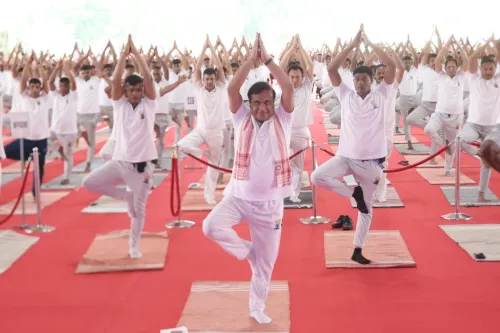
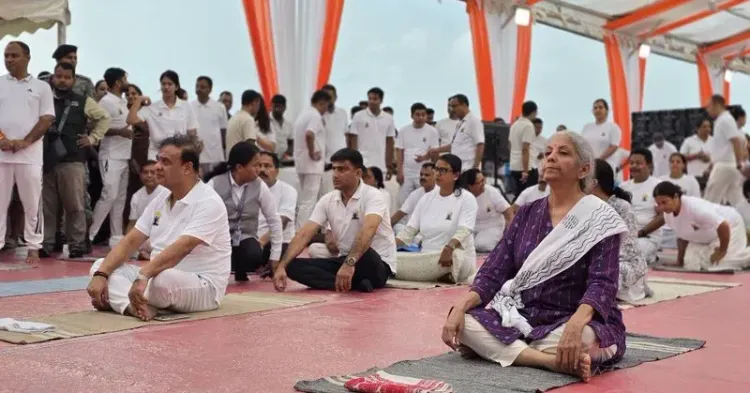
Assam marked International Yoga Day 2026 with 35 lakh participants across 23,498 villages, the Chief Minister's Office announced, reflecting the state's wide rural mobilisation for the UN-designated annual observance coordinated by India's Ministry of AYUSH.
Key Takeaways
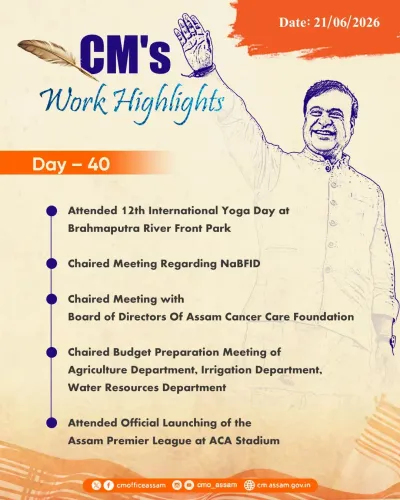
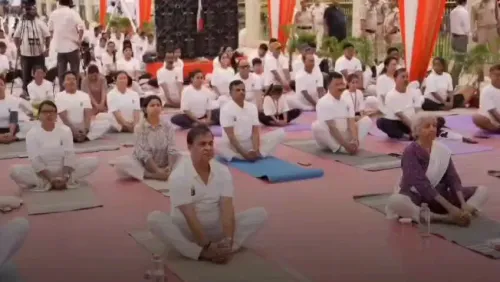
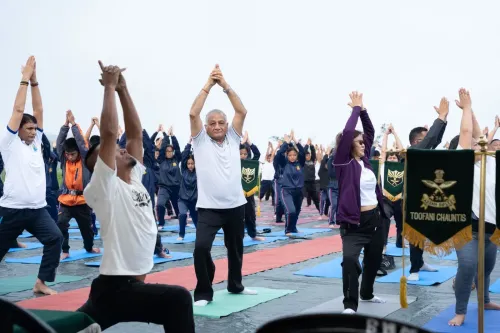
35 lakh people participated in International Yoga Day observances in Assam on June 21, 2026 .
Events were held across 23,498 villages , indicating near-comprehensive village-level coverage in the state.
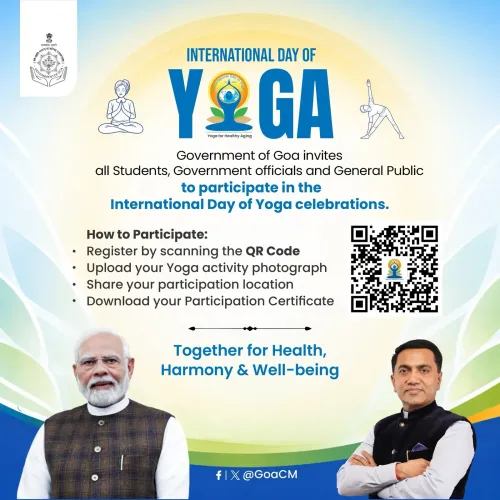
International Yoga Day has been observed globally every June 21 since 2015 , following a UN General Assembly resolution in 2014 .
India's Ministry of AYUSH coordinates national-level participation and state government mobilisation for the event.
Chief Minister Himanta Biswa Sarma has led Assam since 2021 and has aligned the state with central wellness and AYUSH integration priorities.
The scale of outreach mirrors a national pattern of states using International Yoga Day to demonstrate grassroots health programming reach.
The Chief Minister's Office of Assam announced on Monday, June 22, 2026, that Assam recorded participation of 35 lakh people across 23,498 villages in observances marking International Yoga Day, underscoring the state's broad rural outreach for the annual global event.
Context
International Yoga Day is observed every year on June 21, following a United Nations General Assembly resolution passed in December 2014 that designated the date as a global observance — a proposal originally moved by India. Since 2015, India has marked the occasion with mass public demonstrations coordinated at the national level. The Chief Minister's Office of Assam shared the participation figures in a post on X, citing coverage that placed the state among the more active participants in this year's national observances.
Policy Backdrop
The Union government's Ministry of AYUSH serves as the nodal body for organising and promoting yoga events across India, integrating the initiative into a broader preventive-health and traditional-medicine policy framework. State governments are encouraged to mobilise participants at the grassroots level, and Assam's reported reach across more than 23,000 villages reflects the scale at which such coordination is expected to operate. Chief Minister Himanta Biswa Sarma, who has led the state since 2021, has consistently positioned Assam's participation in central wellness programmes as a priority, aligning the state administration with the AYUSH integration agenda within primary care.
Successive administrations across Indian states have used International Yoga Day participation numbers to demonstrate alignment with central health priorities. Assam's figure of 35 lakh participants — spread across nearly every administrative village unit in the state — mirrors a national pattern in which scale of coverage is treated as a measurable indicator of public health outreach.
Stakeholders and Impact
The primary beneficiaries of village-level yoga sessions are rural residents of Assam, a northeastern state with a population exceeding 35 million, where access to organised preventive-health programming has historically been uneven. State health officials and local coordinators bear the logistical responsibility of mobilising communities across geographically dispersed villages, many of which are in flood-prone or hilly terrain. The sheer number of villages covered — 23,498 — suggests significant administrative deployment at the block and panchayat levels.
For the state government, the figures also carry a soft-power dimension: demonstrating rural reach reinforces the administration's messaging on health and wellness, and positions Assam favourably in any national ranking of state-level International Yoga Day participation.
What's Next
Observers will watch whether Assam's village-level yoga infrastructure translates into sustained programming under the National Health Mission or leads to enhanced state budget allocations for AYUSH facilities. A single-day mass event, while symbolically significant, is distinct from institutionalised wellness outreach; follow-up directives from the state health department will indicate how deeply the initiative is embedded in routine public health delivery. The alignment between Assam's grassroots coverage and central government wellness targets is expected to feature in future policy reviews of preventive-health outreach across northeastern states.
Point of View
498 villages is less a spontaneous public health movement and more a measure of the state administration's capacity to coordinate with central government wellness priorities on a single designated day. The figures fit a well-established pattern in which Indian states compete, implicitly, on scale of participation to signal alignment with the ruling dispensation's flagship soft-power initiative. For Chief Minister Himanta Biswa Sarma, who governs a state where rural health infrastructure remains a work in progress, publicising such numbers serves a dual purpose: it reinforces political credibility and positions Assam as a compliant and high-performing partner in the AYUSH integration agenda. The more substantive question — whether village-level yoga sessions feed into sustained preventive-health outcomes — remains open and will depend on how the state links this outreach to the National Health Mission in the months ahead.
NationPress
22 Jun 2026
Frequently Asked Questions
How many people participated in International Yoga Day 2026 in Assam?
According to the Chief Minister's Office of Assam, 35 lakh people participated in International Yoga Day observances across the state on June 21, 2026 .
How many villages in Assam held Yoga Day events in 2026?
The Chief Minister's Office reported that events were held across 23,498 villages in Assam, indicating wide rural coverage for the 2026 observance.
When is International Yoga Day celebrated and who started it?
International Yoga Day is celebrated every year on June 21 . It was established by the UN General Assembly in December 2014 following a proposal by India , and has been observed globally since 2015 .
Which ministry organises International Yoga Day events in India?
India's Ministry of AYUSH is the nodal body responsible for coordinating and promoting International Yoga Day events across the country, working with state governments for grassroots mobilisation.
Who is the Chief Minister of Assam?
Himanta Biswa Sarma is the Chief Minister of Assam, a position he has held since 2021 . His office announced Assam's International Yoga Day 2026 participation figures on X .