CM Assam: Economy Tripled, Semiconductors Next Frontier
Synopsis
On Independence Day 2026, Assam CM Himanta Biswa Sarma declared the state economy has nearly tripled in under a decade, with Assam now targeting semiconductor manufacturing and backed by the Baihata Chariali–Tezpur four-lane highway project linking the state to Arunachal Pradesh.
Key Takeaways
Himanta Biswa Sarma stated on 15 August 2026 that the state economy has nearly tripled in less than a decade .
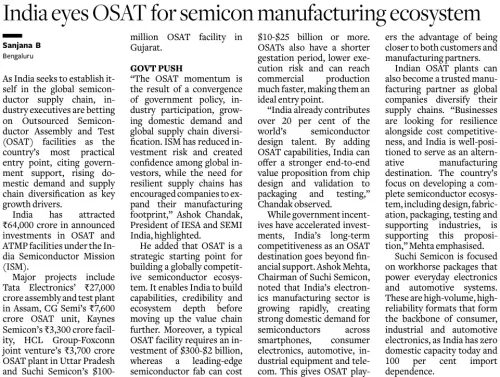
Assam is positioning itself as a destination for semiconductor manufacturing , aligning with the central government's India Semiconductor Mission (Rs 76,000 crore outlay, launched 2021).
The Baihata Chariali–Tezpur four-lane highway is cited as a key connectivity project strengthening internal Assam links and ties to Arunachal Pradesh .
The Assam Industrial Policy 2020 , updated under the Sarma government, offers state-level incentives for electronics and semiconductor investors.
Assam's push aligns with India's Act East Policy , repositioning the Northeast as a high-value manufacturing and connectivity hub rather than a resource-extraction economy.
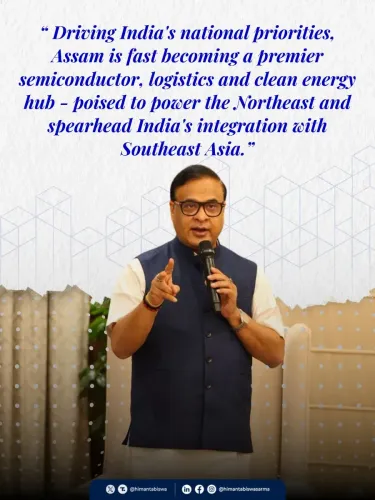
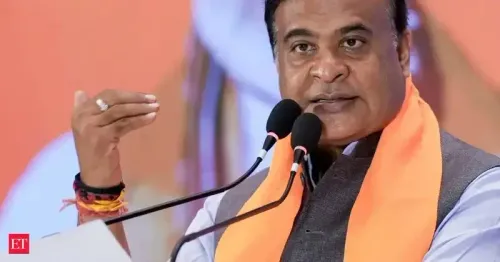
A state once defined by its tea gardens and oil fields is now staking a claim in the global chip economy. On Independence Day, 15 August 2026, the Chief Minister's Office of Assam shared remarks by Chief Minister Dr. Himanta Biswa Sarma declaring that Assam's economy has nearly tripled in less than a decade — and that the state is now positioning itself as a destination for semiconductor manufacturing.
From tea to chips: Assam's industrial pivot
For most of independent India's history, Assam's economic identity was inseparable from its tea estates, crude oil fields, and river trade. That identity is being deliberately rewritten. Sarma's statement frames the near-tripling of the state economy not as an endpoint but as the launchpad — the fiscal headroom to fund 'transformative infrastructure and development.' The ambition is explicit: advanced industries, not just agriculture. The semiconductor angle is the sharpest signal. The India Semiconductor Mission, launched by the central government in 2021 with a Rs 76,000 crore outlay, created the national scaffolding for domestic chip fabrication. Assam's Industrial Policy 2020, updated under the Sarma administration, added state-level incentives for electronics and semiconductor investments. Together, the two policy layers are designed to pull global and domestic chip investors toward the Northeast — a region that has historically struggled to attract high-value manufacturing.The Baihata Chariali–Tezpur corridor and the connectivity logic
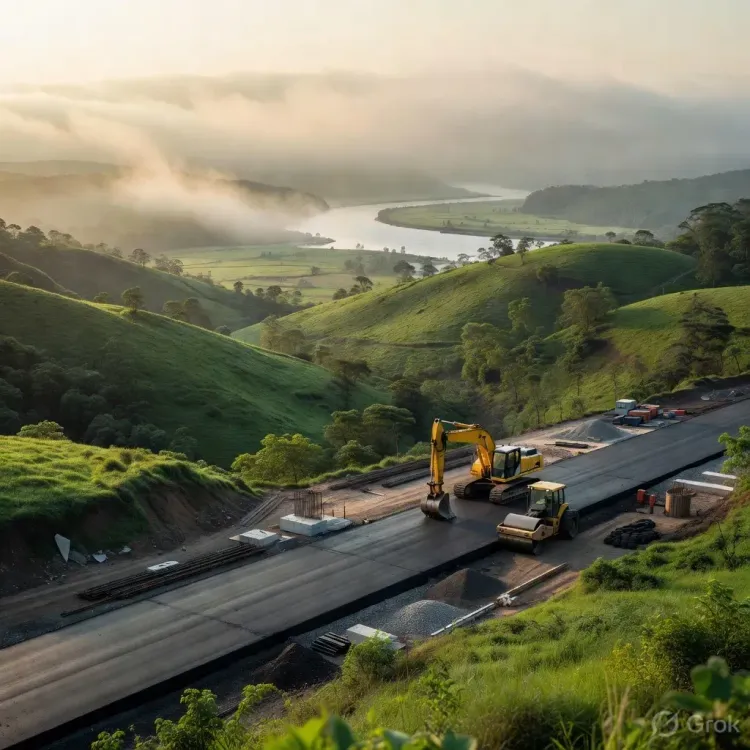
No industrial pivot survives poor roads. The Baihata Chariali–Tezpur four-lane highway — a project under the Bharatmala Pariyojana framework approved in 2015 — is the connective tissue the state is counting on. The corridor does double duty: it tightens internal Assam logistics and opens a stronger road link to Arunachal Pradesh, a border state whose development has taken on strategic weight in the context of India's northeastern frontier. Connectivity and manufacturing incentives are rarely sufficient on their own. But the combination — fiscal capacity, national semiconductor policy, state industrial incentives, and a four-lane highway spine — gives Assam a more credible pitch to investors than it has had at any point in its post-independence history.Act East, and the Northeast's new economic narrative
Assam's messaging sits squarely within the national Act East Policy, which prioritises the Northeast as a gateway to Southeast Asia rather than a peripheral region to be managed. Several Northeastern states are running similar diversification narratives, backed by central infrastructure funding. What distinguishes Assam's current moment is scale: the state is the largest economy in the region, and if its semiconductor ambition materialises, it could anchor an entirely new industrial corridor in India's east. The ground-breaking of any confirmed semiconductor unit in Assam, and the completion milestones of the Baihata Chariali–Tezpur corridor, will be the metrics that test whether this Independence Day declaration becomes economic fact.Point of View
000 crore chip mission, making Assam's pitch feel less like a regional aspiration and more like an execution arm of national industrial policy. The Baihata Chariali–Tezpur highway reference grounds the rhetoric in physical infrastructure, which investors weight heavily. Whether the claim of a tripled economy translates into confirmed semiconductor investments will determine if this is a turning point or a well-crafted narrative.
NationPress
15 Aug 2026
Frequently Asked Questions
Has Assam's economy really tripled in the last decade?
Chief Minister Himanta Biswa Sarma made this claim on Independence Day 2026; the exact GDP figures have not been independently verified from available data, but the statement reflects the state government's official position on economic growth since 2016.
Which semiconductor projects are planned in Assam?
No specific semiconductor unit has been officially confirmed or commissioned in Assam as of the available information; the state is actively seeking investments under the national India Semiconductor Mission framework and its own Industrial Policy 2020 incentives.
What is the Baihata Chariali–Tezpur four-lane highway?
It is a national highway project under the Bharatmala Pariyojana framework, designed to improve road connectivity within Assam and strengthen links to the neighbouring state of Arunachal Pradesh.
What is the India Semiconductor Mission?
The India Semiconductor Mission is a central government programme launched in 2021 with a Rs 76,000 crore outlay aimed at building domestic semiconductor and display fabrication capacity across India.
How does Assam's industrial push relate to the Act East Policy?
Assam's focus on connectivity and advanced manufacturing aligns with India's Act East Policy, which positions the Northeastern states as gateways to Southeast Asia and prioritises infrastructure and industrial investment in the region.