CM Bhagwant Mann: 40,000 Stents, 50,000 Knee Replacements Under Punjab Health Card
Synopsis
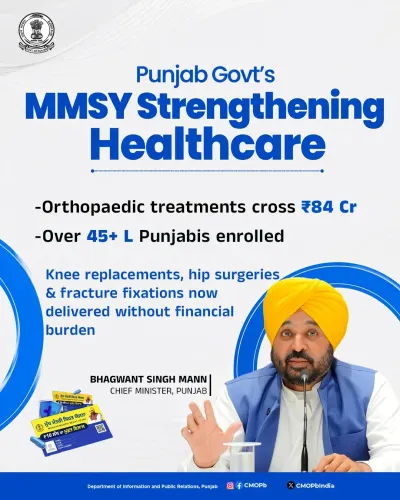
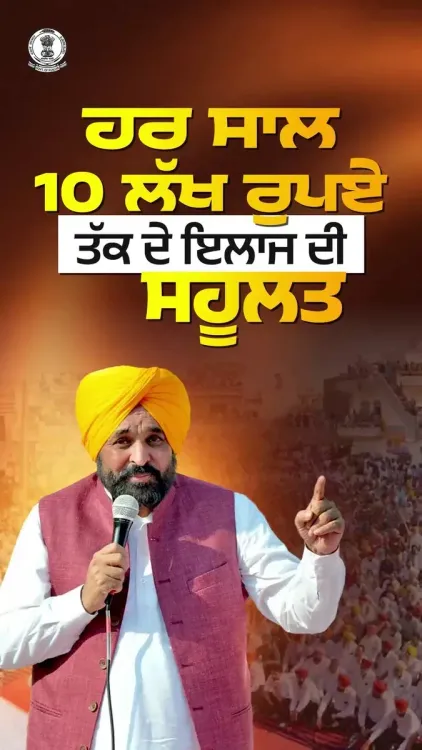
Chief Minister Bhagwant Singh Mann announced at a public lok milni that Punjab's Rs 10 lakh annual health card has funded 40,000 cardiac stent procedures and 50,000 knee replacements, with coverage renewing every year to ensure no resident is denied care due to cost.
Key Takeaways
40,000 patients have received cardiac stents under Punjab's Rs 10 lakh health card scheme.
50,000 patients have undergone knee-replacement surgeries under the same scheme.
The annual coverage limit of Rs 10 lakh resets every year , making it a recurring entitlement rather than a one-time benefit.
The scheme's stated goal is to ensure no Punjabi is denied treatment due to financial constraints .
CM Bhagwant Singh Mann disclosed these figures at a public lok milni citizen-outreach session on 19 November 2026 .
Punjab's initiative follows a broader national pattern of states enhancing coverage beyond the central Ayushman Bharat framework.
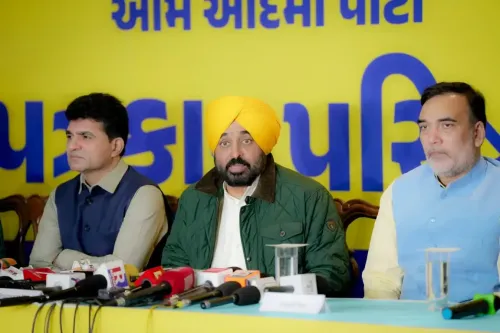
No Punjabi should go without treatment simply because they cannot afford it — that is the stated promise Chief Minister Bhagwant Singh Mann renewed at a public lok milni (citizen-outreach meeting) on Thursday, 19 November 2026, when he disclosed the cumulative reach of the state's flagship Rs 10 lakh health card scheme.
What the numbers say: stents, knees, and scale
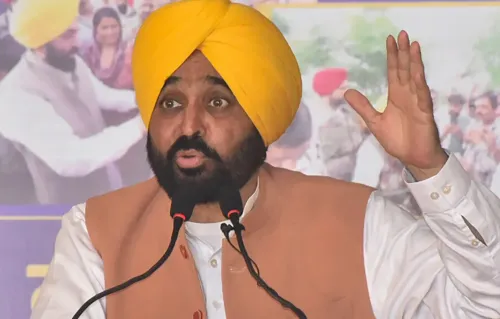
Speaking directly to residents at the lok milni, CM Mann revealed that 40,000 patients have received cardiac stents and 50,000 patients have undergone knee-replacement surgeries under the scheme so far. These are among the most expensive elective and emergency procedures in India's public health landscape — procedures that have historically pushed low-income families into debt or simply gone undone.
The Chief Minister underlined a feature designed to prevent coverage from running dry mid-treatment: the Rs 10 lakh annual limit resets every year, meaning a beneficiary who exhausts the cover in one cycle is eligible again the following year. 'No person in Punjab should be deprived of treatment due to lack of money,' he said.
How Punjab's card fits into India's broader health-cover push
The scheme sits within a wider national pattern. Several Indian states have layered higher coverage limits on top of the central Ayushman Bharat framework — recognising that the central programme's ceiling can fall short for complex cardiac, orthopaedic, or oncological procedures. Punjab's Aam Aadmi Party government, in office since March 2022, positioned the Rs 10 lakh card as a centrepiece of its health-welfare agenda from the outset, explicitly targeting out-of-pocket expenditure that disproportionately hits low-income households.
Cardiac stents and knee replacements serve as a useful litmus test for any such programme: both are high-volume, high-cost procedures with a clear quality-of-life payoff — and both are precisely the interventions that slip out of reach when insurance limits are low or non-renewable.
What to watch next
Official utilisation data and any supplementary budget allocations in Punjab's next budget session will be the real stress-test of these figures. The scale of uptake — 90,000 major procedures across just two categories — will raise questions about the scheme's fiscal sustainability and the capacity of empanelled hospitals to absorb continuing demand.
For now, CM Mann's message at the lok milni was unambiguous: the health card is not a one-time benefit but a renewable annual entitlement, and the government intends to keep it that way.
Point of View
000 major procedures under its health card scheme is a political statement as much as a health metric — the AAP government is seeking to demonstrate tangible welfare delivery ahead of future electoral cycles. The annual-renewal design is a meaningful structural differentiator from one-time insurance covers, but fiscal sustainability will be the real test: high-cost procedures at this volume carry significant budget implications. More broadly, state-level health-cover augmentation is becoming a competitive arena in Indian politics, and the data Punjab chooses to publish — or withhold — will shape how voters and policy analysts assess the programme's true reach.
NationPress
19 Nov 2026
Frequently Asked Questions
What is the Punjab 10 lakh health card scheme?
It is a Punjab government health insurance programme that provides beneficiaries with up to Rs 10 lakh in annual medical treatment coverage, with the limit renewing every year so the benefit is not exhausted permanently.
How many people have benefited from the Punjab health card for stents and knee replacements?
Chief Minister Bhagwant Mann stated that 40,000 people have received cardiac stents and 50,000 people have undergone knee-replacement surgeries under the scheme.
Is the Punjab health card annual or one-time?
The coverage is annual and renewable — the Rs 10 lakh limit resets each year, meaning beneficiaries can access the scheme again in subsequent years.
Who is eligible for the Punjab 10 lakh health card?
The scheme targets residents of Punjab, particularly low-income families who face out-of-pocket expenditure on expensive treatments; the government has not specified income caps in this announcement.
How is Punjab's health card different from Ayushman Bharat?
Punjab's scheme offers a significantly higher annual coverage ceiling of Rs 10 lakh compared to Ayushman Bharat, and explicitly renews every year, addressing the gap left by the central programme for high-cost procedures.