CM Bhagwant Mann Dedicates 153 New Aam Aadmi Clinics to Punjab
Synopsis
Punjab CM Bhagwant Mann inaugurated 153 new Aam Aadmi Clinics at Harkhoval (Chabbeval) on October 14, 2026, raising the state total to 1,245 clinics. The network has recorded over 6.5 crore free patient visits, anchoring AAP's health-education-employment welfare model in Punjab.
Key Takeaways
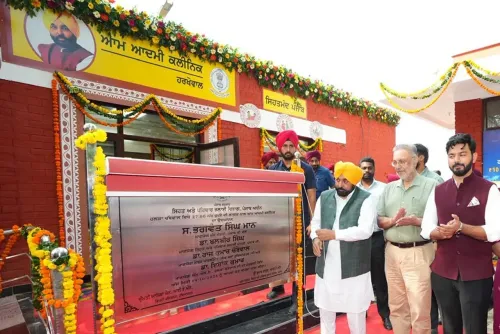
153 new Aam Aadmi Clinics were inaugurated on October 14, 2026 at a public gathering in village Harkhoval, Chabbeval .
Punjab's total Aam Aadmi Clinic count now stands at 1,245 clinics statewide.
The clinics have collectively served patients more than 6.5 crore times with free medicines and diagnostic tests.
The programme replicates AAP's Mohalla Clinic model from Delhi, launched in 2015 , adapted for Punjab's rural geography.
CM Mann framed the expansion around a three-pillar governance agenda: health, education, and employment .
Mann directly challenged opposition parties, accusing them of 'looting Punjab' and pledging to continue reforms backed by public trust.
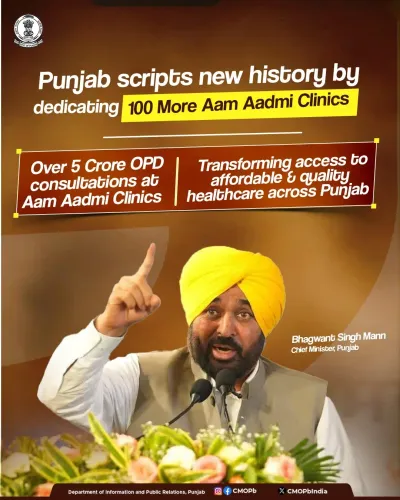
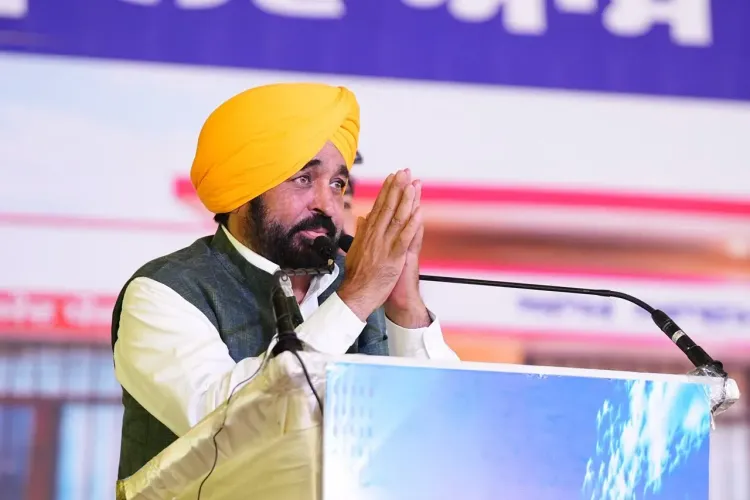
Free healthcare just got a bigger footprint in Punjab. Punjab Chief Minister Bhagwant Mann on Wednesday, October 14, 2026, dedicated 153 new Aam Aadmi Clinics to the state at a large public gathering in village Harkhoval (Chabbeval), pushing the total network to 1,245 clinics across Punjab.
Posting in Punjabi on X, Mann wrote: 'ਅੱਜ ਪੰਜਾਬ ਨੂੰ 153 ਨਵੇਂ ਆਮ ਆਦਮੀ ਕਲੀਨਿਕ ਸਮਰਿਪਤ ਕੀਤੇ ਨੇ' — 'Today, 153 new Aam Aadmi Clinics have been dedicated to Punjab.' He added that the clinics have now collectively served patients more than 6.5 crore times, delivering free medicines and diagnostic tests to residents who previously had few affordable options for primary care.
From Harkhoval to 1,245 clinics: the network's rapid growth
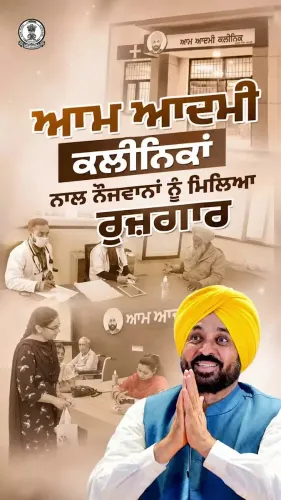
The Aam Aadmi Clinic programme was conceived as Punjab's answer to the Mohalla Clinic model that the Aam Aadmi Party (AAP) pioneered in Delhi after 2015. When AAP swept to power in Punjab in 2022, replicating that model — free consultation, free medicines, free diagnostics, all under one neighbourhood roof — became a signature promise. Today's addition of 153 clinics in a single ceremony signals that the rollout is still accelerating, not plateauing.
The choice of Chabbeval, a constituency in the Hoshiarpur region, as the launch venue is pointed: it underscores the government's stated priority of pushing healthcare into rural and semi-urban Punjab rather than concentrating services in cities. Every clinic in the network is designed to handle primary-care visits that would otherwise burden district hospitals or remain unaddressed entirely.
6.5 crore visits — what that number means on the ground
More than 6.5 crore patient visits for free medicines and tests is the headline figure Mann cited — and in a state of roughly 3 crore people, it points to repeat utilisation, not just first-time footfall. Primary care works when it becomes a habit, not a crisis resort, and the cumulative visit count suggests the clinics have embedded themselves into daily life for a meaningful share of Punjab's population.
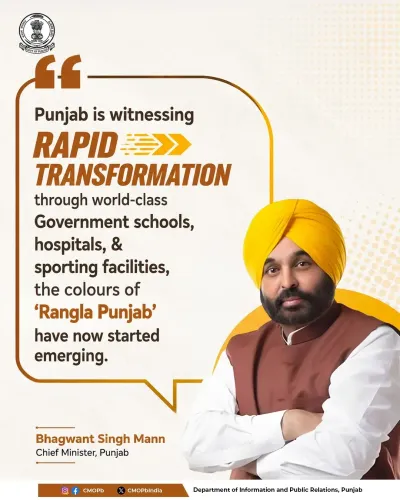
The AAP government frames the programme as evidence of a governing philosophy. 'Our government's work is not about slogans of zindabad-murdabad,' Mann wrote, 'but to ensure the health, education, and employment of the people.' The trio — health, education, employment — mirrors the exact same three-pillar pitch AAP has used in Delhi, now being tested at scale in a larger, more agrarian state.
Mann's sharp message to political rivals
The Chief Minister did not shy away from combative framing. He accused 'traditional parties' of having 'only looted Punjab,' and said no amount of political scheming to defame him would matter as long as the public's trust stood with him. Closing with 'Inquilab Zindabad!' — 'Long live the revolution!' — he cast the clinic expansion not merely as a government delivery milestone but as a political statement of intent ahead of what observers expect will be an intensifying electoral cycle in Punjab.
For patients in Harkhoval and thousands of villages like it, the politics may matter far less than the nearest clinic now being within walking distance. That is precisely the bet Mann is making.
Point of View
Visible welfare delivery mechanism that turns each new inauguration into a political event. Reaching 1,245 clinics and 6.5 crore visits strengthens the party's claim that it governs differently from its predecessors, and the choice of a rural Hoshiarpur constituency as the launch venue signals a deliberate outreach to regions historically underserved by public health infrastructure. The combative tone toward 'traditional parties' suggests Mann is already framing the clinic network as a key electoral asset, using tangible delivery to pre-empt opposition attacks rather than respond to them. Whether the programme translates into measurable health-outcome improvements — reduction in out-of-pocket expenditure, disease burden data — will determine how durable this political advantage proves to be.
NationPress
14 Oct 2026
Frequently Asked Questions
What are Aam Aadmi Clinics in Punjab?
Aam Aadmi Clinics are free neighbourhood primary-healthcare centres set up by the AAP government in Punjab, modelled on Delhi's Mohalla Clinics, offering free consultations, medicines, and diagnostic tests to residents.
How many Aam Aadmi Clinics are there in Punjab now?
As of October 14, 2026, Punjab has 1,245 Aam Aadmi Clinics after CM Bhagwant Mann inaugurated 153 new ones at a ceremony in Harkhoval, Chabbeval.
How many patients have used Aam Aadmi Clinics in Punjab?
More than 6.5 crore patient visits for free medicines and diagnostic tests have been recorded across Punjab's Aam Aadmi Clinic network, according to CM Mann's announcement on October 14, 2026.
Where were the new Aam Aadmi Clinics inaugurated?
The 153 new clinics were dedicated to Punjab at a large public gathering held in village Harkhoval (Chabbeval) by Chief Minister Bhagwant Mann on October 14, 2026.
What is the difference between Mohalla Clinics and Aam Aadmi Clinics?
Mohalla Clinics are the original free primary-care centres launched by AAP in Delhi from 2015 . Aam Aadmi Clinics are the Punjab adaptation of the same model, introduced after AAP formed the state government in 2022 , tailored to Punjab's largely rural geography.