CM Bhagwant Mann Dedicates ₹432 Cr Water Plants in Patiala
Synopsis
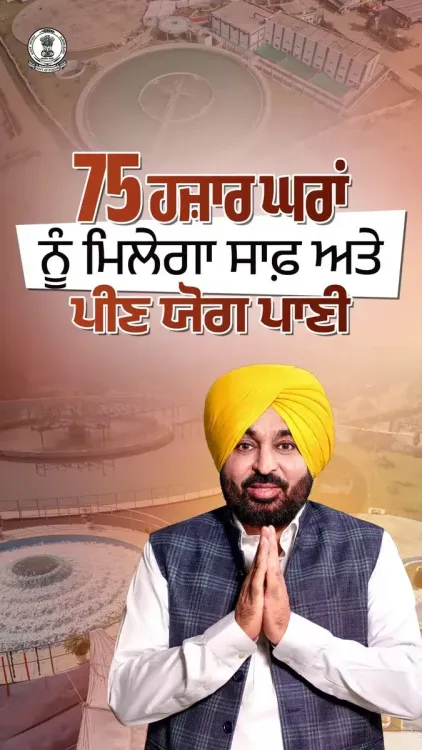
Chief Minister Bhagwant Mann dedicated two new water treatment plants at village Mandoli in Patiala on 4 November 2026, built at ₹432 crore to deliver daily clean canal water to 316 villages and 75,000 households across five assembly constituencies.
Key Takeaways
Two water treatment plants dedicated at village Mandoli, Patiala on 4 November 2026 .
Total project cost: ₹432 crore .
Coverage spans 316 villages and 75,000 households across five assembly constituencies .
Plants supply treated canal water daily, reducing dependence on contaminated groundwater.
Punjab has faced documented groundwater contamination — including uranium and arsenic — in several districts, making canal-based supply critical.
The investment continues the Bhagwant Mann government's rural infrastructure focus since taking office in March 2022 .
Clean canal water is now flowing toward 316 villages and 75,000 households across five assembly segments in Punjab — and it starts at a single village in Patiala district. On Wednesday, 4 November 2026, the Chief Minister's Office of Punjab announced that Chief Minister Bhagwant Mann dedicated two new water treatment plants at village Mandoli, Patiala, built at a combined cost of ₹432 crore.
What ₹432 crore buys Punjab's villages
The two plants at Mandoli are designed to draw from canal water sources and process them into safe, potable supply — daily, reliably, at scale. Speaking at the dedication, CM Mann said the projects would deliver 'ਸਾਫ਼ ਅਤੇ ਪੀਣ ਯੋਗ ਨਹਿਰੀ ਪਾਣੀ' ('clean and drinkable canal water') to beneficiary households every single day. That coverage — 316 villages across five assembly constituencies — signals a deliberate push toward centralized, treated infrastructure rather than piecemeal borewell solutions.
Why canal water matters in Punjab's groundwater crisis
Punjab's groundwater problem is not new, but it is severe. Several districts across the state have recorded alarming levels of uranium and arsenic in underground water, contaminants that no household filter reliably removes. State administrations stretching back to the 2000s have attempted to expand canal-based drinking water networks as the most durable counter-measure — but coverage has historically been uneven, leaving large swathes of rural Patiala and neighboring districts still dependent on compromised borewells.
The Aam Aadmi Party government, in power since March 2022, has positioned rural water access as a core service-delivery commitment. The Mandoli plants are consistent with that posture — large, centralized investments designed to serve multiple constituency clusters in a single project cycle rather than smaller, scattered schemes.
Five assembly segments, one infrastructure hub
Routing treated water from one plant to five assembly constituencies is both a logistical and a political statement. It concentrates expenditure and maximises reach, but it also means the entire supply chain — treatment, distribution, quality monitoring — depends on the operational health of these two facilities. Water quality monitoring and sustained maintenance budgets will determine whether the promise of daily clean supply holds beyond the inauguration.
Punjab's rural households have waited a long time for a tap that runs clean. The question now is whether the pipes stay full — and the testing keeps pace.
Point of View
And a ₹432 crore investment reaching 75,000 homes is exactly the kind of visible, ground-level outcome it needs ahead of future electoral cycles. Routing treated supply across five assembly constituencies from a single hub is an efficient model, but it also creates concentrated risk — operational failure at Mandoli would affect a large population simultaneously. The broader significance lies in Punjab's decades-long groundwater crisis: canal-based treatment networks are the structural solution, and consistent state investment in them signals a policy maturity that piecemeal borewell subsidies never achieved.
NationPress
4 Nov 2026
Frequently Asked Questions
What are the new water treatment plants inaugurated in Patiala?
Chief Minister Bhagwant Mann dedicated two new water treatment plants at village Mandoli in Patiala district on 4 November 2026, built at a combined cost of ₹432 crore to supply clean treated canal water to rural households.
How many villages will benefit from the Patiala water treatment plants?
The two plants at Mandoli will supply clean drinking water to 316 villages and 75,000 households spread across five assembly constituencies in and around Patiala.
Why is canal water preferred over groundwater in Punjab?
Several parts of Punjab have documented groundwater contamination, including elevated levels of uranium and arsenic, making canal-sourced treated water a safer and more reliable option for rural drinking supply.
What is the total cost of the Mandoli water treatment project?
The two water treatment plants at village Mandoli in Patiala have been built at a total cost of ₹432 crore.
What is the Bhagwant Mann government's approach to rural water supply in Punjab?
Since taking office in March 2022, the Aam Aadmi Party government under Chief Minister Bhagwant Mann has prioritised canal-based drinking water infrastructure, investing in centralised treatment plants to serve multiple rural assembly segments simultaneously.