CM Bhagwant Mann Issues 10 Lakh New Smart Ration Cards in Punjab
Synopsis
Punjab Chief Minister Bhagwant Mann announced 10 lakh new Smart Ration Cards issued without recommendations, entitling beneficiaries to 5 kg free wheat and a monthly 'Meri Rasoi' kit of dal, sugar, salt, turmeric, and mustard oil, with e-KYC required to claim benefits.
Key Takeaways
10 lakh new Smart Ration Cards issued in Punjab on November 17, 2026 , with CM Bhagwant Mann stating the process was free of any recommendations.
Each new beneficiary receives 5 kg of free wheat per month under the National Food Security Act entitlement.
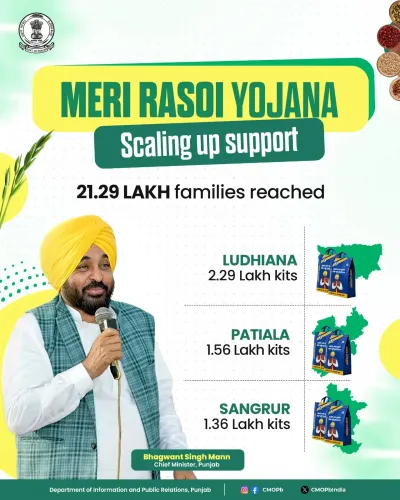
A supplementary 'Meri Rasoi' kit — containing dal, sugar, salt, turmeric, and mustard oil — will be provided every month alongside the wheat.
Beneficiaries must show a mobile SMS notification at their nearest ration depot to collect the kit. e-KYC completion is mandatory to unlock the free wheat component of the entitlement.
The move extends Punjab's AAP government pattern of digitising welfare delivery to reduce leakage and bypass patronage networks.
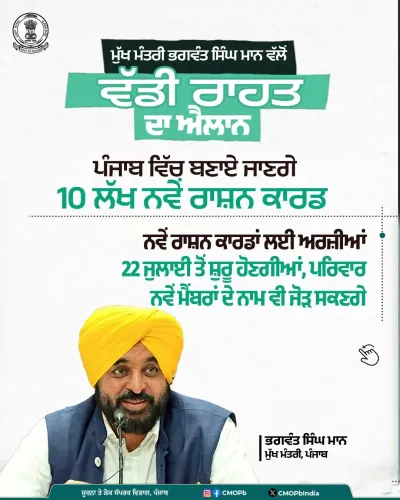
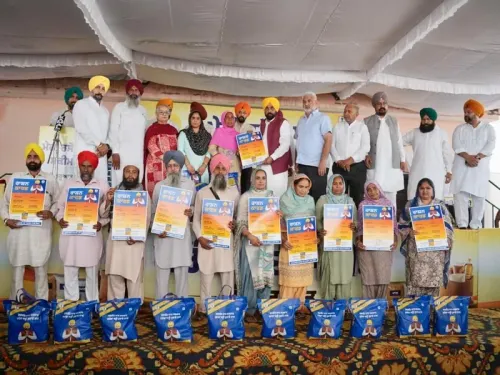
A major welfare decision landed in Punjab on Tuesday, November 17, 2026 — Punjab Chief Minister Bhagwant Mann announced the creation of 10 lakh new Smart Ration Cards for the state's most vulnerable families, promising every new beneficiary monthly free wheat and a supplementary 'Meri Rasoi' food kit, all without a single recommendation letter or middleman.
Posting in Punjabi on X, Mann declared: 'ਬਿਨਾਂ ਕਿਸੇ ਸਿਫਾਰਸ਼ ਅਤੇ ਪੂਰੀ ਪਾਰਦਰਸ਼ਤਾ ਨਾਲ' — 'without any recommendation and with complete transparency' — the new cards had been issued. That phrase carries deliberate political weight in a state where ration-card allocation has historically been dogged by patronage and exclusion errors.
What the 'Meri Rasoi' Kit Delivers Each Month
Beyond the 5 kg of free wheat already available under the central National Food Security Act, each new cardholder will receive a 'Meri Rasoi' ration kit stocked with dal (lentils), sugar, salt, turmeric, and mustard oil every month. The bundle targets the gap between a bare grain entitlement and a functional kitchen — the difference between subsistence and a cooked meal.
India's National Food Security Act, 2013 gives legal entitlement to subsidised grain for roughly two-thirds of the country's population. State governments have increasingly layered additional items on top of the central mandate, and Punjab's 'Meri Rasoi' kit fits squarely into that trend — a state-level supplement designed to convert a grain line into something closer to nutritional coverage.
SMS, Depot Counter, and e-KYC: The Three-Step Claim Process
Mann directly appealed to new beneficiaries in his post: show the mobile message received at a ration depot to collect the kit, and complete e-KYC to unlock free wheat. The twin requirements — digital notification plus biometric verification — are the AAP government's answer to ghost beneficiaries and leakage, problems that have plagued Punjab's public distribution system for decades.
Since taking office in March 2022, the Aam Aadmi Party government in Punjab has consistently framed digitisation and SMS alerts as anti-corruption tools rather than bureaucratic hurdles. The e-KYC mandate doubles as a beneficiary census in real time: completion rates at depots will be the clearest early measure of how many of the 10 lakh new cardholders the system actually reaches.
The Politics Behind 'Inqilab Zindabad'
Mann closed his post with 'ਇਨਕਲਾਬ ਜ਼ਿੰਦਾਬਾਦ!' — 'Long live the revolution!' — a rallying cry with deep roots in Punjab's political memory. The sign-off is a reminder that welfare delivery, in AAP's framing, is not administration. It is a statement of intent directed at both the opposition and the state's own bureaucratic machinery.
The watch items now are straightforward: how quickly new cardholders complete e-KYC, whether depot supply chains absorb the expanded kit demand, and whether the state budget can sustain the supplementary package beyond its launch month. The announcement is made. The distribution test begins now.
Point of View
E-KYC and SMS delivery — to simultaneously claim both generosity and efficiency. By emphasising 'no recommendations,' Mann is drawing a pointed contrast with the patronage-driven PDS of previous Punjab governments. The 'Meri Rasoi' branding, stacking kitchen staples on top of the central grain entitlement, signals a state-level ambition to exceed the NFSA floor. The real political test, however, is operational: if e-KYC completion stalls or depot supplies run short, the gap between announcement and delivery becomes the opposition's ready ammunition.
NationPress
17 Nov 2026
Frequently Asked Questions
What is the Punjab Smart Ration Card 2026?
The Punjab Smart Ration Card 2026 is a digitally issued ration card announced by Chief Minister Bhagwant Mann for 10 lakh new needy families , entitling them to free wheat and a monthly 'Meri Rasoi' food kit without any recommendation process.
What is included in the Punjab 'Meri Rasoi' ration kit?
The 'Meri Rasoi' kit includes dal, sugar, salt, turmeric, and mustard oil , distributed monthly along with 5 kg of free wheat to new Smart Ration Card holders in Punjab.
How do new ration card holders claim the Meri Rasoi kit in Punjab?
Beneficiaries must show the SMS message received on their mobile phone at the nearest ration depot to collect the kit. They must also complete e-KYC to access the free wheat entitlement.
What is e-KYC and why is it required for Punjab ration cards?
e-KYC (electronic Know Your Customer) is a biometric or digital identity verification step. The Punjab government requires it to confirm the identity of new ration card holders and prevent ghost beneficiaries from claiming free grain.
How many new ration cards has the Bhagwant Mann government issued in 2026?
Chief Minister Bhagwant Mann announced the issuance of 10 lakh (one million) new Smart Ration Cards on November 17, 2026 , with the process described as fully transparent and free of political recommendations.