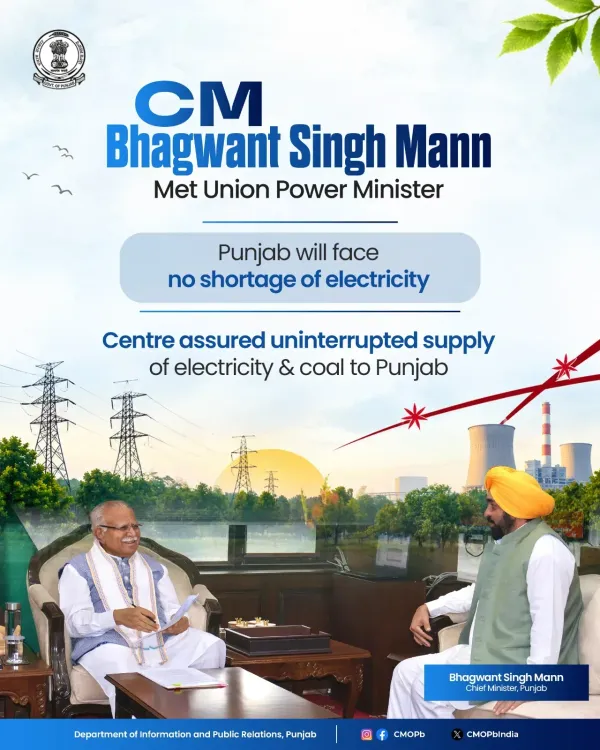
CM Bhagwant Mann: Punjab will face no power shortage after Centre talk
Synopsis
Chief Minister Bhagwant Mann declared on 16 October 2026 that Punjab faces no electricity shortage after meeting the Union Power Minister, who assured uninterrupted coal and power supplies for PSPCL — addressing a recurring centre-state pressure point in Punjab's thermal-dependent grid.
Key Takeaways
CM Bhagwant Mann met the Union Power Minister and secured assurances of uninterrupted electricity and coal supply for Punjab.
PSPCL (Punjab State Power Corporation Limited) was at the centre of the discussions, with coal logistics and power availability as key agenda items.
Punjab depends heavily on coal-fired thermal generation for agricultural, domestic, and industrial power demand.
Coal allocation and railway logistics for state utilities are managed centrally, making periodic Union-government coordination essential for Punjab.
Actual coal dispatch figures and PSPCL plant stockpiles over coming weeks will determine whether the ministerial assurance holds in practice.
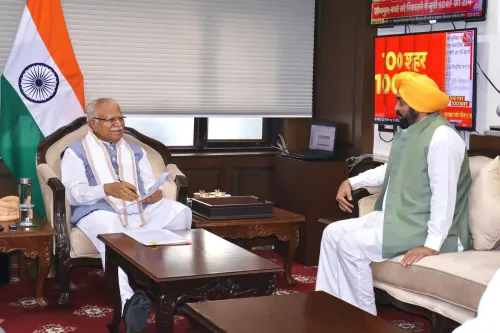
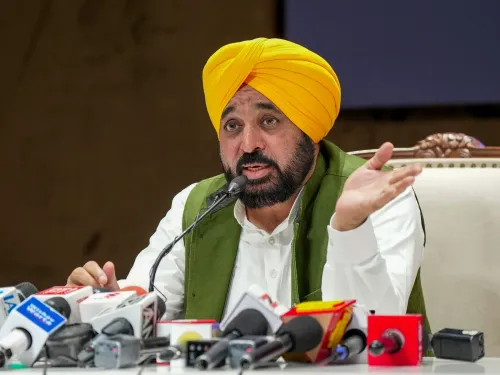
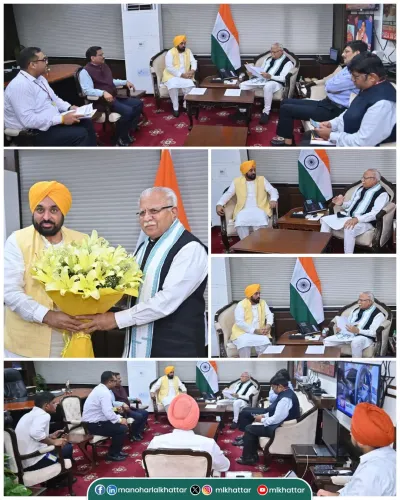
Punjab will not go dark. Chief Minister Bhagwant Mann on Friday, 16 October 2026 declared that the state faces no risk of electricity shortage after meeting the Union Power Minister in New Delhi — securing assurances of uninterrupted power and coal supplies for Punjab State Power Corporation Limited (PSPCL).
What was on the table at the meeting
The meeting centred on several pressing issues facing PSPCL, Punjab's sole state-owned power utility, with coal supply logistics and electricity availability topping the agenda. Mann confirmed the Centre has committed to ensuring that fuel supply and generation capacity will not be disrupted — a direct response to concerns that have dogged the utility ahead of high-demand seasons.
PSPCL manages the entire chain of electricity generation, transmission, and distribution across Punjab. Any disruption in coal delivery — controlled at the national level through Coal India and the railways — ripples immediately into farm pumps, household supply, and industrial units across the state.
Why coal supply to Punjab is a recurring pressure point
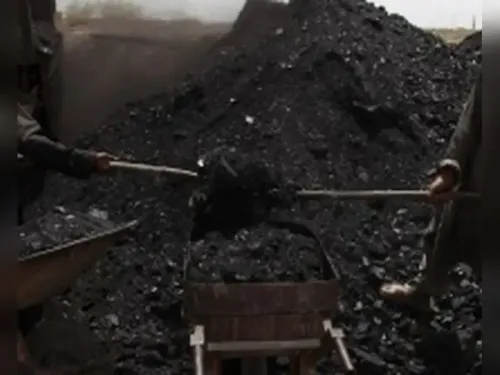
India's coal allocation system places state utilities in a position of structural dependence on the Union government. Railway rake availability, pithead dispatch from eastern coalfields, and linkage agreements are all administered centrally — meaning a state like Punjab, which relies heavily on coal-fired thermal generation to serve its large agricultural load, must periodically seek New Delhi's intervention to secure its fuel pipeline.
Punjab has navigated this dynamic in prior years as well, with successive state administrations coordinating directly with the Union Ministry of Power during seasonal demand spikes. The Aam Aadmi Party government under Mann is following the same established channel — but the public declaration of a Centre assurance signals the meeting produced a concrete outcome, not just dialogue.
What Punjab consumers and industry should watch now
Assurances at the ministerial level are the first step; actual coal rake movements to Punjab's thermal plants over the coming weeks will be the real test. PSPCL's operational stockpiles, dispatch data from Coal India, and any follow-up government statements on plant-wise inventory will indicate whether the Centre's commitment translates into sustained supply on the ground.
For Punjab's farmers, households, and factory floors, the stakes are immediate — and Mann's public announcement sets a clear accountability benchmark the state government will now be measured against.
Point of View
And it creates a visible accountability trail — if supply falters, the Centre's assurance becomes a political liability for both sides. The move fits a well-worn pattern in Indian federal energy politics, where state governments use high-profile ministerial meetings to shift moral responsibility for shortfalls upward to New Delhi. For the AAP government, which built its Punjab mandate partly on promises of reliable, affordable power, keeping the lights on is not just operational — it is existential to its brand.
NationPress
16 Oct 2026
Frequently Asked Questions
Will Punjab face electricity shortage in 2026?
Chief Minister Bhagwant Mann has stated that Punjab will face no electricity shortage, citing assurances from the Union Power Minister of uninterrupted power and coal supply to PSPCL.
What is PSPCL and why is coal supply important to it?
PSPCL, or Punjab State Power Corporation Limited, is the state-owned utility responsible for electricity generation, transmission, and distribution in Punjab. It relies significantly on coal-fired thermal plants, making a steady coal supply critical to stable power delivery.
Why does Punjab need central government help for coal supply?
Coal allocation, railway rake availability, and linkage agreements for state power utilities are managed at the central level by Coal India and the Union Ministry of Railways and Power — placing states like Punjab in structural dependence on New Delhi for fuel logistics.
What did Bhagwant Mann discuss with the Union Power Minister?
The meeting covered several issues related to PSPCL, with coal supply and electricity availability being the primary topics. The Centre assured uninterrupted supplies following the discussions.
How will we know if Punjab's power supply assurance is being fulfilled?
Coal dispatch figures from Coal India, railway rake movements to Punjab's thermal plants, and PSPCL's plant-wise stockpile updates over the coming months will be the key indicators of whether the Centre's commitment is translating into actual supply.