CM Bhajan Lal Pushes Rajasthan Tree Drive, 20 Cr Planted
Synopsis
Rajasthan CM Bhajan Lal Sharma announced on 12 June 2026 that the state has planted 20 crore of its 50 crore sapling target under PM Modi's 'Ek Ped Maa Ke Naam' campaign, with a fresh 10 crore tree drive under way. He appealed to farmers and all citizens to join the effort.
Key Takeaways
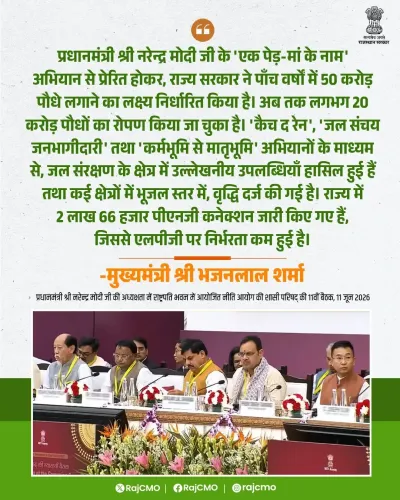
Rajasthan has planted 20 crore saplings against a five-year target of 50 crore under the state government's afforestation programme.
A 10 crore sapling plantation campaign is currently under way in 2026 .
The drive is aligned with PM Narendra Modi 's national Ek Ped Maa Ke Naam initiative, launched in 2024 .
CM Bhajan Lal Sharma made a direct appeal to farmers and all Rajasthan citizens to plant at least one tree.
The programme addresses Rajasthan 's specific environmental vulnerabilities including arid land degradation and water scarcity.
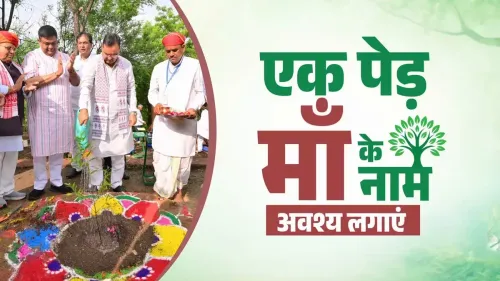
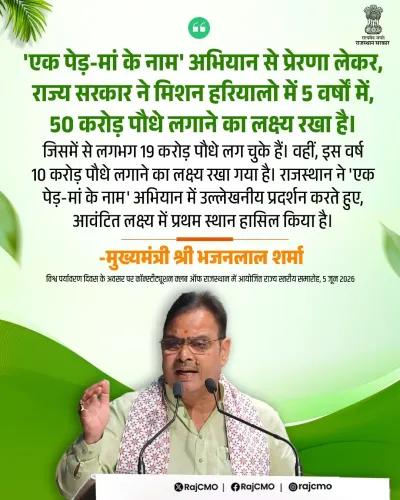
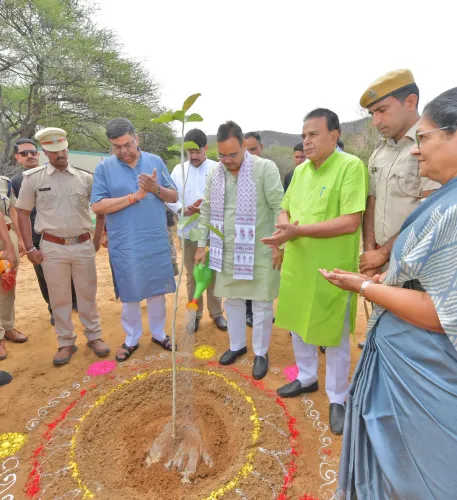
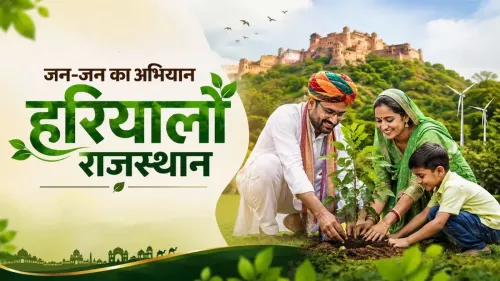
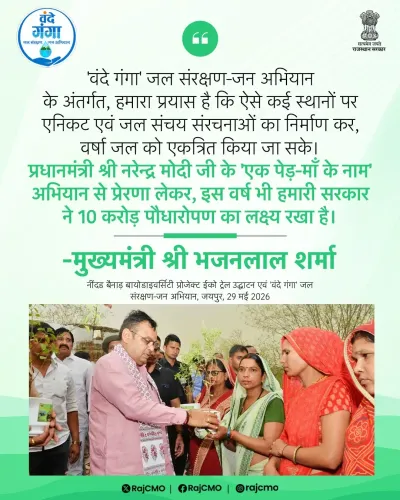
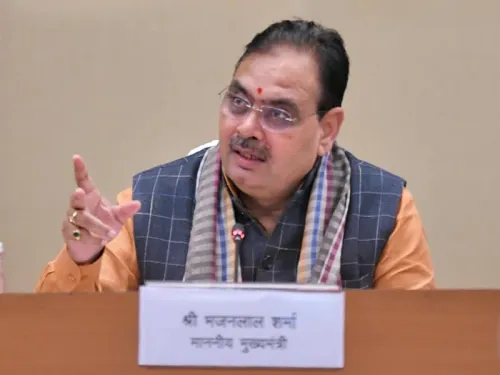
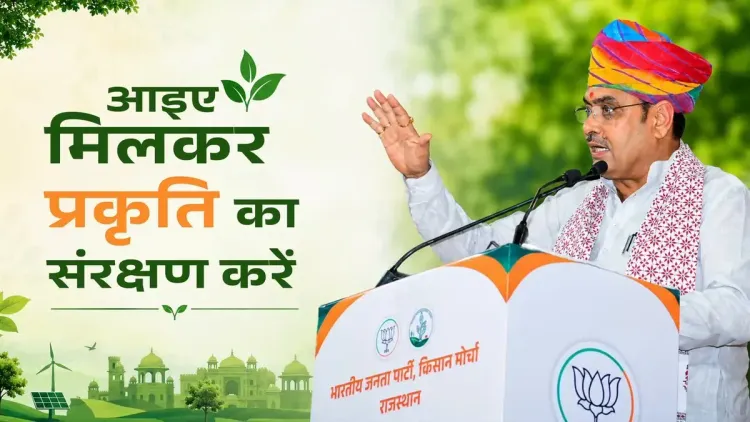
Rajasthan Chief Minister Bhajan Lal Sharma on Friday, 12 June 2026, announced that his government has planted 20 crore saplings out of a five-year target of 50 crore, and that a campaign to plant an additional 10 crore trees this year is currently under way — framing the effort as the state's commitment to Prime Minister Narendra Modi's Ek Ped Maa Ke Naam (One Tree in Mother's Name) initiative.
Context
Posting in Hindi on X, CM Sharma wrote: 'Aadarniya Pradhanmantri Shri Narendra Modi ji ke sankalp Ek Ped Maa Ke Naam ko dhyey banakar Rajasthan nirantar paryavaran sanrakshan ki or agrassar hai' — 'Making the resolve of honourable Prime Minister Narendra Modi, Ek Ped Maa Ke Naam, our guiding goal, Rajasthan is steadily advancing towards environmental protection.' He also appealed directly to farmers and all citizens of the state to participate in what he called a mahayagya — a grand collective offering — for nature, urging every person to plant at least one sapling.
The post was accompanied by a video, indicating a field-level drive is actively being documented and promoted by the state government. The appeal to farmers is notable given that Rajasthan's agrarian communities are among the most directly affected by desertification and erratic rainfall.
Policy Backdrop
Prime Minister Modi launched the Ek Ped Maa Ke Naam campaign in 2024, calling on citizens across India to plant trees as a tribute to their mothers, linking environmental action to a personal and emotional commitment. The campaign quickly became a vehicle for state governments to align their own afforestation targets with a centrally driven narrative.
Rajasthan's five-year target of 50 crore plantations sits within India's broader policy architecture of expanding forest and tree cover to meet national climate commitments. Indian states have increasingly adopted quantitative plantation targets as a way to demonstrate measurable environmental progress and coordinate mass public participation in green initiatives.
Stakeholders and Impact
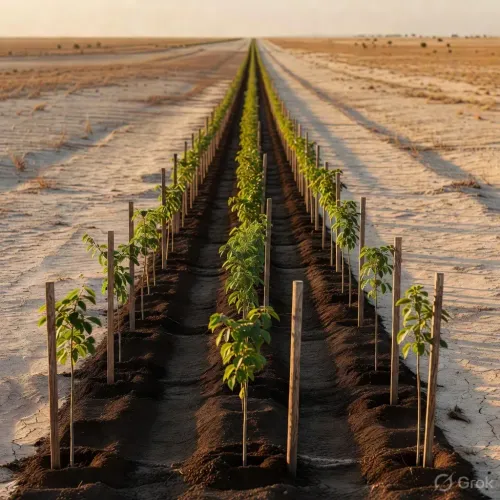
Rajasthan, a largely arid state with significant stretches of the Thar Desert, faces acute environmental pressures including land degradation, water scarcity, and rising temperatures. Large-scale afforestation programmes are seen as a long-term tool to improve soil health, groundwater recharge, and local microclimates — outcomes that directly affect the state's farming communities.
By specifically addressing kisan bhai (farmer brothers), CM Sharma is signalling that the plantation drive is not only an ecological exercise but also an agricultural welfare measure. Agro-forestry and farm-boundary tree planting can provide additional income streams and wind-break benefits to smallholders in the region.
What's Next
With 20 crore of the 50 crore target achieved and a further 10 crore sapling campaign ongoing in the current year, the government's stated trajectory would bring the cumulative total to 30 crore by the end of 2026 — leaving 20 crore to be planted in the remaining years of the five-year window. Official progress reports and survival-rate audits of already-planted saplings will be closely watched to assess whether the programme is translating into durable green cover.
The broader implication is that Rajasthan is positioning itself as a model state for implementing central environmental mandates, with mass-participation campaigns likely to intensify ahead of any national-level review of India's afforestation commitments under its climate pledges.
Point of View
Reinforcing the BJP's narrative of coordinated governance from Delhi to the state capitals. By citing a concrete milestone — 20 crore of 50 crore — the communication moves beyond symbolism into accountability, inviting scrutiny of survival rates and actual green-cover gains. The appeal to farmers signals an attempt to broaden the programme's constituency beyond urban environmentalism into rural self-interest, which is politically significant in a state where agrarian sentiment shapes elections. This pattern of states adopting and amplifying central schemes as their own achievements is likely to intensify as India's climate commitments come under greater international review.
NationPress
14 Sept 2026
Frequently Asked Questions
What is the Ek Ped Maa Ke Naam campaign?
'Ek Ped Maa Ke Naam' — meaning 'One Tree in Mother's Name' — is a national tree plantation initiative launched by Prime Minister Narendra Modi in 2024, encouraging every Indian citizen to plant a tree as a tribute to their mother and contribute to environmental protection.
How many trees has Rajasthan planted under its five-year target?
According to CM Bhajan Lal Sharma's announcement on 12 June 2026, Rajasthan has planted 20 crore saplings out of a five-year target of 50 crore, with an ongoing campaign to plant 10 crore more trees in the current year.
What is Rajasthan's total tree plantation target?
The Rajasthan government set a target of planting 50 crore (500 million) saplings over five years, aligned with PM Modi's Ek Ped Maa Ke Naam campaign and India's broader afforestation goals.
Why did CM Bhajan Lal Sharma appeal to farmers specifically?
CM Sharma addressed farmers directly because Rajasthan's agrarian communities are among those most affected by land degradation and erratic rainfall. Tree planting along farm boundaries and in arid areas can improve soil health, support water retention, and provide additional income through agro-forestry.
What environmental challenges does Rajasthan face that make tree planting important?
Rajasthan is a largely arid state with significant desert terrain, making it vulnerable to land degradation, water scarcity, and rising temperatures. Large-scale afforestation is seen as a long-term strategy to improve local microclimates, groundwater recharge, and soil quality across the state.