CM Bhajan Lal Hails 50 Crore Indians Escaping Poverty
Synopsis
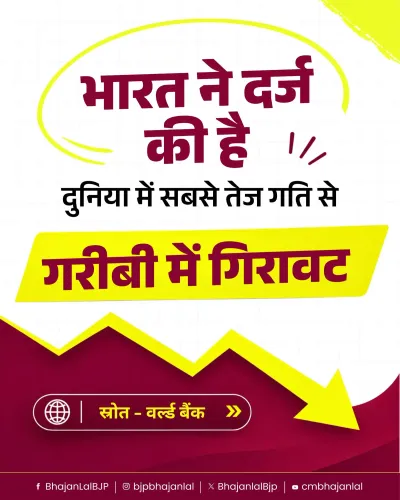
Rajasthan CM Bhajan Lal Sharma hailed the lifting of 50 crore Indians out of poverty in 12-13 years as an unprecedented national achievement, crediting PM Modi's governance and linking the milestone to India's rising global stature.
Key Takeaways
Rajasthan CM Bhajan Lal Sharma posted on November 19, 2026 praising India's poverty-reduction record.
The post cites 50 crore (500 million) Indians exiting poverty in 12–13 years .
The metric aligns with India's Multidimensional Poverty Index framework, tracked by NITI Aayog since its 2021 baseline report.
The post credits Prime Minister Narendra Modi and frames the achievement as evidence of 'New India's capability and resolve.' The post is part of a consistent pattern of BJP state leaders amplifying central government welfare claims as part of national-progress messaging.
The specific figure's exact source dataset has not been independently verified; the next NITI Aayog MPI update will be a key reference point.
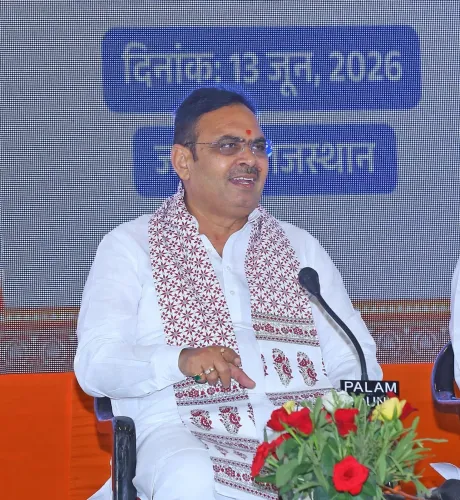
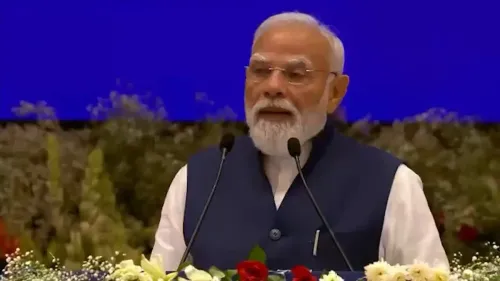
A milestone in India's development story is being amplified loud and clear from Jaipur: Rajasthan Chief Minister Bhajan Lal Sharma on Thursday, November 19, 2026, cited a historic achievement in poverty reduction, crediting Prime Minister Narendra Modi's governance for lifting an extraordinary number of Indians out of deprivation over just over a decade.
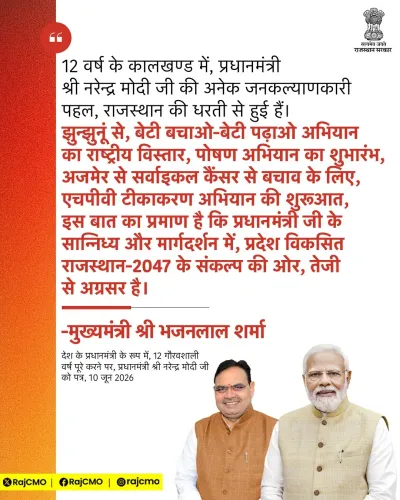
Sharma wrote, in translation: 'विश्व पटल पर भारत की बढ़ती प्रगति और गरीबी उन्मूलन की दिशा में मिली ऐतिहासिक सफलता, नए भारत के सामर्थ्य और संकल्प का प्रमाण है' — 'India's growing progress on the world stage and the historic success in poverty alleviation is proof of the capability and resolve of the new India.' The core claim: in just 12–13 years, 50 crore (500 million) Indians have moved out of poverty — a feat he calls an unprecedented achievement in the country's development journey.
The Metric Behind the Milestone
The figure draws from India's engagement with multidimensional poverty measurement — a framework that goes beyond income to track deprivation across health, education, and living standards simultaneously. NITI Aayog's National Multidimensional Poverty Index (MPI), with its 2021 baseline report, established the official tracking mechanism for this kind of holistic poverty accounting. Under this lens, a household escaping poverty means consistent access to sanitation, nutrition, schooling, and housing — not just a wage crossing a line.
It is precisely this broader lens that made the government's poverty-reduction numbers appear sharper than older income-only benchmarks. The MPI framework, endorsed by global institutions, gave India's welfare data a credibility argument that purely domestic metrics could not.
BJP's State–Centre Messaging Machine
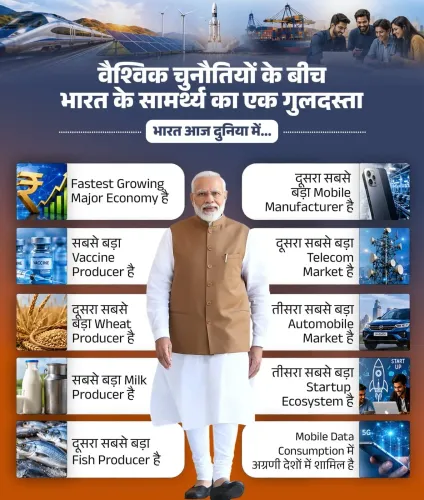
Sharma's post is a textbook example of how the BJP's state leadership functions as an amplification layer for central government achievements. Chief ministers and state leaders routinely channel welfare outcome data upward to reinforce the national narrative — tying local governance to Prime Minister Modi's overarching brand of development. The framing here is deliberate: 'world stage' positioning elevates the claim from domestic politics to India's global standing, a rhetorical move the party has used consistently since 2014.
The claim's precision — the specific window of 12 to 13 years and the round number of 50 crore — also reflects a party communications discipline: round, memorable, attributable. Whether the exact dataset underpinning the figure is independently verifiable remains a question the next NITI Aayog MPI update and the forthcoming Economic Survey will either confirm or complicate.
What the Number Means at Human Scale
Five hundred million people is not an abstraction. It is roughly four times the population of Germany, nearly one and a half times the population of the United States. If even directionally accurate, the scale of movement out of multidimensional poverty would represent one of the largest welfare shifts any nation has recorded in the modern era. The stakes of getting the number right — and transparent — are as large as the number itself.
Point of View
Binding regional political capital to the Prime Minister's national brand. The choice of multidimensional poverty — rather than income poverty — as the benchmark is itself a policy-communications decision, since MPI numbers tend to show steeper declines. The unresolved question is source transparency: until the specific dataset is publicly cited, the 50-crore figure sits in the contested space between political claim and verifiable statistic. The next NITI Aayog MPI release will be the real test of the number.
NationPress
19 Nov 2026
Frequently Asked Questions
What is the claim about 50 crore Indians coming out of poverty?
Rajasthan CM Bhajan Lal Sharma cited a figure of 50 crore (500 million) Indians exiting poverty in 12-13 years, attributing the achievement to Prime Minister Modi's governance. The figure is associated with India's Multidimensional Poverty Index tracking, though the exact source dataset for this specific number has not been independently verified.
What is India's Multidimensional Poverty Index?
The National Multidimensional Poverty Index (MPI) is a measure developed by NITI Aayog, with a baseline report released in 2021, that tracks poverty across health, education, and living standards — not just income. It allows for a broader, more holistic assessment of whether households have escaped deprivation.
Why do BJP state leaders often post about central government welfare achievements?
State-level BJP leaders routinely amplify central government welfare data to reinforce the national narrative of progress linked to PM Modi's leadership. It is a coordinated communications strategy that ties local political capital to the broader 'New India' brand.
Is the claim of 500 million people leaving poverty in India verified?
The figure has not been independently verified from widely established public records without a specific source dataset. The next NITI Aayog MPI report update and the forthcoming Economic Survey are expected to provide fresh data points.
What does Bhajan Lal Sharma's post say about India's global standing?
Sharma framed India's poverty-reduction achievement as proof of 'New India's capability and resolve on the world stage,' linking domestic welfare progress to India's rising international stature — a rhetorical posture consistent with BJP's development messaging since 2014.