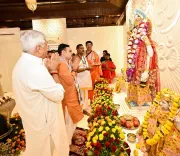
CM Bhajan Lal joins Ramkatha, Navakundi Mahayajna in Kelawa Khurd

Synopsis
Rajasthan Chief Minister Bhajan Lal Sharma joined a Ramkatha and Navakundi Mahayajna at Kelawa Khurd on Navratri Mahasaptami, offering Vedic oblations alongside Union Minister Gajendra Singh Shekhawat and state cabinet members, while praising Keshav Priya Gaushala Seva Samiti for its cow-protection mission.
Key Takeaways
CM Bhajan Lal Sharma attended the Ramkatha and Navakundi Mahayajna at village Kelawa Khurd in Bawdi constituency on 17 October 2026 (Mahasaptami).
The event was held under the Keshav Priya Gaushala Seva Samiti in the presence of Sant Shri Murlidhar Ji Maharaj .
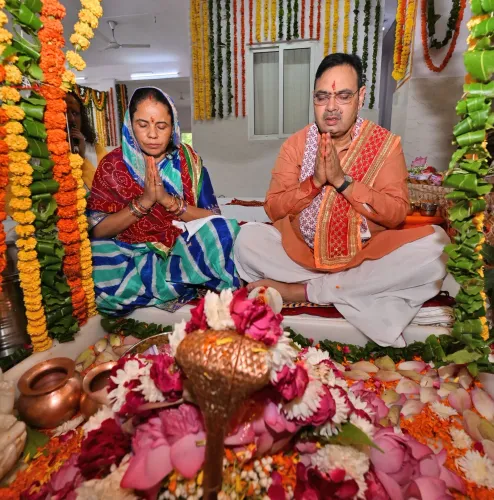
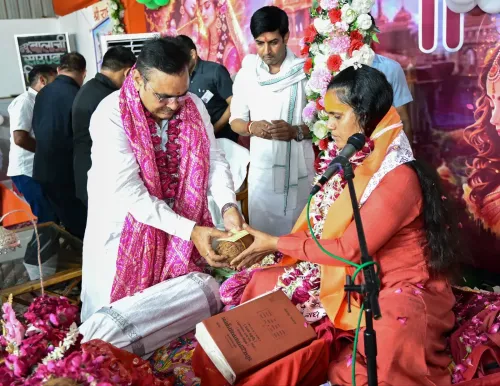
The CM offered oblations into nine sacred fire altars amid Vedic chanting and prayed for the health, peace, and prosperity of all Rajasthan residents.
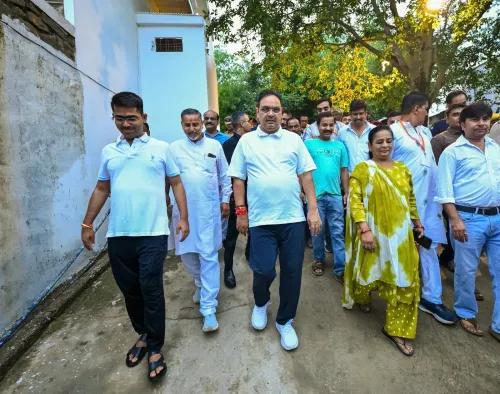
Union Minister for Culture and Tourism Gajendra Singh Shekhawat and several Rajasthan state cabinet ministers attended alongside the CM.
Sharma commended the samiti's work in cow protection, compassion for living beings, and promotion of Indian culture .
On the auspicious occasion of Mahasaptami during Shardiya Navratri, Rajasthan Chief Minister Bhajan Lal Sharma joined a divine Ramkatha and Navakundi Mahayajna at village Kelawa Khurd in the Bawdi constituency on Saturday, 17 October 2026 — offering oblations into nine sacred fire pits and praying for the wellbeing of every resident of the state.
The ceremony at Kelawa Khurd: what unfolded
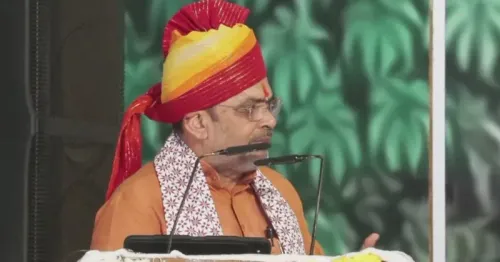
The event was organised under the aegis of the Keshav Priya Gaushala Seva Samiti, in the revered presence of Sant Shri Murlidhar Ji Maharaj. The Chief Minister participated in the Navakundi Mahayajna — a Vedic ritual involving nine consecrated fire altars — offering oblations amid the chanting of sacred mantras. He later listened to the Ramkatha, a discourse on the ideals of Maryada Purushottam Prabhu Shri Ram, describing the experience as one of spiritual peace and inner elevation. 'Adhyatm va aatmik shanti ki anubhuti hui' (a feeling of spirituality and inner peace was experienced), the CM noted in his post.
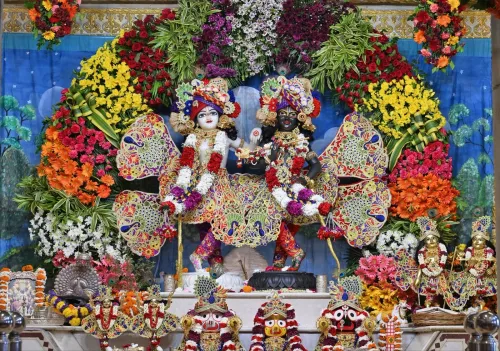
Sharma offered prayers to Jagat Janani Maa Bhagwati, Prabhu Shri Ram, and the assembled saints, seeking good health, happiness, peace, and all-round prosperity for the people of Rajasthan. The gathering brought together a substantial cross-section of public representatives and dignitaries from the region.
Union Minister and state cabinet join the CM
Union Minister for Culture and Tourism Gajendra Singh Shekhawat — the BJP MP from Jodhpur — was present alongside cabinet and state ministers of the Rajasthan government, as well as other elected representatives. The presence of a Union Minister at what is, on one level, a local gaushala event underlines how Navratri gatherings in Rajasthan have become significant nodes on the political-cultural calendar.
Keshav Priya Gaushala Seva Samiti and the cow-protection message
The Chief Minister used the occasion to specifically praise the Keshav Priya Gaushala Seva Samiti, calling its work in cow protection, compassion for living beings, and the promotion of Indian culture both commendable and worth emulating. In Hindu tradition, the cow — Gau Mata — holds a place of reverence, and gaushala committees occupy an important space in BJP's grassroots cultural outreach in Rajasthan. Sharma's endorsement from the CM's chair gives the samiti visible state-level recognition.
For the ruling BJP in Rajasthan, such public participation is not merely devotional — it signals a consistent alignment with the cultural and spiritual priorities that resonate deeply with the state's large Hindu electorate. The ritual setting, the saint's presence, the Navratri timing, and the Ramkatha together create a moment that is as much about cultural affirmation as it is about personal faith.
With Navratri in full swing across Rajasthan and ministers from both state and centre in attendance, the Kelawa Khurd mahayajna stands as a marker of how deeply religious calendars and political visibility intersect in the state — and the season is far from over.
Point of View
With cow protection serving as a recurring cultural touchstone. As the state government approaches its third year, such high-visibility participation at the grassroots reinforces the administration's cultural identity ahead of future electoral cycles.
NationPress
17 Oct 2026
Frequently Asked Questions
What is a Navakundi Mahayajna?
A Navakundi Mahayajna is a Vedic fire ritual conducted using nine consecrated fire pits (kunds). Priests and participants offer oblations (ahutis) into each fire altar while chanting sacred mantras, with the ceremony typically organised for collective wellbeing and spiritual merit.
Where is Kelawa Khurd village located?
Kelawa Khurd is a village in the Bawdi (Bawdi constituency) area of Rajasthan, where the Keshav Priya Gaushala Seva Samiti organised the Ramkatha and Mahayajna event attended by CM Bhajan Lal Sharma.
Who is Keshav Priya Gaushala Seva Samiti?
Keshav Priya Gaushala Seva Samiti is a local Rajasthan organisation that operates a gaushala (cow shelter) and organises community religious events focused on cow protection, compassion for living beings, and the promotion of Indian cultural traditions.
Who else attended the event with CM Bhajan Lal Sharma?
Union Minister for Culture and Tourism Gajendra Singh Shekhawat, Rajasthan cabinet minister Jogaram Patel, state minister K.K. Vishnoi, and several other elected representatives and dignitaries attended the event.
What is Shardiya Navratri Mahasaptami?
Mahasaptami is the seventh day of Shardiya Navratri, the nine-night Hindu festival held in autumn celebrating Goddess Durga. It is considered among the most sacred days of the festival, marked by special pujas, yajnas, and religious discourses.