Jal Shakti Minister Paatil chairs Jaipur irrigation conclave
Synopsis
Union Jal Shakti Minister C. R. Paatil convened India's first regional irrigation efficiency conference in Jaipur on 17 October 2026, uniting state officials, agricultural scientists, and farmers to advance PM Modi's water conservation vision through modern technology and participatory management.
Key Takeaways
India's first regional irrigation efficiency conference was held in Jaipur on 17 October 2026 , convened by the Jal Shakti Ministry .
Participants included state government representatives, agricultural scientists, progressive farmers, and voluntary organisations from multiple states.
The conclave focused on modern irrigation technologies, effective policy implementation, and water-saving best practices.
The event is anchored in two flagship schemes: Pradhan Mantri Krishi Sinchayee Yojana (2015) and Jal Shakti Abhiyan (2019) .
Minister Paatil outlined a three-pillar strategy of technology adoption, better management systems, and public participation ( jan-bhagidari ).
Further regional conferences across other states are expected as part of a decentralised implementation drive.
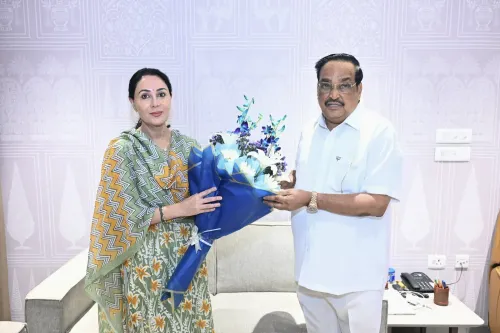
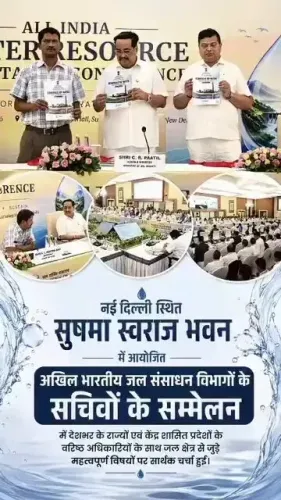
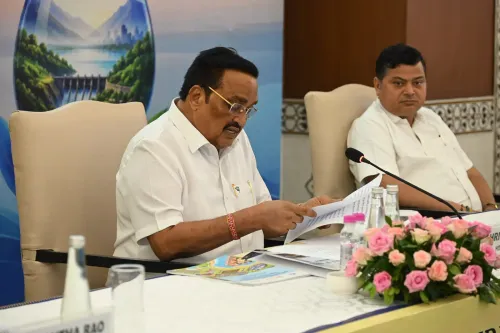
Every drop of water that reaches a farm carries a farmer's labour, hope, and livelihood — and on Saturday, 17 October 2026, Union Jal Shakti Minister C. R. Paatil made that connection the centrepiece of India's first regional conference on irrigation water-use efficiency, held in Jaipur, Rajasthan.
Jaipur's first regional conclave on irrigation efficiency
The conference brought together a wide cross-section of stakeholders — representatives from multiple state governments, agricultural scientists, progressive farmers, and voluntary organisations — to deliberate on modern irrigation technologies, effective policy implementation, and superior water-saving practices. Paatil described the gathering as a forum for 'sarthak vichar-vimarsh' (meaningful deliberation), signalling that the ministry intends these regional conclaves to be substantive working sessions rather than ceremonial showcases.
The minister framed the event explicitly within Prime Minister Narendra Modi's broader vision of water conservation, positioning the Jal Shakti Ministry as the operational arm translating that vision into farm-level outcomes. The ministry's stated priority: making agriculture more empowered and sustainable through modern irrigation techniques and the judicious use of water.
Two flagship schemes powering the push
The Jaipur conclave sits atop a decade-long policy architecture. The Pradhan Mantri Krishi Sinchayee Yojana (PMKSY), launched in 2015, set the original ambition — expanding irrigation coverage and promoting water-use efficiency across India's diverse agro-climatic zones. Four years later, the Jal Shakti Abhiyan (2019) deepened the effort by targeting water conservation and groundwater recharge in identified water-stressed districts. The Jaipur conference represents the next layer: decentralised, region-specific implementation forums where state actors and scientists can align on ground realities.
Technology, management, and people — the three-pillar formula
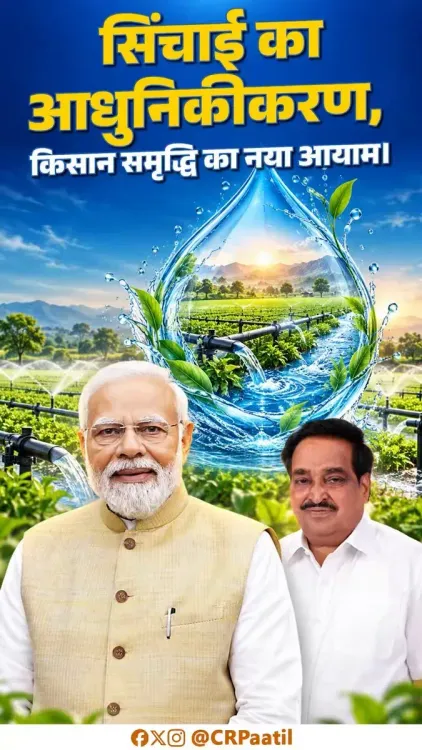
Paatil's post outlined a three-pronged strategy: technology adoption, better management systems, and jan-bhagidari (public participation). The combination is deliberate. Technology alone — drip irrigation, micro-sprinklers, sensor-based soil-moisture monitoring — cannot scale without trained farmers and supportive local institutions. Regional conferences are the ministry's mechanism for closing that gap, building consensus between scientists who design the solutions and farmers who must live with them.
Paatil closed with a crisp pledge: 'Har boond ka sadupyog, samridh kheti ka sankalp' — 'The resolve to use every drop wisely is the resolve for prosperous farming.' Subsequent regional conferences are expected to follow, extending the dialogue to other states and agro-climatic regions.
If the Jaipur model holds, India's water-efficiency agenda will move from national policy documents to state-level action plans — one regional conclave at a time.
Point of View
Participatory implementation forums — a model that acknowledges the gap between national irrigation targets and state-level execution. By convening agricultural scientists alongside farmers and NGOs, the Jal Shakti Ministry is attempting to compress the technology-adoption cycle that has historically slowed PMKSY's on-ground impact. The 'regional conference' format also serves a political purpose: it keeps the water-efficiency narrative visible and ministerially owned ahead of future electoral cycles in agrarian states. Whether the dialogue translates into measurable increases in irrigation water-use efficiency will depend on follow-through at the state level — precisely where past schemes have stalled.
NationPress
17 Oct 2026
Frequently Asked Questions
What happened at the Jaipur irrigation conference in October 2026?
India's first regional conference on irrigation water-use efficiency was held in Jaipur on 17 October 2026, convened by Union Jal Shakti Minister C. R. Paatil. It brought together state representatives, agricultural scientists, progressive farmers, and NGOs to discuss modern irrigation technologies, policy implementation, and water-saving practices.
What is the Pradhan Mantri Krishi Sinchayee Yojana?
Pradhan Mantri Krishi Sinchayee Yojana (PMKSY) is a central government scheme launched in 2015 to expand irrigation coverage across India and promote water-use efficiency in agriculture, operating under the Jal Shakti Ministry.
What is Jal Shakti Abhiyan?
Jal Shakti Abhiyan is a government campaign launched in 2019 focused on water conservation and groundwater recharge in identified water-stressed districts across India, implemented by the Jal Shakti Ministry.
What is C. R. Paatil's role in water conservation?
C. R. Paatil is India's Union Jal Shakti Minister, responsible for overseeing water resources management, irrigation efficiency, and the implementation of national water conservation schemes including PMKSY and Jal Shakti Abhiyan.
Will more regional irrigation conferences be held after Jaipur?
Yes. The Jaipur event was described as the 'first' regional conference, indicating that subsequent conclaves covering other states and agro-climatic regions are planned as part of the ministry's decentralised implementation strategy.