CM Bhajan Lal Backs Modi's Khadi, Vocal for Local Call
Synopsis
Rajasthan Chief Minister Bhajan Lal Sharma on 27 July 2026 echoed PM Modi's Mann Ki Baat call to adopt Khadi and champion Vocal for Local, framing Swadeshi consumption and artisan empowerment as pillars of Atmanirbhar Bharat and the Viksit Bharat 2047 vision.
Key Takeaways
Rajasthan CM Bhajan Lal Sharma publicly amplified PM Modi's Mann Ki Baat appeal on 27 July 2026 .
The post urged citizens to adopt Khadi and make 'Vocal for Local' a personal and national pledge.
Atmanirbhar Bharat Abhiyan , launched in May 2020 , is the policy framework underpinning the Swadeshi push.
The Khadi and Village Industries Commission (KVIC) has received renewed central funding since 2014 to support artisan clusters.
Key beneficiaries include local artisans, village weavers , and MSME units in Rajasthan and across India.
The messaging aligns with the broader Viksit Bharat 2047 roadmap emphasising indigenous production and rural employment.
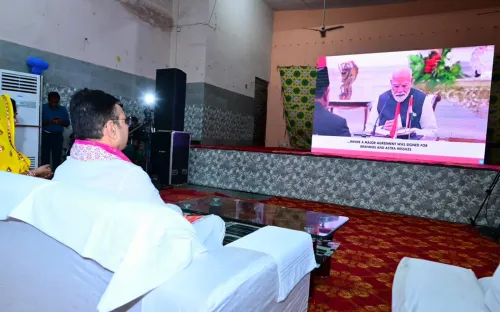
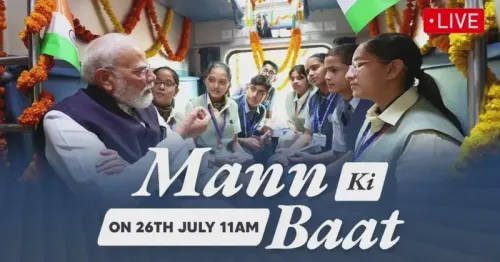
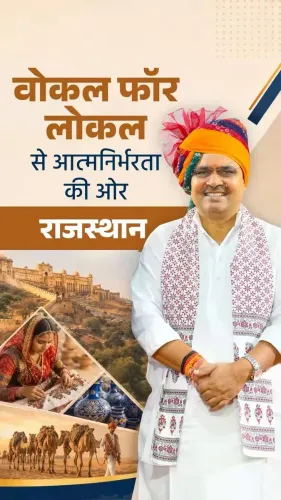
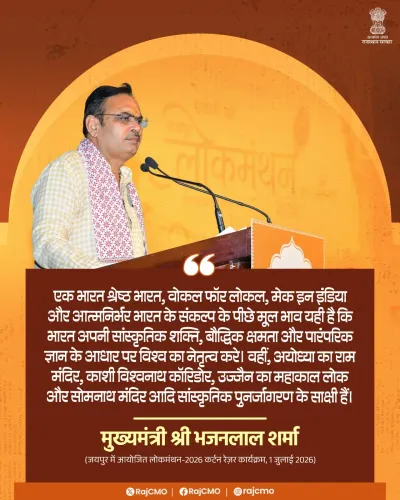
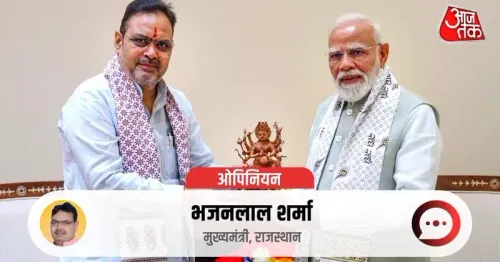
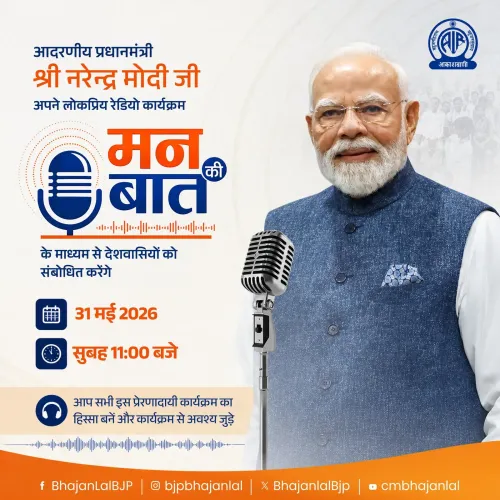
Rajasthan Chief Minister Bhajan Lal Sharma on Sunday, 27 July 2026, amplified Prime Minister Narendra Modi's appeal from the latest episode of Mann Ki Baat, urging citizens to adopt Khadi and make 'Vocal for Local' a national resolve. Sharma called embracing indigenous products and empowering local artisans the 'strong foundation of a developed India.'
Context
In the post, Sharma wrote that Prime Minister Modi had, in his popular programme Mann Ki Baat, called on the public to adopt Khadi and make 'Vocal for Local' — 'a pledge of every citizen.' Sharma echoed that message directly, saying: 'Let us all adopt Swadeshi and become participants in building an Atmanirbhar Bharat.' The post was accompanied by a video and tagged with #MannKiBaat and #VocalForLocal.
Mann Ki Baat is a monthly radio address Prime Minister Modi has conducted since October 2014, regularly using it to promote economic self-reliance, cultural pride, and citizen participation in government initiatives.
Policy Backdrop
The Atmanirbhar Bharat Abhiyan, launched in May 2020, established self-reliance as a central pillar of India's economic policy, targeting domestic manufacturing and reducing import dependence. The 'Vocal for Local' slogan emerged from that same period as PM Modi used Mann Ki Baat episodes to urge Indians to prefer locally made goods, particularly in the aftermath of the pandemic.
The Khadi and Village Industries Commission (KVIC), a statutory body under the Ministry of Micro, Small and Medium Enterprises, has seen renewed central funding since 2014 to expand artisan clusters and improve market linkages. This sits alongside the Make in India initiative, launched in September 2014, which positioned India as a global manufacturing hub and gave fresh institutional weight to indigenous production.
Stakeholders and Impact
The primary beneficiaries of this policy emphasis are local artisans, village weavers, MSME units, and rural entrepreneurs — segments of the unorganised economy that depend on consumer preference for handmade and locally sourced goods. Khadi, in particular, is a labour-intensive sector where demand directly translates into artisan incomes and village-level employment.
For Rajasthan, a state with a rich tradition of handicrafts, handloom weaving, and artisan communities, the Chief Minister's endorsement carries direct policy significance. State procurement targets for Khadi and credit schemes for artisans are instruments through which such messaging can be converted into measurable economic support.
What's Next
Observers will watch whether Rajasthan's forthcoming budget announcements include specific Khadi procurement targets or expanded artisan credit lines aligned with the Centre's Viksit Bharat 2047 roadmap. KVIC marketing campaigns ahead of the festive season — when demand for handloom and traditional goods typically spikes — could also follow. The coordinated messaging between New Delhi and BJP-governed states suggests a sustained push to mainstream Swadeshi consumption as both an economic and cultural priority in the months ahead.
Point of View
Converting a Prime Minister's radio address into amplified state-level political capital. By framing Khadi adoption and Vocal for Local as a 'strong foundation of Viksit Bharat,' he ties Rajasthan's identity to the ruling party's national economic narrative ahead of potential budget and scheme announcements. The move also serves a domestic political purpose — reinforcing BJP's Swadeshi credentials in a state with a large artisan and MSME constituency. It reflects a broader pattern where state chief ministers use social media to echo and extend central government messaging, creating a unified ideological front on economic self-reliance.
NationPress
26 Jul 2026
Frequently Asked Questions
What did CM Bhajan Lal Sharma say about Mann Ki Baat?
Sharma endorsed PM Modi's appeal from the latest Mann Ki Baat episode, calling on citizens to adopt Khadi and make Vocal for Local a national resolve, and urged everyone to participate in building Atmanirbhar Bharat.
What is Vocal for Local and who started it?
Vocal for Local is a campaign promoted by Prime Minister Narendra Modi from 2020 onwards, encouraging Indians to buy domestically made products to support local artisans, MSMEs, and reduce import dependence.
What is Atmanirbhar Bharat Abhiyan?
Atmanirbhar Bharat Abhiyan is a self-reliance campaign launched by the central government in May 2020 with the aim of boosting domestic manufacturing, supporting MSMEs, and reducing India's dependence on imports.
What is the role of KVIC in promoting Khadi?
The Khadi and Village Industries Commission (KVIC) is a statutory body under the Ministry of MSME that promotes Khadi and village industries, expands artisan clusters, and improves market linkages for rural producers.
How does Rajasthan benefit from the Khadi and Vocal for Local push?
Rajasthan has a significant base of artisans, handloom weavers, and MSME units who stand to benefit from increased consumer demand for local goods, along with potential state budget allocations for Khadi procurement and artisan credit schemes.