CM Bhajan Lal Backs Fast-Track Courts for Paper Leak Cases

Synopsis
Rajasthan Chief Minister Bhajan Lal Sharma has lauded the central government's decision to establish fast-track courts for paper leak cases, saying the move reflects PM Modi's unwavering commitment to delivering justice for India's crores of competitive exam aspirants and building a merit-based Developed India.
Key Takeaways
Rajasthan CM Bhajan Lal Sharma publicly backed the central government's decision to set up fast-track courts specifically for paper leak cases on 23 July 2026 .
The fast-track courts are intended to ensure swift hearings and the strictest action against those found guilty of examination fraud.
The central government's stated position is that no guilty party will be spared at any cost — a message directed at those who compromise the futures of student aspirants.
The move builds on the Public Examinations (Prevention of Unfair Means) Act, 2024 , which introduced stringent penalties for malpractices in public exams.
The operationalisation of these courts — including case registration and disposal timelines — will be closely watched by exam aspirants and civil society.
CM Sharma framed the initiative as a pillar of the 'Viksit Bharat' (Developed India) vision, rooted in protecting merit-based opportunity for youth.
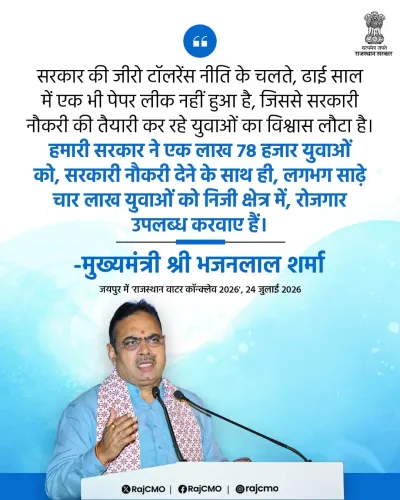
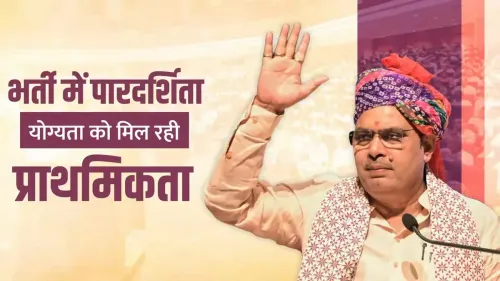
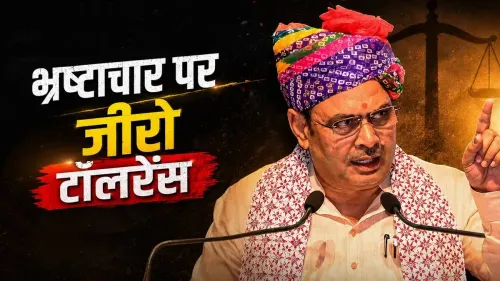
Rajasthan Chief Minister Bhajan Lal Sharma on Thursday, 23 July 2026, praised Prime Minister Narendra Modi's decision to establish fast-track courts for paper leak cases, calling it a historic step that reflects the central government's deep commitment to protecting the interests and futures of India's youth.
Context
In his post, CM Sharma wrote that the welfare and bright future of youth has always been the top priority for Prime Minister Modi. He described the decision to set up fast-track courts for serious crimes like paper leaks as a 'ऐतिहासिक निर्णय' ('historic decision'), and evidence of Modi's deep sensitivity toward youth, his unwavering resolve, and his firm commitment to good governance.
The post further stated that this system will ensure swift hearings and the strictest possible action against the guilty, so that those who tamper with the hard work, talent, and dreams of crores of young Indians receive prompt and stringent punishment. The central government's message, according to CM Sharma, is unambiguous: 'किसी भी दोषी को किसी भी कीमत पर बख्शा नहीं जाएगा' ('no guilty party will be spared at any cost').
Policy Backdrop
The announcement builds on a legislative foundation laid by the Public Examinations (Prevention of Unfair Means) Act, 2024, which was enacted to curb malpractices in public examinations across India. That law introduced stringent penalties for paper leaks, impersonation, and other forms of cheating in government-conducted competitive exams.
Fast-track courts, as a judicial mechanism, have previously been deployed in India to expedite trials in cases involving serious offences. Applying this model to paper leak crimes signals a move toward treating examination fraud not as a minor administrative lapse, but as a grave criminal matter warranting urgent judicial attention. The operationalisation of such courts — including case registration and disposal timelines — will be a key metric to watch.
Stakeholders and Impact
The primary beneficiaries are crores of competitive exam aspirants across India who prepare for recruitment examinations conducted by bodies such as the Staff Selection Commission, state public service commissions, and railway recruitment boards. Repeated paper leak scandals in recent years have forced cancellations and re-examinations, causing significant disruption and mental distress to candidates.
CM Sharma framed the Modi government's resolve as an 'unshakeable commitment' — 'अटल संकल्प' — to provide youth with a fair platform, give their aspirations new wings, and deliver justice for their hard work. He concluded that this is the strong foundation of a 'विकसित भारत' ('Developed India') and a true commitment to the power of youth.
What's Next
Attention will now turn to the formal notification and operationalisation of the fast-track courts, including which categories of paper leak cases will fall under their jurisdiction and the timelines set for trial completion. State governments, including Rajasthan, are expected to coordinate with the Centre on examination security frameworks and prosecution machinery.
If implemented effectively, the fast-track court model could set a precedent for how India's judicial system handles examination fraud, reinforcing the principle that merit-based access to public employment and education must be protected with the full force of the law.
Point of View
Amplifying a central government initiative at the state level to reinforce the BJP's 'youth-first' governance narrative ahead of what remains a sensitive public issue. Paper leak scandals have repeatedly embarrassed administrations across party lines, and the fast-track court decision is designed to signal a decisive break from that pattern. By invoking the 'Viksit Bharat' framework, the messaging connects a judicial mechanism to a much larger national development vision, elevating it beyond a routine law-and-order measure. The real test, however, will be whether these courts are operationalised swiftly and whether conviction rates actually improve — outcomes that will determine whether this becomes a governance milestone or another announcement without follow-through.
NationPress
22 Oct 2026
Frequently Asked Questions
What are fast-track courts for paper leak cases in India?
Fast-track courts for paper leak cases are dedicated judicial bodies designed to expedite trials against individuals accused of leaking examination papers or committing other forms of examination fraud, ensuring swifter verdicts than regular courts.
What is the Public Examinations Prevention of Unfair Means Act 2024?
The Public Examinations (Prevention of Unfair Means) Act, 2024 is a central law enacted to prevent cheating, paper leaks, impersonation, and other malpractices in government-conducted public examinations, with stringent penalties for the guilty.
Why did CM Bhajan Lal Sharma praise PM Modi on paper leak courts?
Rajasthan CM Bhajan Lal Sharma praised PM Modi's decision to establish fast-track courts for paper leak cases, saying it demonstrates the Prime Minister's deep commitment to protecting the futures and hard work of crores of young exam aspirants in India.
Which exams are affected by paper leaks in India?
Paper leaks have affected several major competitive examinations in India, including those conducted by state public service commissions, the Staff Selection Commission, and railway recruitment boards, leading to cancellations and re-examinations that disrupt lakhs of aspirants.
What is Viksit Bharat and how does it relate to youth policy?
'Viksit Bharat,' or Developed India, is the Modi government's overarching vision for India's development by 2047. CM Sharma linked the fast-track court decision to this vision, arguing that protecting merit-based opportunity for youth is a foundational pillar of that goal.