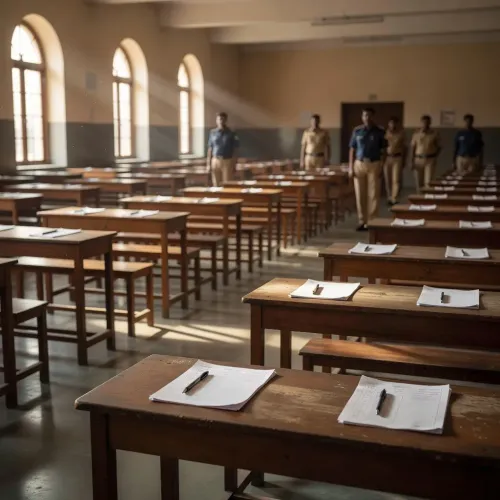
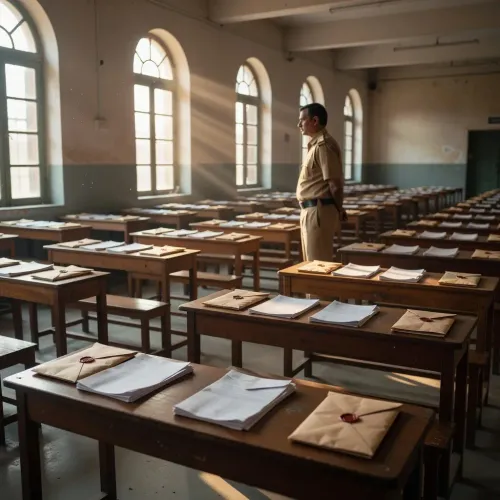
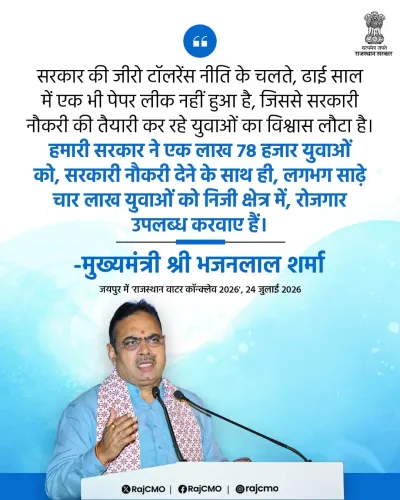
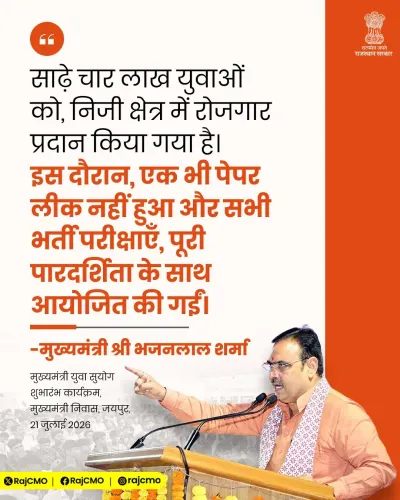
CM Bhajan Lal: Paper Leak Crackdown Made Rajasthan Hiring Fair
Synopsis
Rajasthan Chief Minister Bhajan Lal Sharma has asserted that strict government action against paper leak mafias has transformed the state's recruitment process into a transparent, fair, and merit-driven system, opening genuine opportunities for young aspirants.
Key Takeaways
CM Bhajan Lal Sharma declared on 30 May 2026 that his government's crackdown on paper leak mafias has made Rajasthan's recruitment processes transparent and credible.
Rajasthan has faced recurring paper leak scandals in government recruitment examinations, eroding public trust over many years.
The BJP government that took office in December 2023 had pledged to dismantle paper leak networks as a core electoral commitment.
The crackdown is aimed at ensuring that youth can advance purely on the basis of talent and hard work, without the distortion of leaked question papers.
Rajasthan's approach reflects a broader national pattern of state governments deploying enforcement drives and technology to secure examination integrity.
Sustained credibility will depend on the outcome of future recruitment cycles and prosecutions of alleged syndicate members.
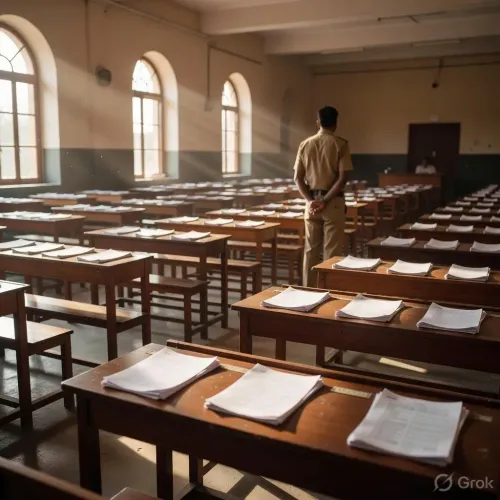
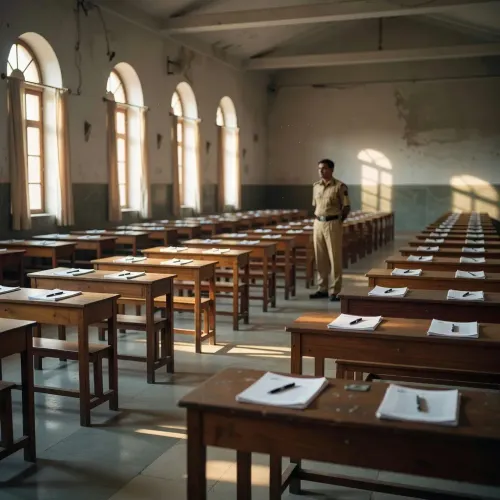
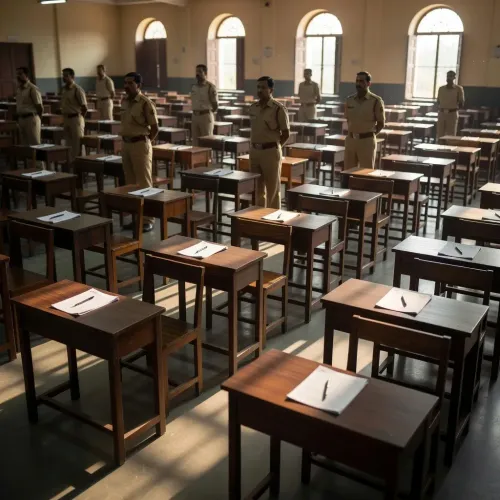
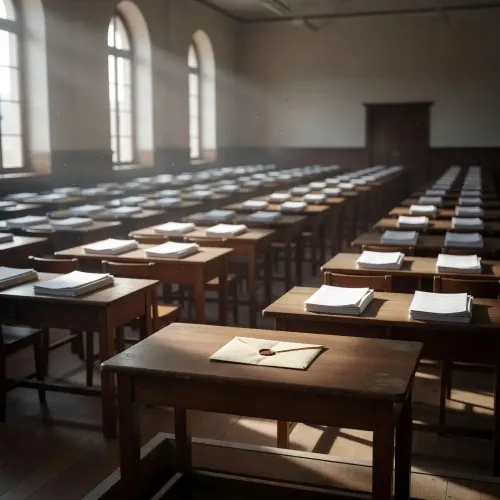
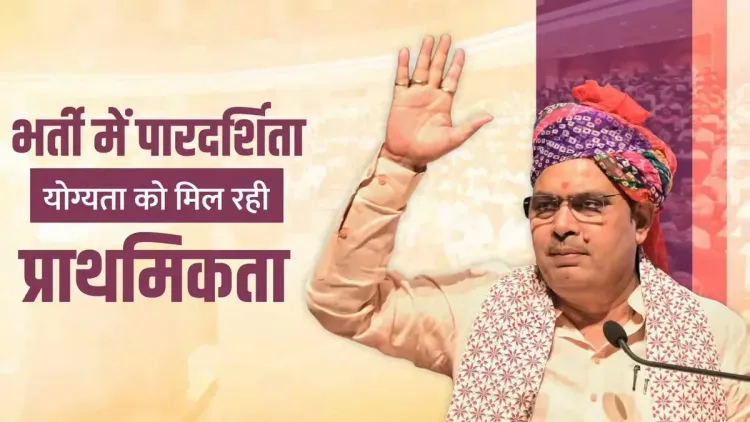
Rajasthan Chief Minister Bhajan Lal Sharma on Saturday, 30 May 2026, declared that his government's firm action against paper leak mafias has made the state's recruitment processes transparent, impartial, and credible, giving young aspirants a genuine opportunity to advance on the strength of their talent and hard work.
Context
In his post on X, CM Sharma wrote: 'पेपर लीक माफियाओं के विरुद्ध हमारी सरकार की सख्त कार्रवाई ने भर्ती प्रक्रियाओं को पारदर्शी, निष्पक्ष और विश्वसनीय बनाया है।' ['Our government's strict action against paper leak mafias has made recruitment processes transparent, fair, and credible.'] He added that youth now have the opportunity to move forward on the basis of their talent and hard work.
Rajasthan has historically been among the states most severely affected by organised paper leak networks in government recruitment examinations. The damage to public trust from repeated leaks had become a defining political grievance before the December 2023 assembly elections.
Policy Backdrop
The BJP government that took office in Rajasthan in December 2023 had pledged, as part of its electoral mandate, to dismantle paper leak syndicates and restore integrity to public hiring. That commitment has since translated into enforcement drives targeting those accused of running or facilitating exam fraud networks.
Across India, paper leaks in competitive examinations have prompted multiple state governments to introduce special investigation cells, technology-driven examination protocols, and stricter penal provisions. Rajasthan's current approach mirrors this broader national pattern of post-election crackdowns aimed at rebuilding credibility in government recruitment.
Stakeholders and Impact
The primary beneficiaries of a credible recruitment process are Rajasthan's millions of job aspirants — young men and women who invest years preparing for state government positions in teaching, police, administration, and other public services. Repeated leaks had forced cancellations of exams, delayed careers, and deepened cynicism about the fairness of the system.
Government recruitment bodies in the state are also directly implicated: their institutional credibility rises or falls with the perceived integrity of each examination cycle. A sustained crackdown signals to candidates that results will reflect merit rather than access to leaked material.
What's Next
Attention will now turn to the outcomes of ongoing and upcoming recruitment examination cycles in Rajasthan — whether the process remains free of leaks and whether prosecutions against alleged syndicate members result in convictions. Any new legislative measures or technology upgrades to examination infrastructure will also be closely watched as indicators of whether the administration's gains are structural or temporary.
The broader test for the Sharma government will be sustaining this momentum through successive recruitment rounds, as a single high-profile leak could quickly erode the credibility it is now claiming to have restored.
Point of View
A politically significant demographic. By tying credible recruitment directly to his administration's action, he is building a narrative of institutional repair that the BJP can deploy ahead of future electoral cycles. The statement also implicitly draws a contrast with the previous government's record on examination integrity. Whether the claim holds will be tested in real time: every upcoming recruitment examination is now a referendum on the administration's credibility on this issue.
NationPress
19 Sept 2026
Frequently Asked Questions
What action has the Rajasthan government taken against paper leak mafias?
The Bhajan Lal Sharma government has carried out enforcement drives against paper leak networks since taking office in December 2023 , with the stated aim of making state recruitment processes transparent and merit-based.
Why are paper leaks a major issue in Rajasthan?
Rajasthan has repeatedly seen organised leaks of question papers for government recruitment examinations, forcing exam cancellations, delaying careers of aspirants, and severely damaging public trust in the hiring process.
What did CM Bhajan Lal Sharma say about recruitment in Rajasthan?
On 30 May 2026 , CM Sharma stated that his government's strict action against paper leak mafias has made recruitment processes transparent, fair, and credible, giving youth the chance to succeed on merit.
How does Rajasthan's paper leak crackdown compare to other Indian states?
Several Indian states have responded to paper leak scandals with special investigation cells, stricter laws, and technology-driven exam protocols. Rajasthan's current approach under the BJP government mirrors this broader national pattern of post-election reform drives.
Who benefits from Rajasthan's recruitment reforms?
The primary beneficiaries are the state's large population of government job aspirants in sectors such as teaching, police, and administration, who can now expect examination results to reflect their actual merit rather than access to leaked material.