CM Bhajan Lal champions youth scheme for Viksit Rajasthan

Synopsis
Rajasthan CM Bhajan Lal Sharma on 7 August 2026 highlighted the Mukhyamantri Yuva Suyog Yojana, framing youth empowerment through sport, skills and self-reliance as the foundation of a developed Rajasthan.
Key Takeaways
Rajasthan CM Bhajan Lal Sharma promoted the Mukhyamantri Yuva Suyog Yojana on 7 August 2026 .
The scheme's stated mantra is 'Play, connect, learn and grow' , combining sports with skill development.
The initiative aims to make youth self-reliant and economically active contributors to state development.
The programme mirrors the national Pradhan Mantri Kaushal Vikas Yojana launched in 2015 , with an added sports and community dimension.
The 'Viksit Rajasthan' framing aligns the state scheme with the Centre's broader 'Viksit Bharat 2047' vision.
Exact enrolment figures and performance metrics for the scheme remain to be confirmed through official progress reports.
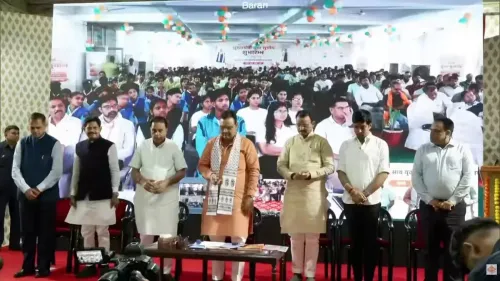
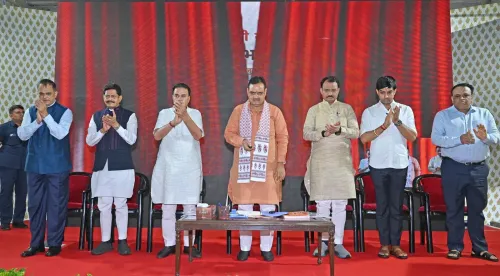
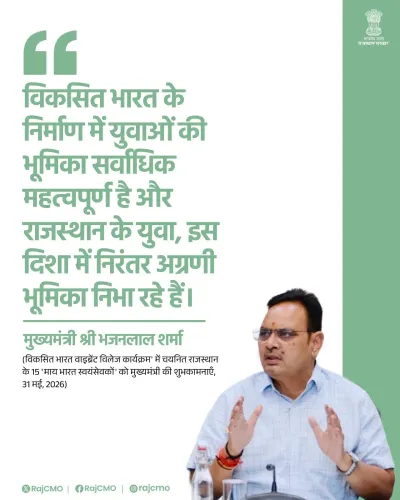
The road to a developed Rajasthan, Chief Minister Bhajan Lal Sharma declared on Friday, 7 August 2026, runs straight through the dreams and determination of the state's young people — and a flagship government scheme is being positioned as the vehicle to get them there.
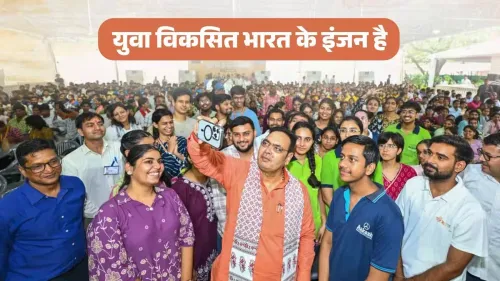
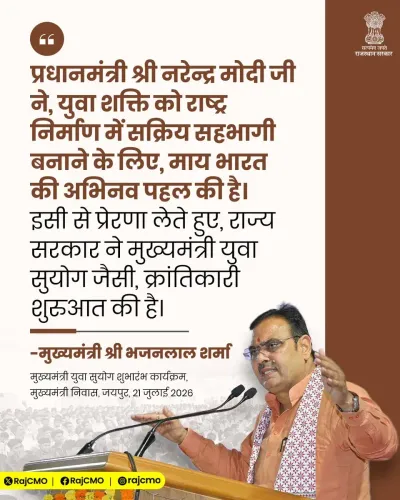
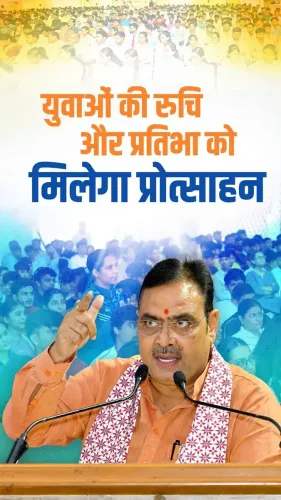
In a post on X, CM Sharma invoked the Mukhyamantri Yuva Suyog Yojana — the state's youth empowerment programme — framing it as a platform for talent development, new opportunities, and self-reliance. 'खेलो, जुड़ो, सीखो और बढ़ो' ('Play, connect, learn and grow'), he wrote, is the governing mantra behind the initiative, one his government says will ensure every young Rajasthani plays a meaningful role in building a 'Viksit Rajasthan' — a developed Rajasthan.
What the Mukhyamantri Yuva Suyog Yojana promises
The scheme is designed around three pillars: sharpening individual talent, connecting youth to emerging opportunities, and steering them toward economic independence. The four-word mantra — sport, connection, learning, growth — signals an intent to blend physical activity with skill development, a combination that has gained traction in state-level youth policy across India.
Rajasthan's approach echoes the national template set by the Pradhan Mantri Kaushal Vikas Yojana, launched in 2015, which sought to plug India's skill gap through structured training. The state programme layers a sports and community dimension on top of that foundation, reflecting a broader recognition that the demographic dividend requires more than classroom instruction to convert into economic participation.
Youth as the axis of Rajasthan's development pitch
Since taking office in December 2023, CM Sharma's government has consistently tied youth welfare to the state's larger development narrative. The 'Viksit Rajasthan' framing is itself a state-level echo of Prime Minister Narendra Modi's 'Viksit Bharat' vision for 2047, and Sharma's post reinforces that alignment — positioning Rajasthan's young population not as beneficiaries of welfare, but as active builders of the state's future.
The real test, as with any scheme of this ambition, will be in the numbers: enrolment figures, skill certifications, and employment outcomes. Budget allocations and periodic progress reports will be the scorecards to watch.
If the government delivers on the mantra, Rajasthan's youth will not just inherit a developed state — they will have built it.
Point of View
Connect, learn and grow' mantra signals an effort to move youth welfare beyond conventional skill-training into a more holistic, aspirational register. For a government barely two years old, anchoring its identity around youth empowerment is a long-term electoral investment: Rajasthan's young demographic is both a development resource and a key vote bloc. The scheme's credibility, however, will ultimately rest on verifiable outcomes — enrolment numbers, certifications, and jobs — not on the strength of the messaging.
NationPress
7 Aug 2026
Frequently Asked Questions
What is the Mukhyamantri Yuva Suyog Yojana in Rajasthan?
The Mukhyamantri Yuva Suyog Yojana is a Rajasthan state government scheme aimed at empowering youth through talent development, skill training, sports, and self-reliance, operating under the mantra 'Play, connect, learn and grow.'
Who launched the Mukhyamantri Yuva Suyog Yojana?
The scheme is an initiative of the Rajasthan government led by Chief Minister Bhajan Lal Sharma, who has been in office since December 2023.
What is 'Viksit Rajasthan' and how does this scheme relate to it?
'Viksit Rajasthan' is the Rajasthan BJP government's vision for a developed state, aligned with the Centre's 'Viksit Bharat 2047' goal. The Mukhyamantri Yuva Suyog Yojana is positioned as a key vehicle for achieving that vision by making youth economically active participants.
How is the Rajasthan youth scheme different from the PM Kaushal Vikas Yojana?
While the national Pradhan Mantri Kaushal Vikas Yojana, launched in 2015, focuses primarily on vocational skill training, the Mukhyamantri Yuva Suyog Yojana adds a sports and community-connection dimension, aiming for a more holistic model of youth development.
What does Bhajan Lal Sharma's government plan for Rajasthan youth?
The Sharma government's stated goal is to make every young Rajasthani empowered, capable, and self-reliant, ensuring their meaningful participation in building a developed Rajasthan through schemes that combine sport, learning, and opportunity.