CM Bhajan Lal congratulates IPhO 2026 gold medallists
Synopsis
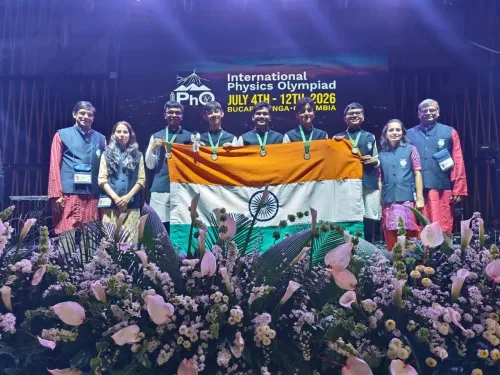
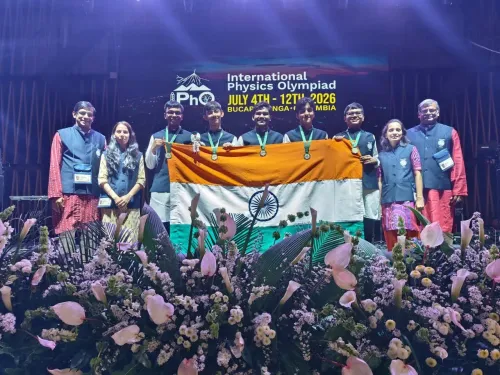
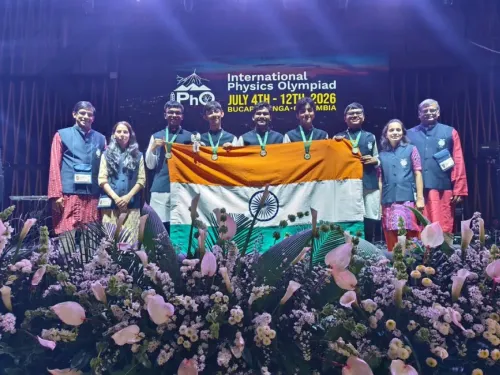
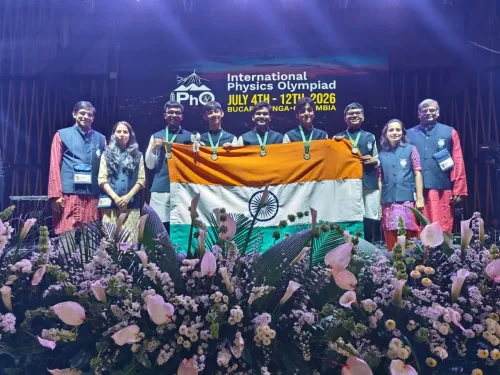
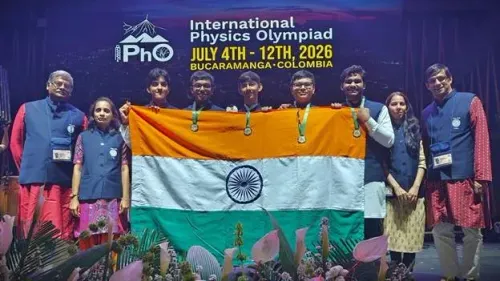
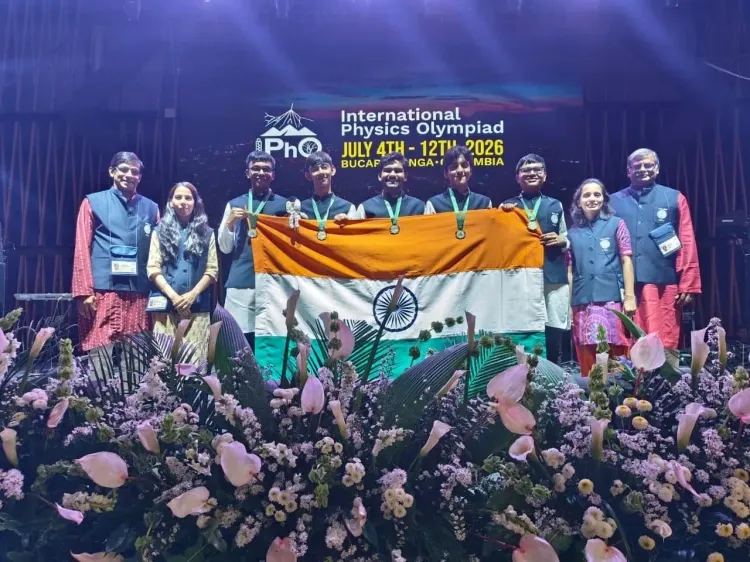
Rajasthan Chief Minister Bhajan Lal Sharma congratulated five Indian students — Kanishk Jain, Riddhesh Anant Bendale, Rishit Garg, Shreshth Suraiya, and Swarit Joshi — for winning gold medals at the 56th International Physics Olympiad 2026 in Bucaramanga, Colombia, calling their achievement an inspiring example of India's youth power.
Key Takeaways
All five members of India's team at the 56th IPhO 2026 in Bucaramanga, Colombia won gold medals.
The gold medallists are Kanishk Jain , Riddhesh Anant Bendale , Rishit Garg , Shreshth Suraiya , and Swarit Joshi .
Rajasthan CM Bhajan Lal Sharma publicly congratulated the students on 13 July 2026 .
India has participated in the IPhO since 1989 and has a consistent record of medal-winning performances.
The achievement aligns with India's broader STEM talent development agenda under the National Education Policy 2020 and the INSPIRE scheme .
The result reinforces India's growing global standing in science and technology education.
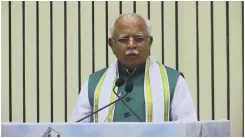
Rajasthan Chief Minister Bhajan Lal Sharma on Monday, 13 July 2026 extended congratulations to five Indian students who won gold medals at the 56th International Physics Olympiad (IPhO) 2026 held in Bucaramanga, Colombia. The students — Kanishk Jain, Riddhesh Anant Bendale, Rishit Garg, Shreshth Suraiya, and Swarit Joshi — brought home gold, competing among the world's best young physics minds.
Posting in Hindi on X, CM Sharma wrote: 'विश्व के सर्वश्रेष्ठ प्रतिभागियों के बीच आपकी यह स्वर्णिम सफलता भारत की युवा शक्ति की प्रतिभा, परिश्रम और उत्कृष्टता का प्रेरक उदाहरण है' — ('Your golden success among the world's finest participants is an inspiring example of the talent, hard work, and excellence of India's youth power.')
Context
The International Physics Olympiad is an annual global competition for high-school students, first held in 1967. India has participated since 1989 and has built a consistent record of medal-winning performances across multiple editions. The 2026 edition, the 56th in the series, was hosted by Bucaramanga, a city in north-eastern Colombia, marking one of the few times the event has been held in South America.
Each participating country fields a team of up to five students. All five members of the Indian contingent secured gold this year, a result that places the country among the top-performing nations at this edition of the olympiad.
Policy Backdrop
Successive Indian governments have invested in identifying and nurturing STEM talent through national programmes such as the INSPIRE scheme and the framework laid out by the National Education Policy 2020. These initiatives aim to build a sustained pipeline of researchers and innovators from school level upward.
Performance at events like the IPhO is viewed as a measurable indicator of the health of India's science education ecosystem. Olympiad training camps, typically coordinated through national institutions, prepare shortlisted students over months before the international competition.
Stakeholders and Impact
The five gold medallists — Kanishk Jain, Riddhesh Anant Bendale, Rishit Garg, Shreshth Suraiya, and Swarit Joshi — are high-school-level students who now join a select group of young Indians recognised on a global academic stage. Their achievement is likely to draw attention from premier science and engineering institutions looking to recruit exceptional talent.
For the broader student community, results like these serve as visible proof points that rigorous preparation through olympiad pathways can yield international recognition. Science educators and policymakers often cite such outcomes to advocate for greater public investment in gifted-student programmes.
What's Next
The Ministry of Education is expected to acknowledge the result formally and may announce follow-up support measures for olympiad participants, as has been the pattern after strong international showings. Selections and training camps for the next IPhO cycle will begin in the coming academic year, with national-level screening tests identifying the next cohort of candidates.
CM Sharma's public acknowledgement also signals the political salience of science achievement as a soft-power narrative — one that aligns with the broader government emphasis on positioning India as an emerging global knowledge economy.
Point of View
A clean sweep of gold medals at the IPhO provides timely, tangible evidence for that claim. The acknowledgement also subtly elevates the profile of science olympiads in public discourse, potentially strengthening the case for increased state-level funding for gifted-student programmes. For Sharma specifically, aligning with national achievement stories helps project a forward-looking governance image beyond Rajasthan's immediate political concerns.
NationPress
13 Jul 2026
Frequently Asked Questions
Who won gold at IPhO 2026?
Five Indian students — Kanishk Jain, Riddhesh Anant Bendale, Rishit Garg, Shreshth Suraiya, and Swarit Joshi — won gold medals at the 56th International Physics Olympiad 2026 held in Bucaramanga, Colombia.
Where was the International Physics Olympiad 2026 held?
The 56th International Physics Olympiad (IPhO) 2026 was held in Bucaramanga, Colombia.
What did Rajasthan CM Bhajan Lal Sharma say about IPhO 2026?
CM Bhajan Lal Sharma congratulated the five gold medallists, calling their achievement an inspiring example of India's youth talent, hard work, and excellence, and said it strengthens India's growing global identity in science, innovation, and technology.
When did India first participate in the International Physics Olympiad?
India first participated in the International Physics Olympiad in 1989 and has since maintained a consistent presence with medal-winning performances across multiple editions.
What is the IPhO and how is India selected for it?
The International Physics Olympiad is an annual global competition for high-school students, first held in 1967. India's team is selected through national-level screening tests followed by intensive training camps coordinated through national institutions.