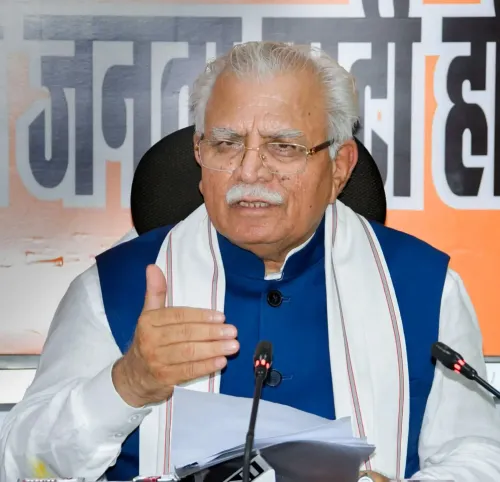
Khattar calls for new S.A.N.K.A.L.P to accelerate India's infrastructure
Synopsis
Union Power Minister Manohar Lal Khattar has called for a new S.A.N.K.A.L.P framework to accelerate India's infrastructure, signalling a potential policy recalibration across the power and housing sectors backed by the National Infrastructure Pipeline and PM Gati Shakti foundations.
Key Takeaways
Manohar Lal Khattar , Union Minister of Power and Housing and Urban Affairs, called for a new S.A.N.K.A.L.P framework to accelerate national infrastructure on 13 July 2026 .
The minister oversees two capital-intensive ministries — Power and Housing and Urban Affairs — making his statement significant for both sectors.
India's infrastructure push has been anchored by the National Infrastructure Pipeline (Rs 111 lakh crore outlay, 2019) and the PM Gati Shakti National Master Plan (2021).
Key stakeholders include infrastructure developers , state governments , urban local bodies, and power distribution companies.
The full form, budgetary details, and implementation roadmap of S.A.N.K.A.L.P are yet to be formally announced.
The next major policy milestone to watch is the Union Budget 2027-28 and any related parliamentary legislation on infrastructure.
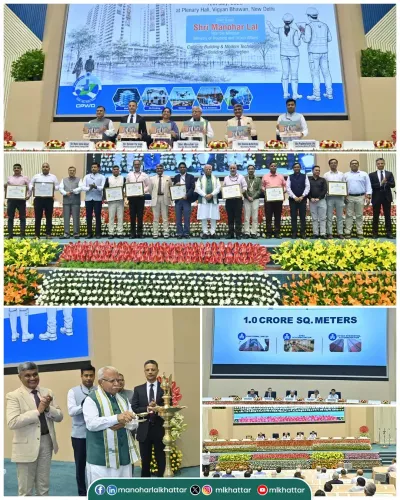
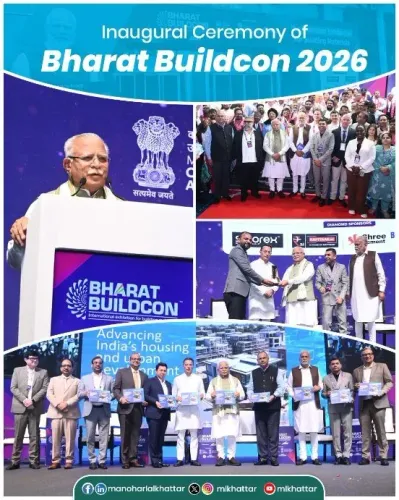
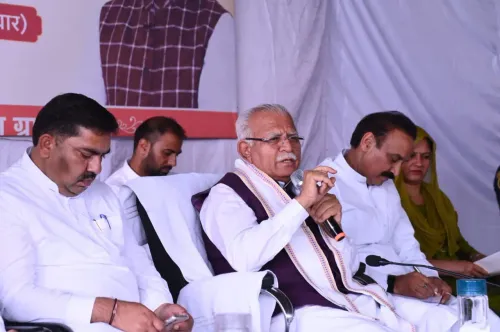
Union Power Minister Manohar Lal Khattar on Monday, 13 July 2026, called for advancing India's infrastructure development under a new framework he termed S.A.N.K.A.L.P, signalling a renewed push to accelerate physical and urban infrastructure across the country.
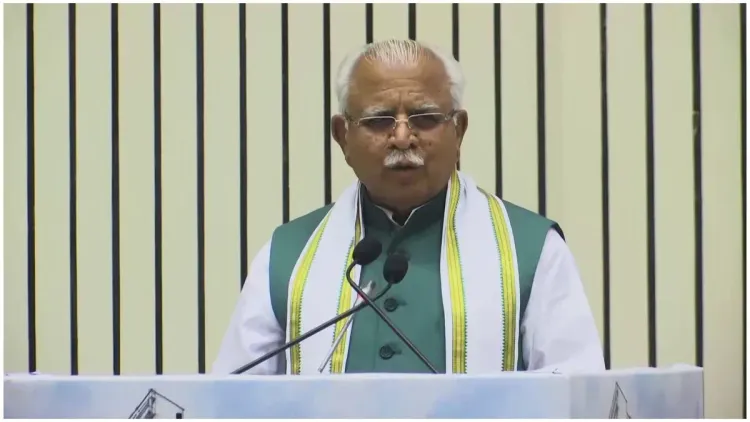
In a post on X, the minister wrote: 'राष्ट्र के इंफ्रास्ट्रक्चर को अधिक गति देने के लिए हमें एक नए S.A.N.K.A.L.P के साथ आगे बढ़ना होगा..' — translating to: 'To give greater momentum to the nation's infrastructure, we must move forward with a new S.A.N.K.A.L.P.' The post was accompanied by a video, the contents of which elaborate on this vision.
Context
The invocation of S.A.N.K.A.L.P — presented as an acronym — follows a well-established pattern in Indian governance of deploying acronym-branded flagship programmes to signal policy intent and rally administrative focus. Khattar, who oversees both the Ministry of Power and the Ministry of Housing and Urban Affairs, is positioned at the intersection of two of India's most capital-intensive infrastructure verticals. His call comes at a time when the central government is intensifying scrutiny of project execution timelines and last-mile delivery.
Policy Backdrop
India's infrastructure push has been anchored by two landmark frameworks in recent years. The National Infrastructure Pipeline, announced in 2019, envisaged an outlay of Rs 111 lakh crore across roads, power, urban development, and other sectors over five years. This was followed in 2021 by the PM Gati Shakti National Master Plan, a digital platform designed to enable multimodal connectivity and real-time monitoring of large-scale projects.
The Power Ministry has, in parallel, pursued grid modernisation, renewable energy integration, and the expansion of urban electricity access. The Housing and Urban Affairs Ministry has driven schemes targeting affordable housing and smart city development. Together, these efforts have made infrastructure acceleration a defining theme of the current administration's economic agenda.
Stakeholders and Impact
The minister's statement is directly relevant to infrastructure developers, both public-sector undertakings and private players, who look to central policy signals for investment planning and project pipeline visibility. State governments are equally key stakeholders, as the bulk of on-ground infrastructure execution — from power distribution networks to urban housing projects — depends on centre-state coordination and co-financing arrangements.
A renewed framework under the S.A.N.K.A.L.P rubric, if formalised, could reshape funding priorities, project approval processes, and implementation timelines across these sectors. Urban local bodies and power distribution companies would be among the first institutional actors to feel the downstream effects of any such policy shift.
What's Next
The specific contours of S.A.N.K.A.L.P — its full form, budgetary backing, and implementation roadmap — are yet to be formally detailed in public documents. Observers will watch for any announcement in the run-up to the Union Budget 2027-28, which is expected to set fresh capital expenditure targets for power and housing. Parliamentary discussions on new infrastructure legislation could also provide the next substantive forum for the minister to elaborate on this framework.
Khattar's framing of infrastructure as a domain requiring a 'new resolve' suggests the government views the current pace of execution as a baseline to be surpassed — a signal that policy recalibration, rather than mere continuation, may be on the horizon.
Point of View
The statement carries institutional weight beyond a routine motivational post. It suggests the government is preparing to reframe its infrastructure narrative, possibly ahead of the next Union Budget cycle, where capital expenditure targets will face heightened scrutiny from markets and opposition alike. The timing and format — a video post on X — indicate this is a message aimed as much at administrative machinery and investor confidence as at the general public.
NationPress
13 Jul 2026
Frequently Asked Questions
What is S.A.N.K.A.L.P in Manohar Lal Khattar's infrastructure announcement?
S.A.N.K.A.L.P is an acronym-based framework invoked by Union Power Minister Manohar Lal Khattar on 13 July 2026 to signal a renewed push for accelerating India's infrastructure. The full form and detailed policy contours have not yet been formally announced.
What ministries does Manohar Lal Khattar head?
Manohar Lal Khattar is the Union Minister of Power and Housing and Urban Affairs. He is also a senior BJP leader and former Chief Minister of Haryana.
What is India's National Infrastructure Pipeline?
The National Infrastructure Pipeline is a government framework announced in 2019 with a projected outlay of Rs 111 lakh crore to expand roads, power, urban development, and other infrastructure sectors across India.
What is PM Gati Shakti and how does it relate to infrastructure?
PM Gati Shakti is a National Master Plan launched in 2021 to enable multimodal connectivity and real-time digital monitoring of large infrastructure projects. It is one of the key platforms underpinning India's current infrastructure acceleration strategy.
What should we watch for after Khattar's S.A.N.K.A.L.P announcement?
Key developments to watch include the formal unveiling of the S.A.N.K.A.L.P framework's full form and scope, capital expenditure allocations in the Union Budget 2027-28, and any parliamentary discussions on new infrastructure legislation covering power and housing sectors.