Anand Mahindra hails India's IPhO 2026 gold sweep in Colombia
Synopsis
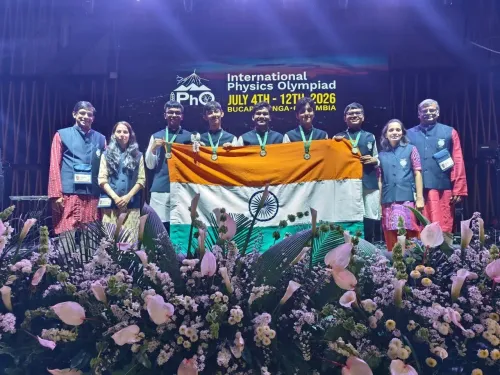
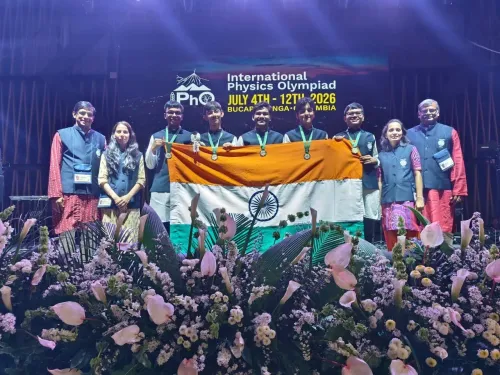
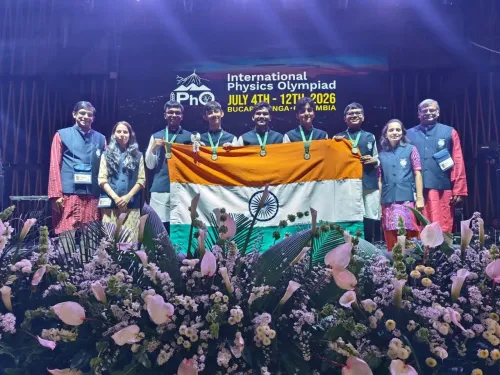
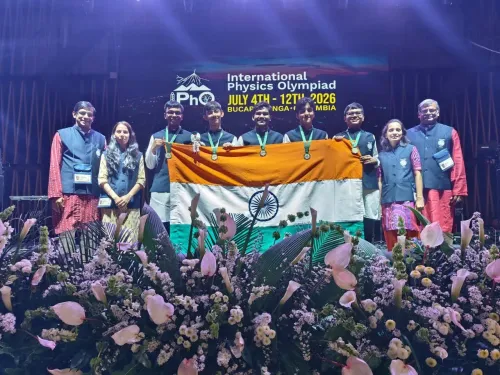
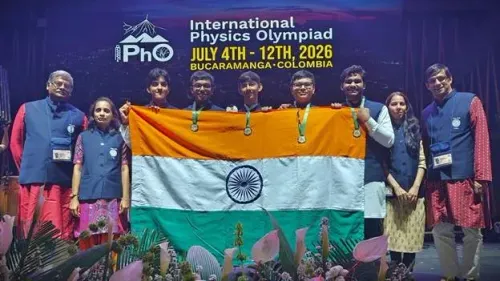
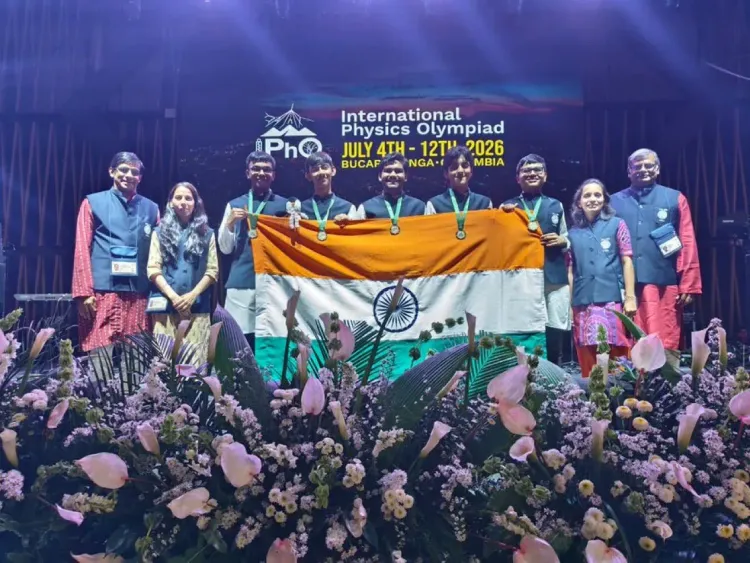
All five Indian students at the 56th International Physics Olympiad 2026 in Colombia won gold, placing India joint first globally. Mahindra Group chairman Anand Mahindra praised the feat and credited the Homi Bhabha Centre for Science Education for delivering world-class results on modest resources.
Key Takeaways
All five Indian students at IPhO 2026 in Colombia won gold medals, placing India joint #1 globally.
India tied with China, Kazakhstan, Russia, South Korea and Taiwan among 381 students from 87 countries .
The five champions are Kanishk Jain (Pune), Riddhesh Anant Bendale (Indore), Rishit Garg (New Delhi), Shresth Suraiya (Mumbai) and Svarit Joshi (Ahmedabad).
Homi Bhabha Centre for Science Education , established in 1974 , manages India's olympiad training on 'modest resources.' Mahindra Group chairman Anand Mahindra highlighted the result as proof of Indian students' 'raw talent, curiosity and hunger to succeed.' The result renews calls for increased funding and policy attention toward olympiad-linked STEM education in India.
Mahindra Group chairman Anand Mahindra on Monday, 13 July 2026 celebrated a historic sweep by India's five-member team at the 56th International Physics Olympiad (IPhO) 2026 held in Colombia, where all five students won gold medals, placing India joint first in the world alongside China, Kazakhstan, Russia, South Korea and Taiwan out of 381 students from 87 countries.
Context
Mahindra described the result as 'absolutely remarkable', naming each of the five champions: Kanishk Jain from Pune, Riddhesh Anant Bendale from Indore, Rishit Garg from New Delhi, Shresth Suraiya from Mumbai, and Svarit Joshi from Ahmedabad. The post, which Mahindra tagged as his #MondayMotivation, drew attention not only to the medal haul but to the conditions under which it was achieved. He noted the feat came 'without the kind of vast, state-organised apparatus that some countries deploy to nurture Olympiad talent.'
The International Physics Olympiad is an annual global competition for secondary-school students, first organised in 1967, and is widely regarded as the most prestigious pre-university physics contest in the world. India's clean sweep of gold — all five students medalling at the top tier — is a landmark result in the country's olympiad history.
Policy Backdrop
The training and selection of India's IPhO team is managed by the Homi Bhabha Centre for Science Education (HBCSE), a national institution established in 1974 under the Tata Institute of Fundamental Research. HBCSE's mandate spans research in science and mathematics education as well as talent identification and preparation for international olympiads across multiple disciplines. Mahindra specifically credited 'the dedication of the scientists, teachers and mentors at the Homi Bhabha Centre for Science Education, who have built a world-class Olympiad programme with only modest resources.'
India's olympiad achievements have historically been driven by focused institutional programmes and voluntary teacher networks rather than the large-scale, centrally directed talent pipelines common in several East Asian and Eastern European countries. The 2026 result continues a pattern of steady improvement in elite STEM competitions, reflecting a wider national approach of channelling specialised public investment into centres of excellence while general science education access expands in parallel.
Stakeholders and Impact
The five gold medallists represent cities spread across India — Pune, Indore, New Delhi, Mumbai and Ahmedabad — underlining the geographic spread of STEM talent the HBCSE pipeline has been able to tap. For the students themselves, an IPhO gold medal typically opens pathways to admissions at leading global universities and research institutions. Mahindra, whose group has a long record of engaging with science and innovation ecosystems, framed the result as evidence of 'raw talent, curiosity and hunger to succeed' rather than systemic advantage.
The recognition from a prominent industrialist with a large social-media following is likely to amplify public awareness of the olympiad programme and the institution behind it, potentially influencing philanthropic and policy attention toward HBCSE's funding needs.
What's Next
Attention will now turn to whether India's performance at IPhO 2026 prompts any formal government response — including enhanced funding for HBCSE or deeper integration of olympiad-style pedagogy within the National Education Policy framework. The selection and training cycle for the 57th IPhO will begin in the coming academic year, and educators are likely to use this result to make the case for sustained or increased institutional support. Mahindra closed his post with a message of gratitude: 'I want to say thank you to these Olympians and to everyone who has helped shape their journey for making me so optimistic about India's future.'
Point of View
And Anand Mahindra's amplification of the result gives it unusual cross-sector visibility. The deliberate framing around 'modest resources' is a pointed, if indirect, argument for greater public investment in institutions like HBCSE — a message that lands differently when delivered by one of India's most prominent capitalists rather than an academic. The result also tests the National Education Policy's stated ambition to mainstream scientific temper: if olympiad excellence can be achieved at current funding levels, the case for scaling the model becomes harder for policymakers to ignore. Watch whether this translates into a formal budget commitment or remains a moment of social-media pride.
NationPress
12 Oct 2026
Frequently Asked Questions
Did India win at the International Physics Olympiad 2026?
Yes. All five Indian students who competed at the 56th International Physics Olympiad 2026 in Colombia won gold medals, placing India joint first in the world alongside China, Kazakhstan, Russia, South Korea and Taiwan.
Who are the five Indian gold medallists at IPhO 2026?
The five gold medallists are Kanishk Jain (Pune), Riddhesh Anant Bendale (Indore), Rishit Garg (New Delhi), Shresth Suraiya (Mumbai), and Svarit Joshi (Ahmedabad).
What is the Homi Bhabha Centre for Science Education?
The Homi Bhabha Centre for Science Education (HBCSE) is a national institution established in 1974 under the Tata Institute of Fundamental Research. It is responsible for research in science and mathematics education and for selecting and training India's teams for international olympiads.
Where was IPhO 2026 held?
The 56th International Physics Olympiad 2026 was held in Colombia, with 381 students from 87 countries participating.
What did Anand Mahindra say about India's IPhO 2026 result?
Mahindra called the result 'absolutely remarkable' and credited the students' 'raw talent, curiosity and hunger to succeed,' while also praising the scientists, teachers and mentors at HBCSE for building a world-class programme with only modest resources.