CM Bhajan Lal hails Modi's Ministry of Cooperation
Synopsis
Rajasthan CM Bhajan Lal Sharma praised PM Narendra Modi for establishing India's first independent Ministry of Cooperation in 2021, saying it has brought transformative change to crores of farmers, animal husbandry workers, women, and youth nationwide.
Key Takeaways
Rajasthan CM Bhajan Lal Sharma praised PM Modi's creation of India's first independent Ministry of Cooperation in a post on 6 July 2026 .
The Ministry of Cooperation was carved out of the Ministry of Agriculture in July 2021 — the first such standalone ministry in independent India.
The ministry has focused on computerising Primary Agricultural Credit Societies , amending the Multi-State Cooperative Societies Act , and integrating cooperatives with digital-payment infrastructure.
CM Sharma highlighted the ministry's impact on farmers, animal husbandry workers, women, and youth across the country.
State-level adoption of central cooperative schemes in Rajasthan and new multi-state cooperative legislation remain key areas to watch.
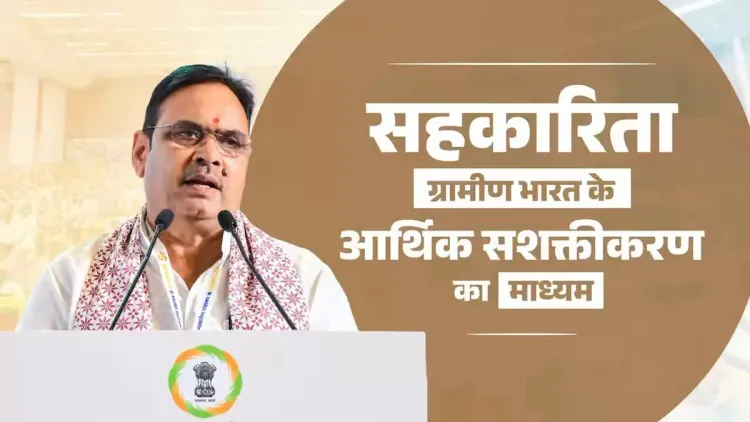
Rajasthan Chief Minister Bhajan Lal Sharma on Monday, 6 July 2026, credited Prime Minister Narendra Modi's 'visionary leadership' for the creation of India's first dedicated Ministry of Cooperation, saying it has brought 'unprecedented positive change' to the lives of crores of farmers, animal husbandry workers, women, and youth across the country.
Context
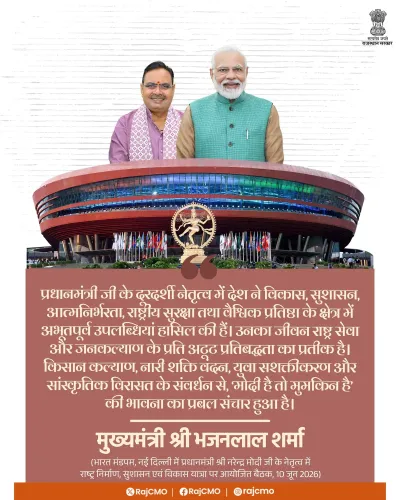
In his post on X, CM Sharma wrote in Hindi: 'देश के यशस्वी प्रधानमंत्री श्री नरेंद्र मोदी जी के दूरदर्शी नेतृत्व में पहली बार एक स्वतंत्र सहकारिता मंत्रालय का गठन हुआ' — translating to: 'Under the visionary leadership of the country's distinguished Prime Minister Shri Narendra Modi, for the first time an independent Ministry of Cooperation was formed.' He added that the ministry has worked to bring 'unprecedented positive change' to crores of farmers, animal husbandry workers, women, and youth.
The post was accompanied by a video, underscoring the BJP government's continued effort to highlight cooperative-sector reforms as a flagship achievement of the Modi administration.
Policy Backdrop
The Ministry of Cooperation was established in July 2021, when the Union Government carved it out of the Ministry of Agriculture and Farmers Welfare to give focused, independent attention to cooperative societies across India. It was a structural first — no such standalone ministry had existed before in independent India.
Since its formation, the ministry has pursued large-scale computerisation of Primary Agricultural Credit Societies (PACS), amendments to the Multi-State Cooperative Societies Act, and integration of cooperatives with digital-payment and credit-delivery infrastructure. These measures are part of a broader rural-development approach linking self-help groups, cooperative credit, and agricultural supply chains.
Stakeholders and Impact
Farmers and animal husbandry workers are among the primary beneficiaries cited, as cooperative credit societies and dairy cooperatives form a critical part of rural livelihoods across states including Rajasthan. Women's self-help groups and youth entrepreneurship programmes channelled through cooperative networks have also been highlighted as key focus areas of the ministry.
For Rajasthan — a state with a large agrarian and pastoral population — the alignment between central cooperative policy and state-level implementation carries particular significance. CM Sharma's endorsement signals the state government's intent to deepen that alignment.
What's Next
Observers will watch for state-level adoption of central cooperative schemes in Rajasthan and any new legislation on multi-state cooperatives in upcoming parliamentary sessions. The broader question is whether the structural and digital reforms initiated since 2021 translate into measurable improvements in rural credit access and cooperative membership at the grassroots level.
As BJP-governed states increasingly champion the cooperative ministry's agenda, the sector is likely to remain a prominent plank in the party's rural outreach ahead of future electoral cycles.
Point of View
Reinforcing the BJP's narrative that structural governance reforms — not just welfare spending — define the Modi era. By spotlighting the Ministry of Cooperation, the party connects a relatively low-profile institutional reform to a vast rural constituency of farmers, dairy workers, and women's groups. This fits a broader BJP pattern of recasting administrative decisions as transformative milestones ahead of electoral cycles. For Rajasthan, where agrarian distress and cooperative credit gaps remain live issues, the messaging also serves a local political purpose.
NationPress
6 Jul 2026
Frequently Asked Questions
When was the Ministry of Cooperation formed in India?
The Ministry of Cooperation was established in July 2021 by the Union Government, separating cooperative affairs from the Ministry of Agriculture to give the sector dedicated policy focus.
What does the Ministry of Cooperation do?
The ministry oversees policy, training, and computerisation for cooperative societies across India, including digitising Primary Agricultural Credit Societies (PACS) and amending the Multi-State Cooperative Societies Act.
Why did CM Bhajan Lal Sharma praise the Ministry of Cooperation?
CM Bhajan Lal Sharma credited PM Modi's 'visionary leadership' for creating the ministry, saying it has brought 'unprecedented positive change' to crores of farmers, animal husbandry workers, women, and youth in India.
Who benefits from India's cooperative sector reforms?
Key beneficiaries include farmers, dairy and animal husbandry workers, women's self-help groups, and rural youth who access credit, digital payments, and entrepreneurship support through cooperative networks.
Was there a Ministry of Cooperation before 2021 in India?
No. Before July 2021 , cooperative affairs were handled within the Ministry of Agriculture. The formation of a standalone Ministry of Cooperation was a first in independent India's history.