HP CM Office Hikes Disaster Compensation for Farmers

Synopsis
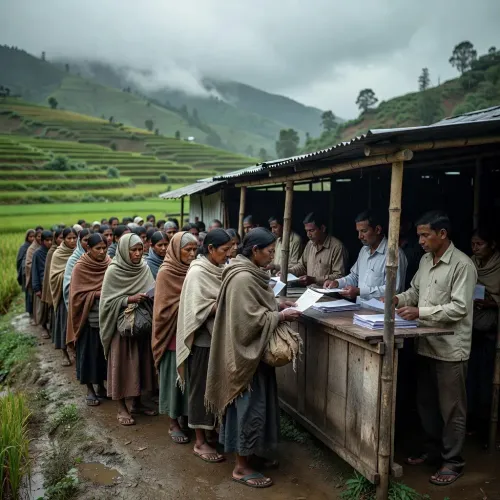
The Himachal Pradesh government has made a historic upward revision in disaster compensation for farmers, covering agricultural and horticultural land loss, silt removal from fields, and crop damage — providing relief to livelihoods battered by recurrent extreme weather events in the Himalayan state.
Key Takeaways
The Chief Minister's Office of Himachal Pradesh announced a historic increase in disaster compensation for farmers on 6 July 2026 .
The revised compensation covers three heads: agricultural and horticultural land loss , silt removal from fields , and direct crop damage .
Relief is routed through the State Disaster Response Fund (SDRF) , the standard mechanism for post-disaster ex-gratia payments in the state.
Horticulture growers and smallholder farmers whose livelihoods were severely disrupted by natural disasters are the primary beneficiaries.
The announcement continues a broader pattern of Himachal Pradesh revising SDRF norms after major monsoon-season damage in the western Himalayas.
Actual impact will hinge on the Revenue Department publishing revised rates and ensuring timely disbursement before the next sowing season.
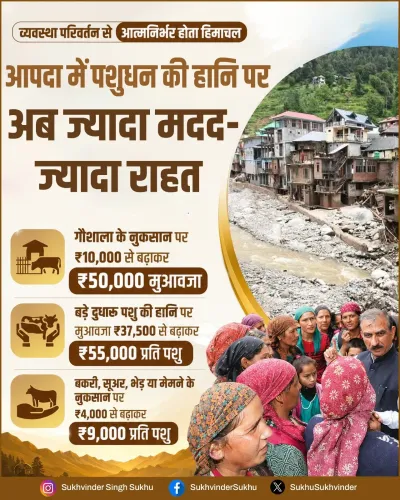
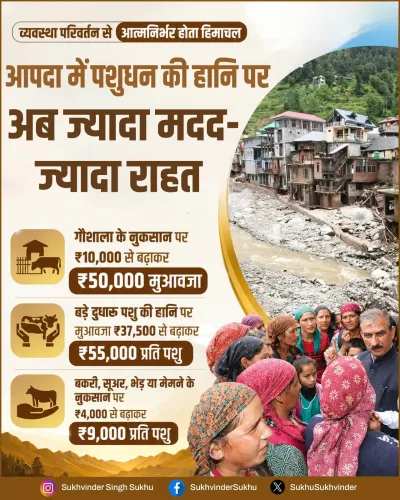
The Chief Minister's Office of Himachal Pradesh announced on Monday, 6 July 2026 that the state government has made a historic increase in compensation amounts for farmers whose agricultural and horticultural land, crops, and fields have been damaged by natural disasters, describing the move as relief for those whose livelihoods have been severely threatened.
Context
The post, shared in Hindi, states that 'आपदा के कारण कृषि एवं बागवानी फसलों को भारी क्षति पहुँची' ('disasters have caused heavy damage to agricultural and horticultural crops'), placing farmers in deep livelihood crisis. In response, the government says it has made an 'historic increase' (ऐतिहासिक वृद्धि) in the compensation paid for loss of agricultural and horticultural land, silt removal from fields, and crop damage. The announcement is directed at affected farmers across the state.
Policy Backdrop
Himachal Pradesh is a predominantly smallholder farming state where apple orchards and subsistence crops form the backbone of rural incomes. The state sits in the western Himalayas and is recurrently struck by extreme rainfall, floods, and landslides during the monsoon season, which regularly destroy standing crops and deposit thick layers of silt on cultivable land. Relief payments for such losses are channelled through the State Disaster Response Fund (SDRF), the primary mechanism for ex-gratia payments and relief works following notified disasters. The state government has historically revised SDRF compensation norms after severe monsoon seasons to address the gap between actual losses and the rates fixed in earlier years.
Stakeholders and Impact
The primary beneficiaries are disaster-affected farmers and horticulture growers across Himachal Pradesh, many of whom depend on a single annual harvest for their income. The revised compensation structure covers three specific heads: loss of agricultural and horticultural land, the cost of removing silt deposited on farmland, and direct crop loss — each of which can independently devastate a smallholder's seasonal income. By revising all three heads simultaneously, the government signals a broader recalibration of its disaster-relief framework rather than a piecemeal adjustment.
Horticulture growers, particularly those cultivating apples in the mid- and high-altitude belts, have long argued that SDRF rates did not reflect the actual market value of lost produce. If the revised rates address this gap, the relief could meaningfully reduce post-disaster debt burden for orchard-owning families.
What's Next
The practical impact of the announcement will depend on the Revenue Department formally publishing the revised compensation schedule and the speed of actual disbursement to affected households before the next sowing season. Observers will watch whether the new rates are notified in the official gazette and whether district administrations are equipped to process claims swiftly. The state's track record on translating post-disaster announcements into timely field-level payments will be the key metric against which this 'historic' claim will be judged.
Point of View
And upward SDRF revisions are a low-cost, high-visibility tool for any state government. The real test, however, is institutional: Himachal Pradesh has a mixed record on translating compensation announcements into swift field-level disbursements, and the absence of specific revised figures in the public communication makes independent verification difficult. If the Revenue Department follows through with a gazetted schedule and a clear claims window, this could set a meaningful precedent for disaster-relief adequacy in hill states.
NationPress
6 Jul 2026
Frequently Asked Questions
What compensation has Himachal Pradesh increased for disaster-affected farmers?
The Himachal Pradesh government has announced a historic increase in compensation for loss of agricultural and horticultural land, silt removal from farmland, and direct crop damage caused by natural disasters.
Which fund is used to pay disaster compensation to farmers in Himachal Pradesh?
Disaster compensation for farmers in Himachal Pradesh is paid through the State Disaster Response Fund (SDRF), which is the primary mechanism for ex-gratia and relief payments after notified disasters.
Who benefits from Himachal Pradesh's revised disaster compensation?
Disaster-affected farmers and horticulture growers across Himachal Pradesh — particularly those who lost crops, had their land damaged, or need silt cleared from their fields — are the primary beneficiaries.
Why does Himachal Pradesh frequently revise farm disaster compensation?
The western Himalayan state faces recurrent floods, landslides, and extreme rainfall every monsoon season that destroy crops and deposit silt on farmland, prompting periodic upward revisions to keep compensation rates in line with actual losses.
When will farmers in Himachal Pradesh receive the revised disaster compensation?
Disbursement timelines depend on the Revenue Department formally publishing the revised compensation schedule; farmers and observers are watching for a gazetted notification and district-level claims processing before the next sowing season.