HP CM Office on Farmer Relief: Land Restored, Aid Disbursed
Synopsis
The Chief Minister's Office of Himachal Pradesh has announced that state-backed crop-loss relief and soil restoration measures have enabled farmers to resume cultivation, providing financial support to those hit by agricultural distress.
Key Takeaways
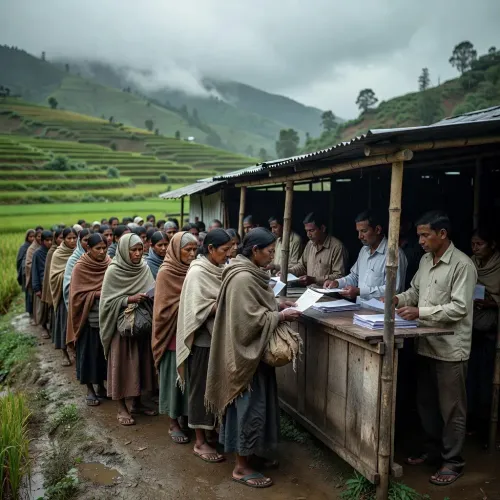
The Chief Minister's Office of Himachal Pradesh confirmed on 6 July 2026 that financial relief has been disbursed to farmers affected by crop losses.
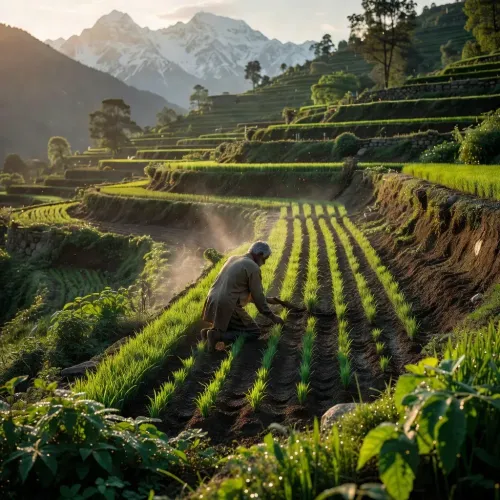
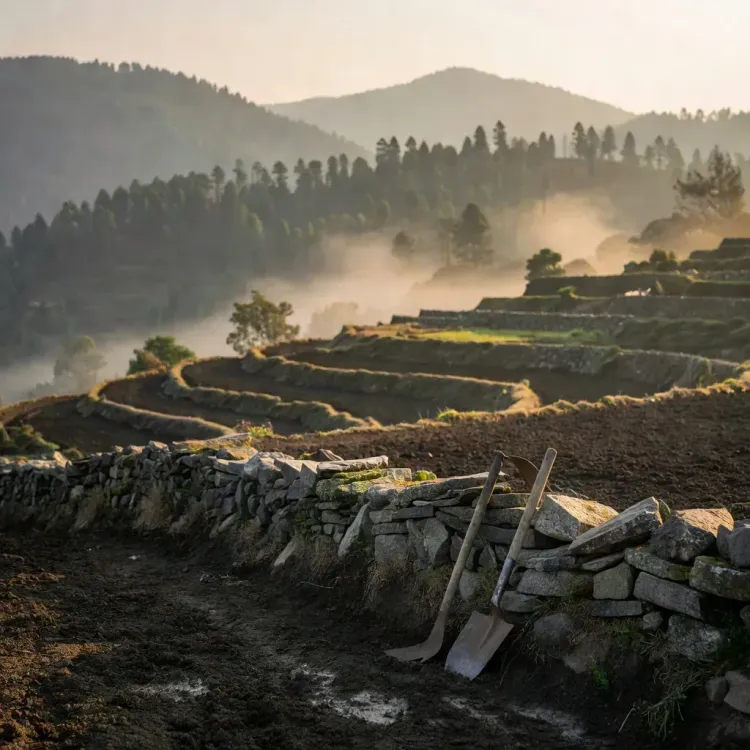
The government stated that soil fertility in affected areas has been restored, allowing farmers to return to cultivation.
Relief amounts against crop damage were described as helping farmers overcome economic hardship and revive agricultural activity.
Himachal Pradesh supplements central schemes such as PMFBY and PM-KISAN with state-level top-up payments during distress years.
Key stakeholders include small and marginal farmers and horticulture growers in the hill districts.
Disbursement figures and new packages ahead of the 2026–27 rabi season remain to be announced.
The Chief Minister's Office of Himachal Pradesh on Monday, 6 July 2026 shared an update on the state government's farmer welfare efforts, stating that financial support has been extended to agriculturists affected by crop losses, soil fertility has been restored, and farmers have been enabled to resume cultivation.
The post, in Hindi, stated: 'भूमि की उर्वरता पुनः बहाल हुई और किसान दोबारा खेती करने की स्थिति में आए' ('land fertility has been restored and farmers have been brought back to a position to farm again'). It further noted that relief amounts provided against crop damage helped farmers overcome financial hardship and 'paved the way to restore momentum to agricultural activities.'
Context
Himachal Pradesh is a predominantly agrarian hill state where farming and horticulture form the backbone of rural livelihoods. The state is acutely vulnerable to monsoon-related disasters — floods, cloudbursts, and landslides — that periodically devastate standing crops and degrade topsoil across river valleys and terraced fields.
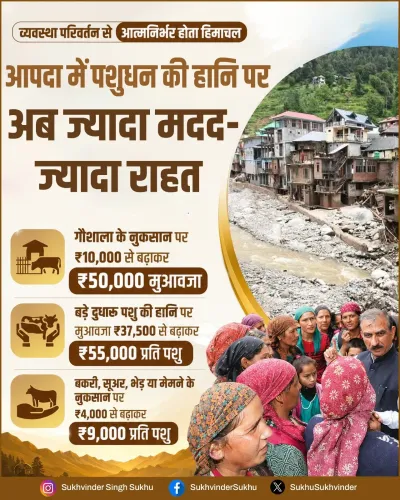
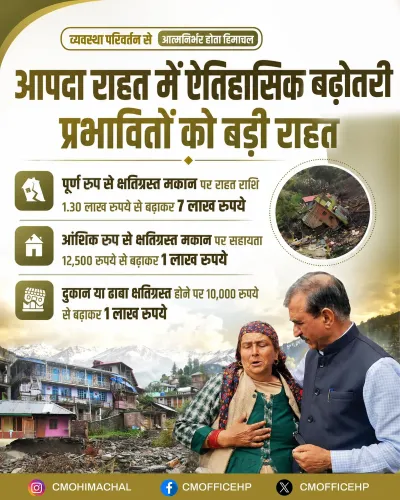
Following the severe floods of 2023, the state government had announced special relief packages covering crop damage compensation and input subsidies for affected farmers. The latest communication signals a continuation of that recovery effort, with the government asserting that the intervention cycle — from relief disbursement to soil rehabilitation — has yielded tangible results.
Policy Backdrop
Farmer relief in Himachal Pradesh operates on two tracks: the central Pradhan Mantri Fasal Bima Yojana (PMFBY), a crop-insurance programme operational since 2016, and state-level top-up payments and input subsidies that are triggered during distress years. The state has periodically supplemented the national PM-KISAN income-support scheme with additional assistance when climate-induced losses are severe.
Soil restoration is a distinct but related challenge in the Himalayan region, where flooding strips topsoil and renders fields unproductive for multiple seasons. Government interventions that address both income loss and land health are considered critical to preventing permanent displacement of small and marginal farmers from agriculture.
Stakeholders and Impact
The primary beneficiaries of the measures cited are small and marginal farmers and horticulture growers — communities that lack the financial buffers to absorb even a single season of total crop failure. For many households in the hill districts, a single monsoon disaster can translate into multi-year debt cycles.
By restoring soil fertility and providing direct relief against crop losses, the state government aims to break that cycle and ensure continuity of agricultural activity. The announcement is also significant for the broader rural economy, as farming incomes have downstream effects on local trade, daily-wage labour, and rural credit markets.
What's Next
Policy watchers will track whether the state's 2026–27 budget carries specific allocations for farmer relief and soil-health programmes, which would give a clearer picture of the scale of intervention the government envisages. The approach taken ahead of the 2026–27 rabi season will be a key indicator of whether the recovery momentum cited in the post translates into sustained agricultural output.
As the monsoon of 2026 progresses, the state's capacity to respond swiftly to fresh crop losses — and to institutionalise soil-restoration measures — will determine how durable the gains described in the government's communication prove to be.
Point of View
Where demonstrating visible relief delivery carries both administrative and political weight. What distinguishes this update is its dual claim — not just income support but physical restoration of agricultural land — which signals an attempt to frame the intervention as structural rather than merely transactional. If backed by verifiable disbursement data, it could strengthen the ruling dispensation's narrative of proactive disaster governance ahead of the budget cycle. The real test, however, lies in whether soil-health and relief measures translate into measurable improvements in crop output and farmer income in the coming rabi season.
NationPress
6 Jul 2026
Frequently Asked Questions
What relief has the Himachal Pradesh government given to farmers for crop loss?
The Himachal Pradesh government has disbursed financial relief to farmers against crop losses, helping them overcome economic hardship and resume agricultural activities, as stated by the Chief Minister's Office on 6 July 2026.
How has the HP government restored soil fertility after floods?
The state government has undertaken efforts to restore land fertility in areas damaged by natural disasters, enabling farmers who had been forced to stop cultivation to return to their fields.
What is PMFBY and how does it help Himachal Pradesh farmers?
The Pradhan Mantri Fasal Bima Yojana (PMFBY) is a central crop-insurance programme launched in 2016 that provides financial cover against crop losses; Himachal Pradesh supplements it with state-level top-up payments and input subsidies during distress years.
Which farmers in Himachal Pradesh benefit most from crop-loss relief?
Small and marginal farmers and horticulture growers in the hill districts are the primary beneficiaries, as they lack financial buffers to absorb crop failures caused by monsoon floods or landslides.
When will Himachal Pradesh announce a new farmer relief package for 2026-27?
Specific allocations are expected to become clearer in the state's 2026-27 budget; any new package ahead of the rabi season will be a key indicator of the government's sustained commitment to agricultural recovery.