CM Bhajan Lal hails National Honour Amendment Bill passage in Lok Sabha
Synopsis
Rajasthan CM Bhajan Lal Sharma hailed the Lok Sabha passage of the National Pride Insult Prevention (Amendment) Bill, 2026 as a historic step for India's cultural identity, congratulating PM Modi for the 'Nation First' legislative push.
Key Takeaways
The National Gaurav Apman Nivaran (Sanshodhan) Vidheyak, 2026 passed the Lok Sabha on 30 July 2026 .
The bill amends the Prevention of Insults to National Honour Act, 1971 to extend protections to the national song.
Rajasthan CM Bhajan Lal Sharma called the passage 'historic and highly commendable' in a post on X.
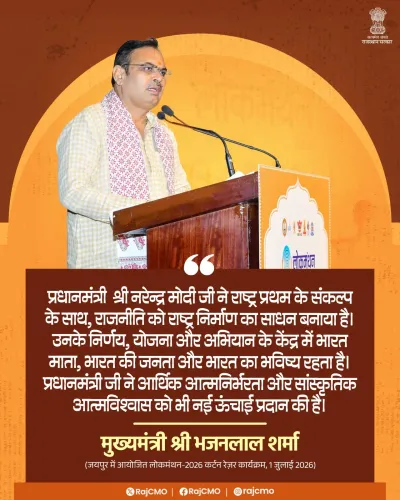
Sharma credited PM Narendra Modi 's 'skilled and far-sighted leadership' for the bill's advancement.
The bill must still clear the Rajya Sabha before it becomes enforceable law.
The legislation fits a broader BJP pattern of reinforcing legal respect for national symbols since 2014 .
A bill aimed at strengthening legal protection for India's national symbols and the national song cleared the Lok Sabha on Thursday, 30 July 2026 — and Rajasthan Chief Minister Bhajan Lal Sharma was quick to call it a landmark moment for the country's cultural conscience. The passage of the National Gaurav Apman Nivaran (Sanshodhan) Vidheyak, 2026 — the National Pride Insult Prevention (Amendment) Bill, 2026 — drew warm praise from the BJP chief minister, who credited Prime Minister Narendra Modi's leadership for the legislative push.
What the Bill seeks to protect
The amendment builds on the foundational Prevention of Insults to National Honour Act, 1971, which established penalties for disrespecting the national flag, the national anthem, and the Constitution. The new legislation extends that protective framework to the national song — Vande Mataram — a symbol that has carried deep cultural and independence-movement significance for over a century. The bill now moves to the Rajya Sabha before it can become law.
Sharma's tribute to Modi's 'Nation First' resolve
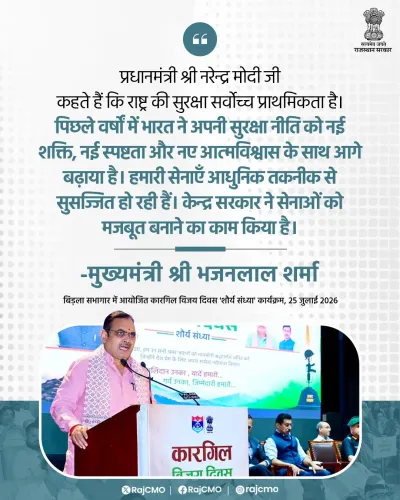
Posting on X, CM Sharma offered an unambiguous salute to the Prime Minister: 'Rashtra ke maan-samman ko akshunn banaye rakhne aur rashtrageeth ko naya samman dilane ke liye... hridaya se abhinandan!' — 'Heartfelt congratulations for keeping the nation's honour inviolable and giving the national song new respect.' He framed the vote as proof that the 'Rashtra Pratham' (Nation First) commitment is growing stronger under Modi's 'skilled and far-sighted leadership.' Sharma added that the decision will give fresh energy to citizens' reverence for India's cultural identity and national symbols.
BJP's decade-long cultural nationalism thread
The bill fits a consistent pattern. Since 2014, successive BJP-led governments have pursued both legislative and symbolic measures to reinforce respect for national emblems — from Supreme Court directives on the national anthem to flag-code amendments — as part of a broader cultural nationalism agenda. A Rajasthan chief minister publicly amplifying a central legislative moment is itself a signal of how tightly the party's state and central wings coordinate messaging on identity politics.
With the Rajya Sabha vote still ahead and enforcement rules yet to be notified, the bill's journey is not complete — but its Lok Sabha passage has already landed as a political statement about whose values shape the legislative calendar.
Point of View
Reinforcing the party's 'Nation First' brand at both the central and state level. Bhajan Lal Sharma's immediate, effusive endorsement reflects how state BJP leaders use such moments to align themselves with Modi's ideological agenda and amplify its reach. Extending the 1971 Act to cover the national song is symbolically significant — it signals that the government views cultural reverence as a legislative, not merely civic, obligation. The Rajya Sabha vote will be the real test of whether the bill commands cross-party consensus or becomes a flashpoint for opposition pushback on free-expression grounds.
NationPress
30 Jul 2026
Frequently Asked Questions
What is the National Gaurav Apman Nivaran Amendment Bill 2026?
It is an amendment to the Prevention of Insults to National Honour Act, 1971, passed by the Lok Sabha on 30 July 2026, which seeks to strengthen legal protections for India's national symbols, including the national song.
Why did CM Bhajan Lal Sharma praise the National Honour Bill?
Sharma called it a historic step for India's cultural identity and constitutional values, congratulating PM Modi for advancing the 'Nation First' commitment through the legislation.
What does the Prevention of Insults to National Honour Act 1971 cover?
The 1971 Act established penalties for disrespecting India's national flag, national anthem, and Constitution. The 2026 amendment extends its scope to the national song, Vande Mataram.
Has the National Honour Amendment Bill 2026 become law yet?
Not yet. After passing the Lok Sabha, the bill must also be approved by the Rajya Sabha and receive Presidential assent before it becomes enforceable law.
What is Bhajan Lal Sharma's role in Indian politics?
Bhajan Lal Sharma is the Chief Minister of Rajasthan and a BJP leader, having assumed office as part of the BJP's return to power in the state.