CM Siddaramaiah Slams Police Action on NEET Protesters, Demands Amit Shah Resign
Synopsis
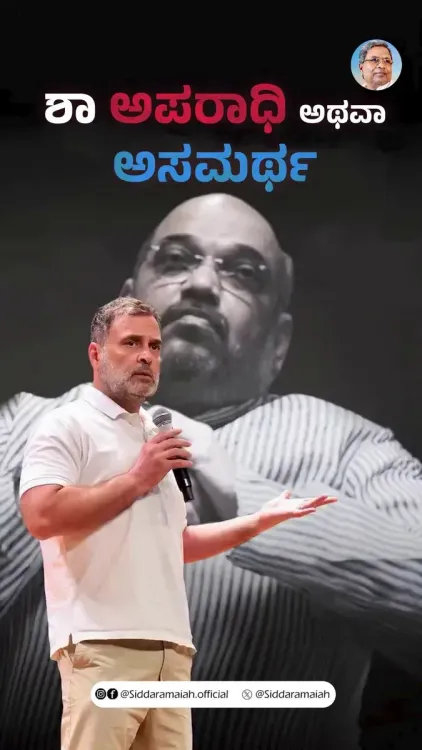
Karnataka CM Siddaramaiah condemned Delhi Police's alleged use of pellet guns, spiked lathis, and plainclothes assailants against NEET paper-leak protesters at Jantar Mantar, directly blamed Home Minister Amit Shah, and backed Rahul Gandhi's demand for Shah's resignation.
Key Takeaways
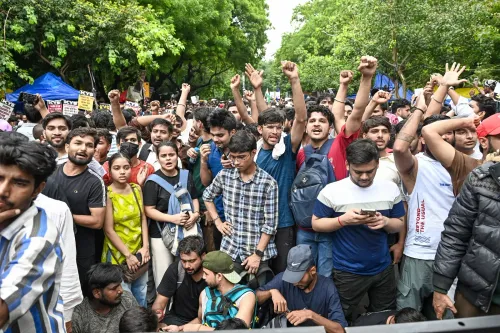
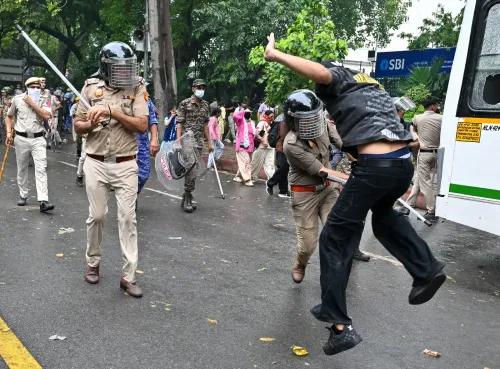
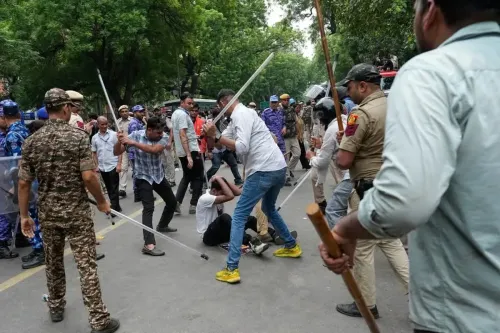
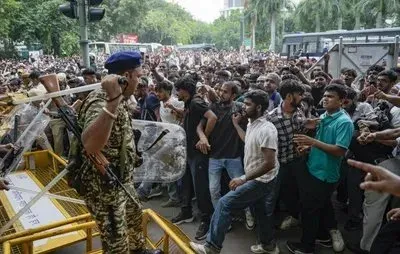
Karnataka CM Siddaramaiah called Delhi Police's crackdown on NEET paper-leak protesters at Jantar Mantar on 30 July 2026 'unforgivable.' He cited videos allegedly showing pellet guns, spiked lathis, slapping of women and minors, plainclothes attackers, and threats to plant cannabis on students.
Delhi Police reports directly to the Union Ministry of Home Affairs under Amit Shah , whom Siddaramaiah held directly responsible.
Siddaramaiah posed a pointed dilemma: either Shah ordered the force, or he failed to control it — both damaging conclusions.
He endorsed Rahul Gandhi 's demand that Amit Shah resign over the crackdown.
He argued that peaceful protest is a constitutional right and that treating students 'worse than terrorists is not befitting a democratic government.'
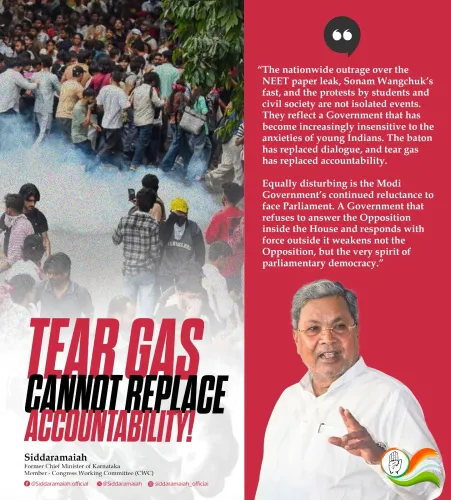
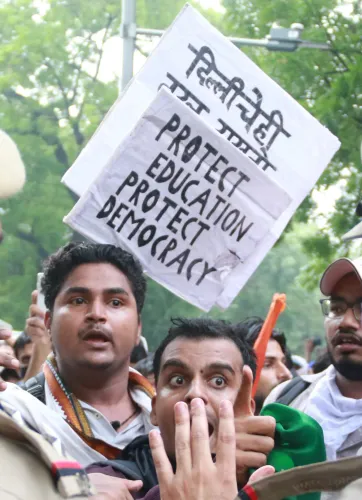
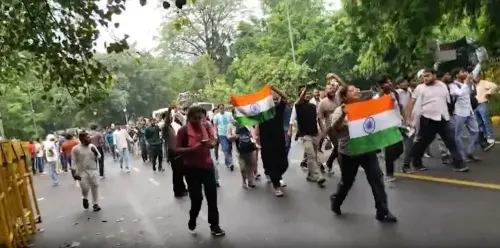
Pellet guns and lathis against students demanding justice for an exam scandal — Karnataka Chief Minister Siddaramaiah called that 'unforgivable' on Thursday, 30 July 2026, firing a sharp political broadside at Union Home Minister Amit Shah over Delhi Police's handling of NEET paper-leak protests at Jantar Mantar, New Delhi.
In a lengthy post in Kannada, Siddaramaiah catalogued a series of alleged police excesses visible in videos circulating online — officers tripping students, slapping women and minors, prodding female protesters from behind with lathis, threatening to plant cannabis on students to frame them, deploying men in plainclothes to assault demonstrators, using spiked batons, and smashing vehicle windows themselves. 'We have seen videos of violence against protesting students in multiple ways,' he wrote. 'Attacking those who are the future of the country is unforgivable.'
Why Siddaramaiah's Finger Points Directly at Amit Shah
Delhi Police operates under the Union Ministry of Home Affairs — not under the Delhi state government — making Amit Shah, as Home Minister, the chain-of-command anchor for any order to deploy force. Siddaramaiah pressed that logic hard: 'Suspicion is growing that Amit Shah himself ordered the pellet-gun attack on students. If he did not, who else would have? And if a Sub-Divisional Magistrate issued the order directly without Shah's knowledge, does that not mean the Home Minister is incompetent?'
The rhetorical trap is deliberate. Either Shah authorised disproportionate force — or he lost control of his own force. Neither answer flatters the minister.
Siddaramaiah Backs Rahul Gandhi's Resignation Demand
Siddaramaiah explicitly endorsed Rahul Gandhi's call for Shah to resign and take moral responsibility for the crackdown. 'I support Rahul Gandhi's demand that Amit Shah accept responsibility for the attack and step down,' he wrote — a rare instance of the Karnataka CM publicly aligning himself with the Congress national leadership's political position in such direct terms.
The post also invoked constitutional principle: peaceful protest and hunger strikes are the right of every citizen, Siddaramaiah argued, and treating students who seek justice 'worse than terrorists is not befitting a democratic government.'
NEET's Long Shadow Over Student Unrest
NEET — the National Eligibility cum Entrance Test — was introduced in 2013 on Supreme Court direction to replace a patchwork of state-level and national medical entrance exams with a single standardised test. Its centralised design was meant to eliminate irregularities; instead, periodic paper-leak allegations have made it a recurring flashpoint. Jantar Mantar, the designated protest ground in central Delhi, has hosted multiple such student demonstrations over the years, and police conduct there has drawn both public criticism and judicial scrutiny before.
Opposition-ruled states have consistently used NEET controversies to press accountability questions at the Centre — and Siddaramaiah's post fits that pattern precisely, escalating from the exam scandal itself to the conduct of the police force that answers to Delhi's central administration.
If the videos hold up to scrutiny, the pressure on the Home Ministry will not stay rhetorical for long — courts have moved before, and they can move again.
Point of View
Using the constitutional chain of command as the lever. By framing it as 'either Shah ordered it or Shah is incompetent,' he leaves the Home Ministry no comfortable exit. The alignment with Rahul Gandhi's resignation demand is also notable — it signals that Congress is coordinating this pressure across its state and national leadership. With NEET controversies already before the Supreme Court, the political heat from opposition-ruled states could feed back into judicial scrutiny of both the exam system and police conduct.
NationPress
30 Jul 2026
Frequently Asked Questions
What did Siddaramaiah say about the NEET protest crackdown?
Karnataka CM Siddaramaiah called the Delhi Police action against NEET paper-leak protesters at Jantar Mantar 'unforgivable,' citing videos allegedly showing pellet guns, spiked lathis, assault of women and minors, and threats to plant drugs on students.
Why is Amit Shah being held responsible for Delhi Police action?
Delhi Police operates under the Union Ministry of Home Affairs, which Amit Shah heads as Home Minister. Siddaramaiah argued that Shah is therefore directly accountable for any order to use force against protesters.
What is the NEET paper leak controversy?
NEET (National Eligibility cum Entrance Test) is India's single national medical entrance exam introduced in 2013. Allegations of question-paper leaks have triggered student protests in Delhi and other cities, with demonstrators demanding accountability and exam reforms.
Did Rahul Gandhi also demand Amit Shah's resignation over the NEET protests?
Yes. Rahul Gandhi called on Amit Shah to accept responsibility for the crackdown and resign. Siddaramaiah explicitly backed this demand in his post on 30 July 2026.
What is Jantar Mantar and why do protests happen there?
Jantar Mantar is a historic site in central New Delhi that serves as a designated protest venue. Various groups, including student demonstrators, regularly gather there to stage demonstrations and hunger strikes.