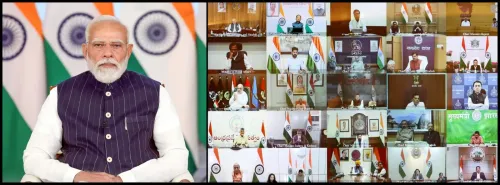
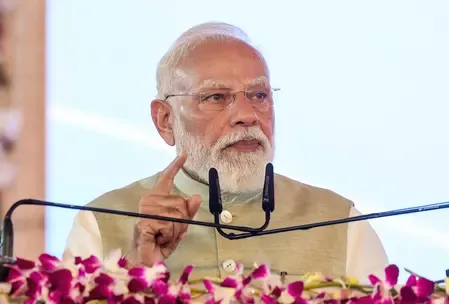
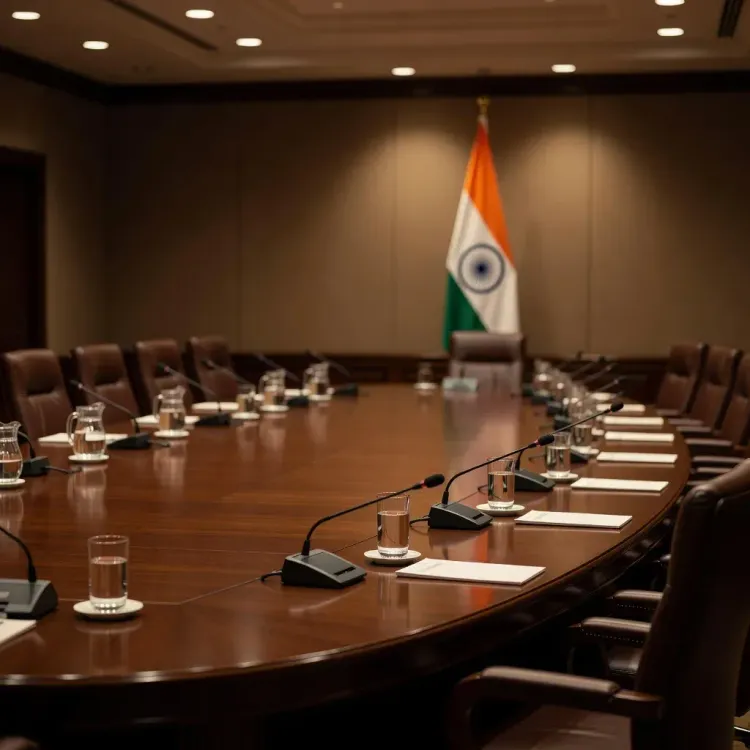
PM Modi chairs CCS meet on West Asia situation
Synopsis
Prime Minister Narendra Modi chaired a Cabinet Committee on Security meeting on 30 July 2026 to review developments in West Asia, focusing on the welfare of Indian expatriates in the Gulf and ensuring uninterrupted supply of crude oil and key commodities amid regional instability.
Key Takeaways
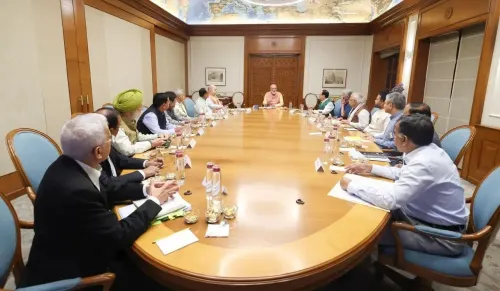
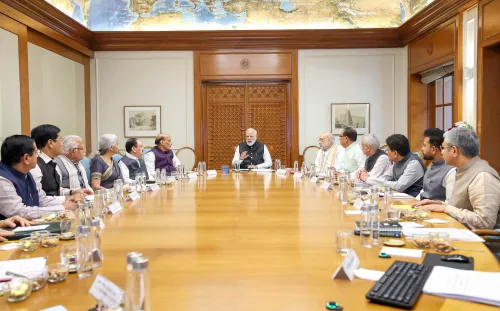
Prime Minister Narendra Modi chaired a Cabinet Committee on Security (CCS) meeting on 30 July 2026 to review the situation in West Asia .
The CCS is India's apex security body, including the ministers of defence, home, finance, and external affairs.
The meeting focused on two priorities: the welfare of Indian nationals in the Gulf region and ensuring uninterrupted supply of key commodities , including crude oil.
West Asia is the source of the bulk of India's crude oil imports and home to an estimated 8-9 million Indian expatriates .
India has followed the same CCS-led response pattern during previous West Asian crises, including after the October 2023 Israel-Hamas escalation and the 2022 Russia-Ukraine conflict.
An official Press Information Bureau release was issued alongside the meeting, indicating active inter-ministerial coordination.
As instability ripples through West Asia, Prime Minister Narendra Modi convened India's most powerful security cabinet on Thursday, 30 July 2026 — a signal that New Delhi is watching closely and moving early.
The Cabinet Committee on Security (CCS) — India's apex decision-making body on national security, comprising the ministers of defence, home, finance, and external affairs — met under the Prime Minister's chairmanship to assess the unfolding situation in the region. The agenda covered two pressure points that define India's stake in West Asian stability: the welfare of Indian nationals living and working there, and the continuity of supply for key commodities, most critically crude oil.
Why West Asia is never just a foreign-policy file
The Gulf is home to an estimated eight to nine million Indian expatriates, the largest overseas Indian community in any single region. Their remittances form a substantial pillar of household incomes across Kerala, Uttar Pradesh, Bihar, Rajasthan and beyond. Any deterioration in regional security raises immediate questions about their safety, their ability to continue working, and the logistics of evacuation if conditions worsen.
Simultaneously, West Asia supplies the bulk of India's crude oil imports. Disruptions to shipping lanes, port operations, or production infrastructure translate almost directly into domestic fuel prices — a politically and economically sensitive variable for a country of India's scale. The CCS meeting's explicit reference to 'uninterrupted supply of key items' signals that energy security sat at the centre of Thursday's deliberations.
A pattern India has rehearsed before
This is not the first time the CCS has been activated over West Asian turbulence. Following the October 2023 escalation between Israel and Hamas, the committee reviewed both citizen welfare and oil supply routes. The 2022 Russia-Ukraine conflict prompted a similar review of energy security and commodity continuity. India's institutional reflex — convene the CCS, assess the exposure, coordinate across ministries — reflects a doctrine built on two pillars: protect citizens abroad, stabilise the economy at home.
The government also linked the meeting to an official Press Information Bureau release, indicating that formal inter-ministerial coordination is already under way rather than still being planned.
What New Delhi is watching next
Follow-on signals will come from the Ministry of External Affairs, which typically issues travel advisories and consular alerts when the CCS flags citizen welfare concerns. Any movement on India's strategic petroleum reserves or emergency procurement would indicate how seriously supply disruption is being priced in. For the millions of Indian families with relatives in the Gulf, Thursday's meeting is the government's clearest public acknowledgement yet that the situation demands active management — not passive monitoring.
India has navigated West Asian crises before. The machinery is in motion.
Point of View
Coordinating instrument the moment a foreign crisis threatens India's two most exposed variables — energy imports and overseas citizens. The public disclosure of the meeting, linked to a formal PIB release, is itself a calibrated signal — reassuring domestic audiences while putting diplomatic partners on notice that India is engaged. Over successive crises, from the Ukraine war to the Gaza escalation, this pattern has become a recognisable doctrine of proactive economic-security management. The test, as always, will be in the follow-through: whether strategic reserves are deployed, whether evacuation protocols are activated, and whether diplomatic channels in the Gulf translate into tangible protection for Indian workers on the ground.
NationPress
30 Jul 2026
Frequently Asked Questions
What is the Cabinet Committee on Security (CCS)?
The Cabinet Committee on Security is India's highest decision-making body on national security matters. It is chaired by the Prime Minister and includes the ministers of defence, home affairs, finance, and external affairs.
Why did PM Modi call a CCS meeting on West Asia?
PM Modi chaired the CCS meeting on 30 July 2026 to review ongoing developments in West Asia, with a focus on the safety of Indian nationals in the Gulf region and ensuring uninterrupted supply of crude oil and other essential commodities.
How many Indians live and work in the Gulf region?
An estimated eight to nine million Indian expatriates live and work across Gulf countries, making the region home to the largest concentration of the Indian diaspora anywhere in the world.
How does West Asian instability affect India's oil supply?
West Asia supplies the bulk of India's crude oil imports. Disruptions to regional shipping lanes or production can directly push up domestic fuel prices, making energy security a central concern whenever the region faces instability.
Has India held CCS meetings over West Asian crises before?
Yes. The CCS reviewed energy security and citizen welfare after the October 2023 Israel-Hamas escalation and again during the 2022 Russia-Ukraine conflict, establishing a pattern of proactive inter-ministerial review during regional crises.