Dr. Jitendra Singh Flags Paper Leaks in Rajya Sabha Debate

Synopsis
Union Minister Dr. Jitendra Singh intervened in the Rajya Sabha debate on the Public Examinations (Prevention of Unfair Means) Amendment Bill, 2026, highlighting a long history of paper leaks across India and naming Punjab and Karnataka as the latest states to report such incidents.
Key Takeaways
Jitendra Singh spoke in the Rajya Sabha on July 30, 2026 during debate on the Public Examinations (Prevention of Unfair Means) Amendment Bill, 2026 .
He stated that paper leak incidents span 'several years' and named Punjab and Karnataka as the latest states to report such cases.
The amendment builds on the original Public Examinations (Prevention of Unfair Means) Act, 2024 , enacted after high-profile national exam scandals.
The bill aims to strengthen enforcement against unfair means in public examinations across India.
Passage and enforcement rules will determine the law's real-world impact on state and central examination boards.
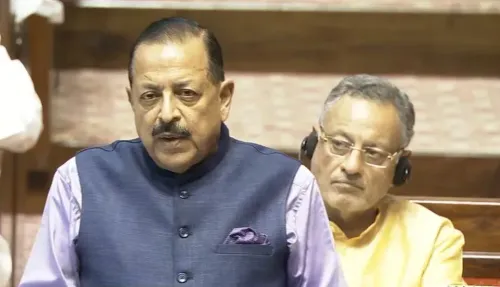
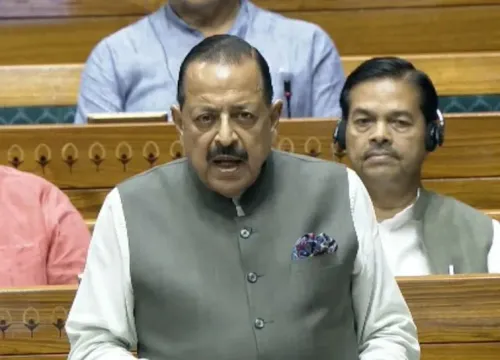
Paper leaks have become a recurring national wound — and on Thursday, July 30, 2026, Union Minister Dr. Jitendra Singh made that case on the floor of the Rajya Sabha, intervening in the debate on the Public Examinations (Prevention of Unfair Means) Amendment Bill, 2026 and pointing squarely at recent incidents in Punjab and Karnataka as the latest chapters in a long, damaging story.
A Pattern Stretching Across Years and States
Dr. Singh's intervention drew on what has become an uncomfortable national pattern. 'The list of Paper Leak instances is long, extending over several years, with the latest paper leaks being reported from the States of Punjab and Karnataka,' he told the House. The remark was not an isolated charge — it was a frame: that no single state or government owns this crisis, and that the rot runs deep enough to demand a legislative response at the central level.
The original Public Examinations (Prevention of Unfair Means) Act, 2024 was itself born out of high-profile scandals that shook student confidence in national-level competitive exams. The 2026 Amendment Bill now before Parliament signals that the 2024 law alone has not been sufficient to stem the tide.
Why Punjab and Karnataka Were Named
By specifically naming Punjab and Karnataka — both states currently governed by opposition parties — the minister's remarks carry political weight inside a legislative chamber already divided on federal responsibility. The framing places the burden of recent failures on state-level examination machinery, even as the central government pushes for tougher national-level enforcement tools through the amendment.
For millions of students who sit competitive and recruitment examinations each year, the stakes are existential: a leaked paper does not just taint a result, it can erase a year of preparation and a shot at a government job or college seat.
What the Amendment Bill Seeks to Do
Details of the specific provisions in the 2026 Amendment Bill are still emerging from parliamentary proceedings. What is clear from the broader legislative arc is that successive amendments have moved toward criminalising unfair means more stringently and tightening coordination between central agencies and state examination boards — the two layers of governance where leaks have historically slipped through.
The Rajya Sabha debate marks a key legislative moment; the bill's passage and any rules subsequently notified for enforcement will determine whether the amended law has real teeth on the ground.
If the pattern of the past decade holds, the amendment will pass — but the harder test will be whether enforcement catches up with the ingenuity of those who profit from compromised exams.
Point of View
Cross-party problem rather than a partisan one, while implicitly putting opposition-governed Punjab and Karnataka in the spotlight. The 2026 Amendment Bill arriving so soon after the 2024 Act signals that the government acknowledges the original law's enforcement gaps. For the BJP, tighter central oversight of examinations also doubles as political capital: it positions the Union government as the guardian of meritocracy against state-level administrative failure. The real test of intent will come not in Parliament, but in whether the amended law reaches the networks that actually leak papers.
NationPress
30 Jul 2026
Frequently Asked Questions
What is the Public Examinations (Prevention of Unfair Means) Amendment Bill, 2026?
It is a parliamentary bill introduced in 2026 to amend the Public Examinations (Prevention of Unfair Means) Act, 2024, which was enacted to criminalise unfair means in public examinations and strengthen enforcement against paper leaks in India.
Which states did Dr. Jitendra Singh name for paper leaks in Rajya Sabha?
Dr. Jitendra Singh named Punjab and Karnataka as the latest states to report paper leak incidents during his intervention in the Rajya Sabha on July 30, 2026.
What was the original Public Examinations Act of 2024 about?
The Public Examinations (Prevention of Unfair Means) Act, 2024 was enacted after multiple high-profile leaks in national-level exams. It criminalised unfair means in public examinations and sought to coordinate enforcement across jurisdictions.
Why is paper leak a major issue in India?
Paper leaks in competitive and recruitment examinations have spanned several years and multiple states, eroding trust in admission and government job processes and affecting millions of students who invest years of preparation.
What happens after the Amendment Bill is passed in Rajya Sabha?
After parliamentary passage, the Union government would notify enforcement rules under the amended law, which would determine how central agencies and state examination boards coordinate to prevent future paper leaks.