Dr. Jitendra Singh: NTA Finished Congress's 33-Year Unfinished Task
Synopsis
Union Minister Dr. Jitendra Singh told Rajya Sabha on July 30, 2026, that Congress-led governments ignored high-level commission recommendations for 33 years before PM Modi's government established the National Testing Agency in 2017, consolidating JEE Main, NEET and other national entrance exams.
Key Takeaways
Jitendra Singh made the remarks in the Rajya Sabha on July 30, 2026 , defending the National Testing Agency against Opposition criticism.
He claimed Congress-led governments refused to establish a national testing agency for 33 years , citing high-level commission recommendations from 1992 and 2010 .
The NTA was formally announced in the Union Budget 2017-18 as an autonomous body under the Ministry of Education.
Before the NTA, national exams like JEE Main and NEET were conducted by fragmented bodies including CBSE and AICTE .
The specific commission recommendations and the 33-year timeline cited by the minister have not been independently corroborated from widely available public records.
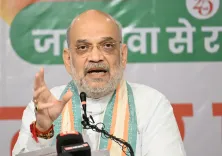
A pointed political salvo landed in the upper house on Thursday, July 30, 2026, when Union Science and Technology Minister Dr. Jitendra Singh turned the Opposition's critique of the National Testing Agency (NTA) on its head — arguing that successive Congress-led governments had themselves refused to act on the very reforms they now question.
Speaking in the Rajya Sabha, Dr. Singh stated that Congress-led governments declined to establish a national testing agency for 33 years, despite recommendations from high-level commissions — citing, in particular, reports from 1992 and 2010. 'The Opposition should, therefore, be grateful to PM Sh Narendra Modi for having finished their unfinished task by setting up the National Testing Agency,' he said, framing the BJP government's 2017 move as completing decades of deferred governance.
What the NTA Was Created to Fix
Before the NTA's establishment, national entrance examinations — including JEE Main and NEET — were conducted by a patchwork of bodies such as CBSE and AICTE, leading to coordination gaps and inconsistency in delivery. The Union Budget 2017-18 formally announced the NTA as an autonomous body under the Ministry of Education, consolidating these high-stakes examinations under a single, dedicated institution. The shift affected millions of higher-education aspirants across the country.The Parliamentary Arithmetic of Blame
Dr. Singh's floor argument follows a well-worn pattern in parliamentary exchanges on institutional reform: the ruling party frames long-pending actions as evidence of Opposition failure, while the Opposition contests the implementation record of what was eventually built. The NTA has itself faced scrutiny in recent parliamentary sessions over examination conduct and administration — which is precisely the context in which Dr. Singh's defence was offered. The specific commission recommendations from 1992 and 2010, and the precise 33-year figure cited by the minister, are claims that official records would need to corroborate. What is on the record: the NTA was constituted in 2017, and the Congress party last held power at the Centre until 2014. The larger question the Rajya Sabha exchange leaves hanging — whether the NTA, now built, is delivering on the promise those long-ago commissions envisioned — is one that future parliamentary sessions will almost certainly revisit.Point of View
Pivot to the Opposition's prior inaction. The 33-year framing is politically potent — it spans multiple Congress governments and two named commission reports — but its evidentiary basis remains publicly unverified, which is a vulnerability Opposition members could exploit. More broadly, the exchange reflects how the NTA has evolved from a reform trophy into a contested political object, with both sides now invested in controlling its narrative. Whether the debate produces substantive scrutiny of NTA's functioning, or remains a blame-allocation exercise, will define the quality of parliamentary oversight on a body that shapes the futures of millions of students.
NationPress
14 Sept 2026
Frequently Asked Questions
Why did Dr. Jitendra Singh defend the NTA in Rajya Sabha?
Dr. Singh defended the NTA in Rajya Sabha on July 30, 2026, by arguing that Congress-led governments had themselves ignored high-level commission recommendations to set up such a body for 33 years, and that PM Modi's government completed that long-deferred task in 2017.
When was the National Testing Agency established?
The NTA was established as an autonomous body under the Ministry of Education following its announcement in the Union Budget 2017-18, during the government led by Prime Minister Narendra Modi.
What exams does the National Testing Agency conduct?
The NTA conducts major national entrance examinations including JEE Main for engineering admissions and NEET for medical admissions, centralising tests that were previously managed by bodies like CBSE and AICTE.
What were the 1992 and 2010 commission recommendations Dr. Jitendra Singh mentioned?
Dr. Singh cited recommendations from high-level commissions in 1992 and 2010 that reportedly called for a national testing agency. These specific recommendations have not been independently corroborated from widely available public records.
What is the Congress party's position on the NTA?
Congress and the broader Opposition have raised concerns about NTA's functioning and examination conduct in parliamentary sessions, which is the context in which Dr. Singh's counter-argument was delivered.