PM Modi Urges State Leaders to Unite Against West Asia Crisis
Synopsis
In response to the West Asia crisis, PM Modi convenes a crucial video conference with state leaders to strategize on maintaining India's economic stability and energy security. The focus is on collaboration and proactive measures to safeguard citizens and supply chains.
Key Takeaways
PM Modi emphasized the 'Team India' approach for collaborative crisis management.
Focus on economic stability and energy security is paramount.
Proactive measures include reducing excise duties and ensuring LPG availability.
States must monitor supply chains and prevent hoarding.
Accurate information dissemination is crucial to maintain public confidence.
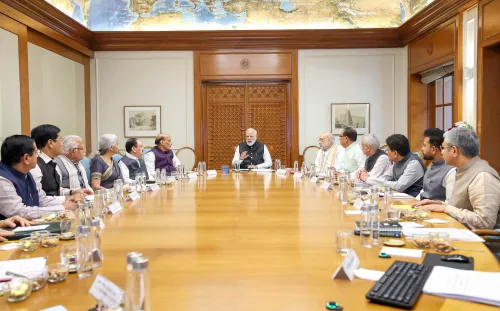
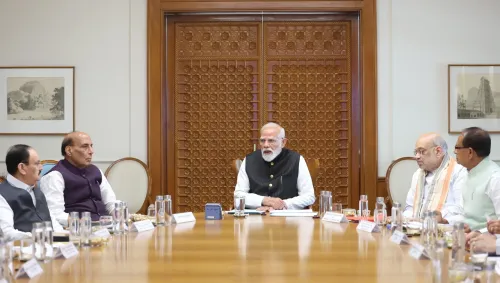
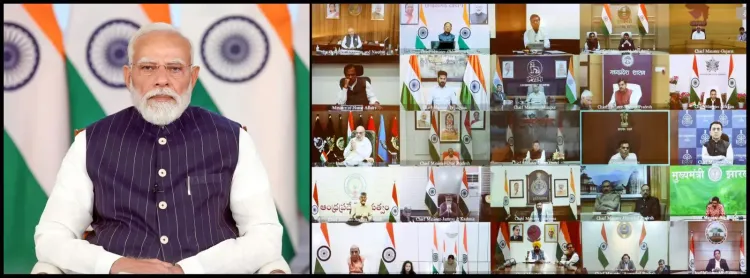
New Delhi, March 27 (NationPress) Prime Minister Narendra Modi convened a video conference on Friday with Chief Ministers and Lieutenant Governors to assess India's readiness in response to the changing dynamics in West Asia and its possible repercussions on the nation's economy, energy security, and supply chains.
Displaying confidence in India's ability to surmount these challenges through a collaborative effort termed “Team India”, the Prime Minister emphasized that the government's primary objectives are to preserve economic and trade stability, protect citizens’ welfare, guarantee energy security, and fortify industry and supply chains.
He urged states to facilitate the uninterrupted operation of supply chains and implement stringent actions against hoarding and price gouging.
The Prime Minister also pointed out the necessity for proactive planning within the agriculture sector, especially in overseeing the storage and distribution of fertilizers to avert disruptions during the forthcoming Kharif season. He underscored the importance of establishing effective coordination frameworks at all governance levels for prompt responses to changing scenarios.
He highlighted that special care should be taken in border and coastal states to tackle issues associated with shipping, essential supplies, and maritime operations.
Addressing concerns over misinformation and false rumors, the Prime Minister stressed the need for the dissemination of accurate and trustworthy information to uphold public trust. He called on states to activate control rooms, helplines, and designate nodal officers to ensure timely communication and support for citizens, particularly those with family members in West Asia.
During the meeting, Defence Minister Rajnath Singh noted that the government has already initiated proactive measures, such as reducing excise duty on petrol and diesel and ensuring the timely provision of LPG.
Cabinet Secretary T.V. Somanathan delivered a comprehensive assessment of the ongoing situation and recommended steps for states to bolster their preparedness. Union Home Minister Amit Shah and Defence Minister Rajnath Singh were also present among other senior leaders.
Chief Ministers recognized the Central government's initiatives under the Prime Minister's guidance, including diplomatic efforts to protect Indian citizens overseas. They appreciated the reduction in fuel excise duty and the increase in commercial LPG supplies to states, which have now returned to 70% of pre-crisis levels.
They expressed confidence that the situation remains stable, with sufficient supplies of petrol, diesel, and LPG, and reaffirmed their intent to collaborate closely with the Centre.
The Prime Minister concluded by reiterating that overcoming these challenges is a collective responsibility, assuring that through united efforts, India will successfully navigate this crisis.
Chief Ministers who participated included N. Chandrababu Naidu (Andhra Pradesh), Vishnu Deo Sai (Chhattisgarh), A. Revanth Reddy (Telangana), Yogi Adityanath (Uttar Pradesh), Omar Abdullah (Jammu and Kashmir), Bhagwant Mann (Punjab), Mohan Yadav (Madhya Pradesh), Hemant Soren (Jharkhand), Pushkar Singh Dhami (Uttarakhand), Bhupendra Patel (Gujarat), and Devendra Fadnavis (Maharashtra).
The Chief Ministers from election-bound states -- Tamil Nadu (M.K. Stalin), West Bengal (Mamata Banerjee), Assam (Himanta Biswa Sarma), Kerala (Pinarayi Vijayan), and Puducherry (N. Rangasamy) -- did not attend due to the Model Code of Conduct.
Point of View
The government aims to ensure that India remains resilient amidst evolving challenges while prioritizing the welfare of its citizens.
NationPress
15 Sept 2026
Frequently Asked Questions
What was the purpose of PM Modi's video conference?
The video conference aimed to assess India's preparedness regarding the evolving situation in West Asia and its potential impacts on the economy, energy security, and supply chains.
What did PM Modi emphasize during the meeting?
PM Modi emphasized the need for a collaborative 'Team India' approach to tackle challenges while ensuring economic stability, safeguarding citizens' interests, and maintaining energy security.
What proactive steps has the government taken?
The government has reduced excise duties on petrol and diesel and ensured the timely availability of LPG to mitigate the crisis's impacts.
How are states expected to respond to the situation?
States are urged to ensure smooth supply chain operations and take strict measures against hoarding and profiteering.
Which Chief Ministers participated in the conference?
Chief Ministers from various states including Andhra Pradesh, Chhattisgarh, Telangana, and Uttar Pradesh participated, while some from poll-bound states did not attend.