PM Modi Asserts Strong Indian Economy Amid West Asia Conflict
Synopsis
Prime Minister Modi reassures citizens of India's economic resilience as the government takes steps to mitigate the impact of the West Asia conflict. With robust strategies in place, the focus remains on ensuring the safety of supplies and supporting farmers during these challenging times.
Key Takeaways
Indian economy fundamentals are strong.
Government is monitoring the West Asia conflict closely.
Inter-Ministerial Group formed for import-export challenges.
Efforts to ensure adequate fertilizer supply for farmers.
372,000 Indians have returned safely since the conflict began.
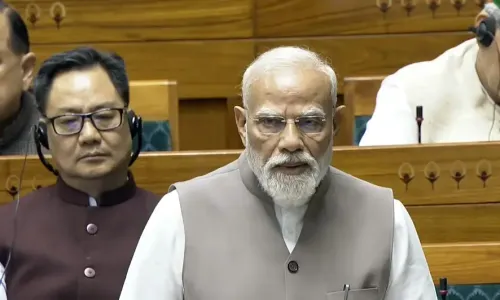
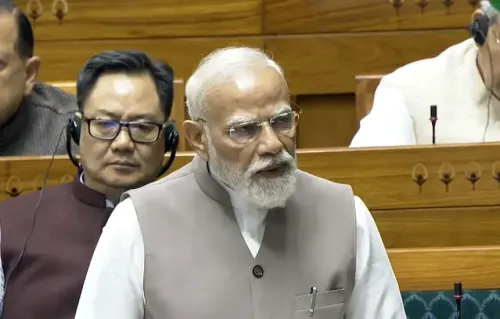
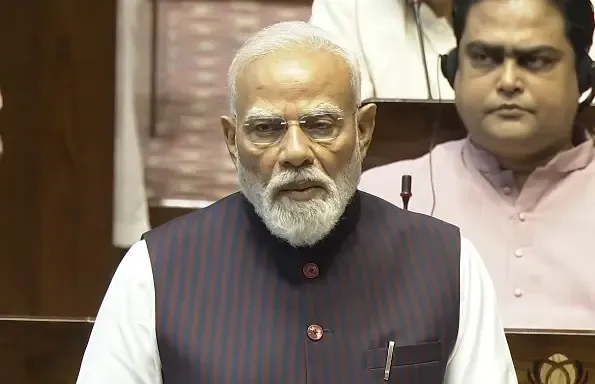
New Delhi, March 24 (NationPress) On Tuesday, Prime Minister Narendra Modi emphasized that the foundations of the Indian economy are robust, and the government is actively working to minimize the impact of the conflict in West Asia on the nation.
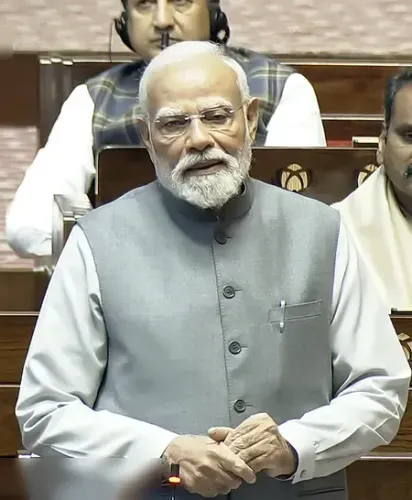
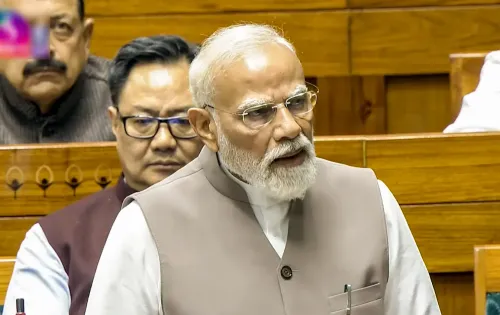
During his address in the Rajya Sabha regarding the West Asia situation, PM Modi remarked, "This ongoing crisis has disrupted the economies globally. Recovery from the repercussions of the West Asia conflict will take considerable time. We are making continuous efforts to ensure that it affects India as little as possible. Our economic fundamentals remain strong, and the government is closely monitoring the evolving circumstances. A strategic approach is being adopted to manage the short-term, medium-term, and long-term ramifications."
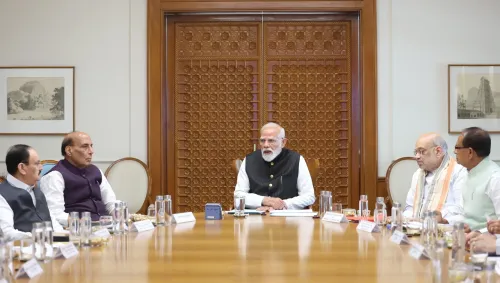
He revealed that the Centre has established an Inter-Ministerial Group that convenes regularly to evaluate challenges in India’s imports and exports. This group consistently seeks necessary solutions to emerging issues.
"Similar to the empowered groups formed during the Covid pandemic to address sectoral challenges, six new empowered groups were constituted yesterday. Their focus will be on critical areas such as supply chains, fuel, fertilizers, gas, and inflation, working swiftly and effectively under a comprehensive strategy," he stated, expressing confidence that these collective efforts will enhance the country's response to the situation.
The Prime Minister also highlighted that the Strait of Hormuz serves as one of the largest conduits for global trade, facilitating significant transport of crude oil, gas, and fertilizers.
"Since the onset of the war, navigating the Strait of Hormuz has become considerably challenging. Nevertheless, despite these adversities, our government has endeavored to establish pathways through dialogue and diplomacy. Our goal is to guarantee that oil and gas supplies reach India from all possible sources. The outcome of these efforts is already visible," he mentioned.
In recent days, PM Modi noted that ships delivering crude oil and LPG from various nations have successfully arrived in India.
"We will persist in our endeavors to ensure that vessels transporting essential goods, whether oil, gas, or fertilizers, reach India safely," he added.
"However, if global conditions stemming from this conflict remain unchanged, significant adverse effects are unavoidable. Therefore, India is intensifying efforts to bolster resilience," he cautioned.
PM Modi reassured farmers that the government is committed to ensuring they receive sufficient fertilizers during the upcoming sowing season.
"The government is tirelessly working to ensure that farmers are not burdened by any crises. I reaffirm our commitment to stand by farmers in overcoming any challenges," he stated.
Over the past 11 years, the Prime Minister noted that India has consistently worked to address such situations, mentioning the diversification of energy imports from 27 to 41 countries, the establishment of strategic petroleum reserves, and an increase in refining capacity.
"I assure both the House and the country that India has adequate crude oil storage and arrangements for a continuous supply," he concluded.
Reiterating the government's commitment to the safety of Indian citizens, PM Modi provided data indicating that since the conflict began, more than 372,000 Indians have returned safely to the country, including over 1,000 from Iran.
"Our government is operating with utmost sensitivity during this crisis," PM Modi remarked, adding that affected families are receiving necessary assistance.
Point of View
PM Modi's assurances about the strength of the Indian economy amidst the West Asia conflict reflect a commitment to resilience and proactive governance. The measures announced aim to safeguard essential supplies while addressing potential economic repercussions, underscoring a nation-first approach.
NationPress
24 Sept 2026
Frequently Asked Questions
What measures is the Indian government taking to support farmers during the conflict?
The government is ensuring adequate fertilizer supply for the upcoming sowing season and is committed to standing by farmers to alleviate any burdens caused by the crisis.
How is the Indian economy being affected by the West Asia conflict?
The conflict has disrupted global economies, but the Indian government is focused on minimizing its impact through strategic monitoring and interventions.
What is the role of the Inter-Ministerial Group mentioned by PM Modi?
The Inter-Ministerial Group regularly assesses challenges related to imports and exports, working on solutions to ensure economic stability.
How many Indians have returned home since the conflict began?
Over 372,000 Indians have safely returned to India since the conflict commenced.
What assurances did PM Modi give regarding oil and gas supplies?
PM Modi assured that the government is actively working to maintain oil and gas supplies to India, despite challenges in global transport routes.