Two Baloch students forcibly disappeared by Pakistani forces in July
Synopsis
Two Baloch students — a 23-year-old from Multan and a 17-year-old from Quetta — were forcibly disappeared by Pakistani forces in July, according to rights group Paank, which is now demanding urgent UN and EU intervention. The cases emerge alongside the killing of a Balochistan district judge, with diaspora leaders alleging secret state agency involvement.
Key Takeaways
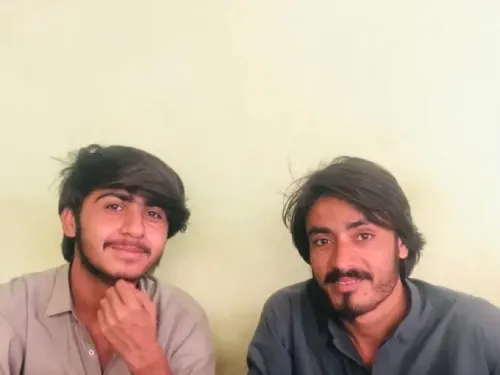
Bakhtiyar Baloch , 23, was forcibly disappeared on 10 July from Nishtar Hospital, Multan , Punjab.
Noor Zaib , 17, was disappeared last month from Sariab Road, Quetta , Balochistan.
Rights body Paank condemned the incidents as part of a 'deeply alarming pattern of impunity.' Paank has called on the UN , UN Working Group on Enforced Disappearances , EU , and international community to intervene urgently.
Tara Chand of the Baloch American Congress demanded an independent probe into the killing of Mastung judge Abdul Hakeem Kakar , including alleged state agency involvement.
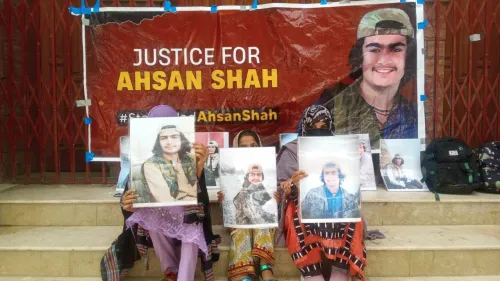
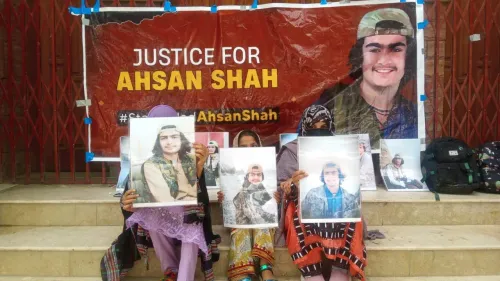
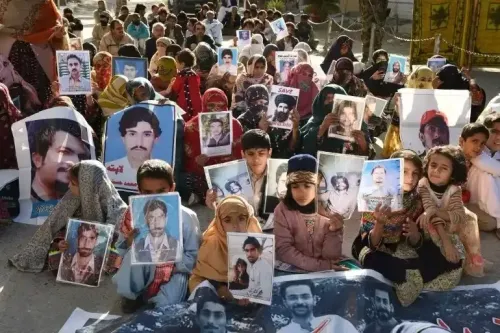
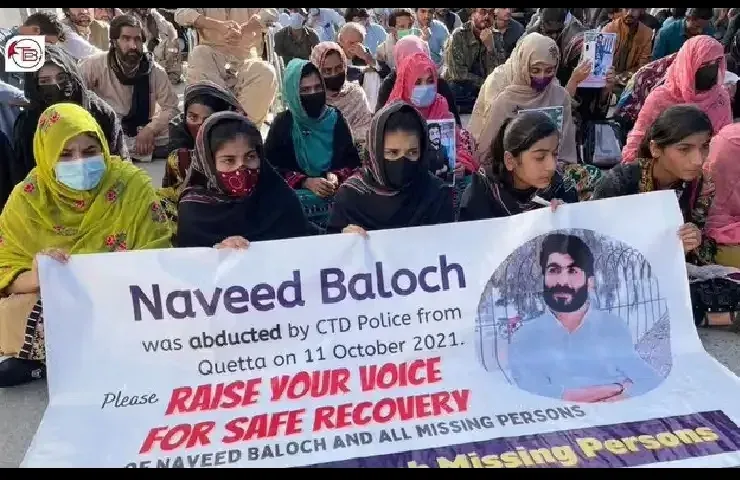
Two Baloch students were subjected to enforced disappearances by Pakistani forces in Balochistan and Punjab provinces, according to Paank, the human rights department of the Baloch National Movement, which disclosed the cases on Thursday, 30 July. The incidents have drawn fresh condemnation from rights groups and diaspora organisations, adding to a long-documented pattern of enforced disappearances targeting Baloch civilians.
The Two Cases
Bakhtiyar Baloch, a 23-year-old student, was forcibly disappeared by Pakistani forces on 10 July from Nishtar Hospital in Multan, Punjab. In a separate incident, Noor Zaib, aged 17, was reportedly disappeared last month from Sariab Road in Quetta, the provincial capital of Balochistan. Both cases were documented and disclosed by Paank.
What Paank Said
Paank condemned the incidents in strong terms, stating: 'The continued targeting of Baloch students and civilians through enforced disappearances reflects a deeply alarming pattern of impunity that demands urgent international attention. The disappearance of young people, including students, is an attack on human dignity and the rule of law. No authority should be allowed to operate beyond legal accountability or deprive individuals of their fundamental rights through secret detention and incommunicado custody.'
The rights body further noted that such acts constitute grave violations of fundamental human rights, including the rights to liberty, security, due process, and protection from arbitrary detention. It described enforced disappearance as 'a serious violation of international human rights law' that 'inflicts lasting suffering on victims and their families.'
International Intervention Demanded
Paank formally called on the United Nations, the UN Working Group on Enforced or Involuntary Disappearances, relevant UN Special Rapporteurs, the European Union, and the broader international community to urgently intervene and take concrete action. 'Silence and inaction only embolden perpetrators and prolong the suffering of victims' families, who continue to live without truth, justice, or accountability,' the organisation added.
Judge's Killing Sparks Separate Outcry
In a related development, Tara Chand, President of the Baloch American Congress, sharply criticised the killing of Abdul Hakeem Kakar, the District and Sessions Judge of Mastung district in Balochistan, described as an honest judge who served the poor and upheld justice. Posting on X, Chand called for an independent and transparent inquiry into the killing, including into 'alleged involvement of secret Pakistani state agencies.' He stated: 'Those responsible for this crime must be identified and held accountable based on credible evidence.'
The twin disclosures come amid sustained international scrutiny of Pakistan's human rights record in Balochistan, a region where enforced disappearances have been documented by the UN and multiple rights groups over more than two decades. Whether Islamabad will respond to the latest calls for accountability remains to be seen.
Point of View
Signalling that the reach of these operations extends well beyond the province. The simultaneous killing of a sitting district judge — with allegations of state agency involvement — suggests an erosion of institutional boundaries that should alarm any observer of Pakistan's democratic stability. International calls for accountability have been made before; the question is whether this moment, with the UN Working Group already engaged on Balochistan, will produce a different response.
NationPress
30 Jul 2026
Frequently Asked Questions
Who are the two Baloch students reportedly disappeared by Pakistani forces?
The two students are Bakhtiyar Baloch, 23, disappeared on 10 July from Nishtar Hospital in Multan, Punjab, and Noor Zaib, 17, disappeared last month from Sariab Road in Quetta, Balochistan. Both cases were documented by Paank, the human rights department of the Baloch National Movement.
What is Paank and why is its report significant?
Paank is the Human Rights Department of the Baloch National Movement, which monitors and documents enforced disappearances and other rights violations affecting Baloch civilians. Its reports are among the primary civil-society records of such incidents and have previously been cited in international human rights discussions.
What action has Paank demanded over the disappearances?
Paank has called on the United Nations, the UN Working Group on Enforced or Involuntary Disappearances, relevant UN Special Rapporteurs, the European Union, and the wider international community to urgently intervene and take concrete measures to address the ongoing crisis.
Who is Abdul Hakeem Kakar and why is his killing significant?
Abdul Hakeem Kakar was the District and Sessions Judge of Mastung district in Balochistan, described as an honest judge who served the poor. His killing has drawn sharp criticism from the Baloch American Congress, whose president Tara Chand has demanded an independent investigation, including into alleged involvement of secret Pakistani state agencies.
How does this fit into the broader pattern of enforced disappearances in Balochistan?
Enforced disappearances in Balochistan have been documented by the UN and multiple human rights organisations for over two decades. Rights groups argue that a persistent pattern of impunity allows such acts to continue unchecked, with victims' families left without truth, justice, or accountability.