India expands naval fleet with INS Mahendragiri, targets 200 ships by 2035
Synopsis
India's commissioning of INS Mahendragiri and INS Malvan is more than a routine induction — it is a data point in a deliberate race to field 200 ships by 2035, backed by a $8.4 billion maritime revival package and a domestic content push that already stands at 75 per cent on new frigates. With China's navy and Pakistan's Chinese-built submarines sharpening the strategic calculus, New Delhi's shipbuilding ambition has never been more urgent.
Key Takeaways
INS Mahendragiri and INS Malvan were commissioned into the Indian Navy in July 2025 , both indigenously built.
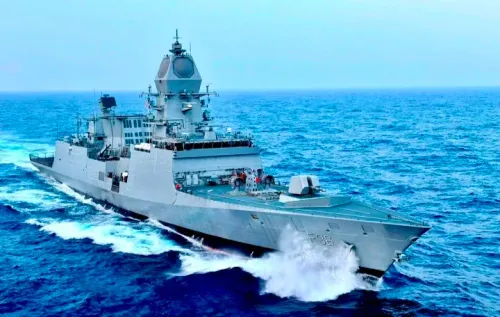
INS Mahendragiri carries 75 per cent indigenous content and is the sixth Nilgiri-class frigate.
India's navy currently has around 150 vessels , with nearly 50 more under construction; the target is 200 ships by 2035 .
A $8.4 billion maritime revival package was unveiled last year to make India a top-five shipbuilding nation by 2047 .
Analysts flag capacity constraints and supply chain gaps, recommending selective technology transfers from France, Russia, Israel , and the US .
Seven or eight next-generation warships under Project-17 Bravo are already in the pipeline.
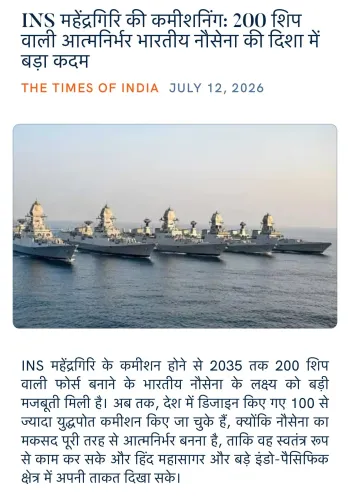
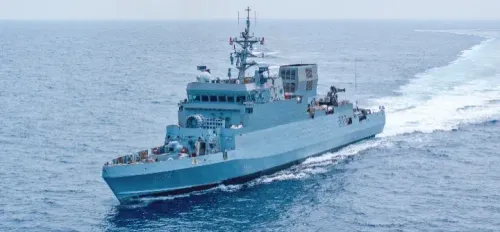
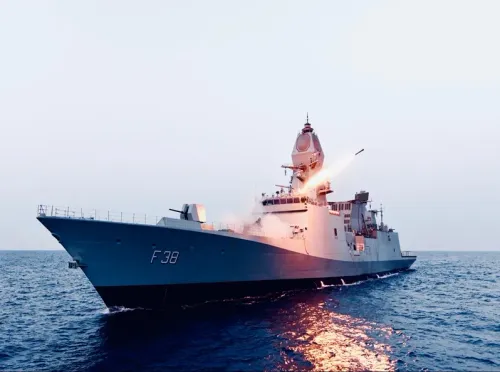
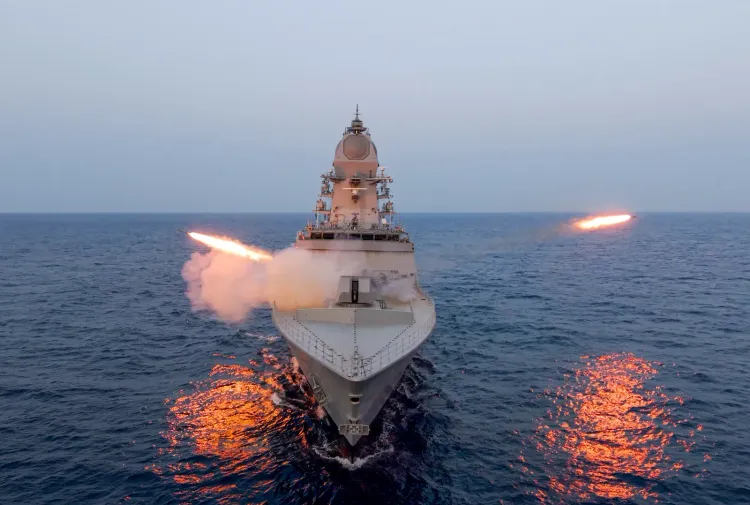
India commissioned two indigenously built warships — stealth frigate INS Mahendragiri and submarine hunter INS Malvan — into the Indian Navy this month, a move analysts describe as a significant step in New Delhi's drive to field a 200-ship navy by 2035 while reducing dependence on foreign defence suppliers. The commissioning comes as India seeks to counter China's rapidly expanding naval fleet and Pakistan's induction of advanced Chinese-built attack submarines.
The Two New Warships
INS Mahendragiri, designed by the Indian Navy's Warship Design Bureau and built by Mazagon Dock Shipbuilders, carries 75 per cent indigenous content — a direct reflection of Prime Minister Narendra Modi's Atmanirbhar Bharat (self-reliant India) push in the defence sector. It is the sixth ship to join the Nilgiri-class fleet.
The seventh and final Nilgiri-class vessel, Vindhyagiri, is expected to be inducted within months. Beyond that, seven or eight next-generation warships under the proposed Project-17 Bravo are already in the pipeline, according to reports.
Where the Fleet Stands Today
India's navy currently comprises around 150 vessels, including an estimated 135 frontline combat platforms — frigates, destroyers, and submarines — with nearly 50 additional ships under construction. According to Sanjay Misra, a former Rear Admiral and defence analyst, the composition of the fleet makes the 200-ship target well within reach.
'Considering that composition is largely made up of indigenously supported ships, the target of a 200-ship navy by 2035 is well within reach. Given the right impetus, we could even exceed this figure,' Misra said.
The Shipbuilding Ambition
Last year, New Delhi unveiled a $8.4 billion maritime revival package aimed at positioning India among the world's top five shipbuilding nations by 2047 — the centenary of the country's independence. Srinivasan Balakrishnan, Director of Strategic Engagements and Partnerships at the Indic Researchers Forum think tank, called the 200-ship goal ambitious but achievable, citing recent milestones including the INS Vikrant aircraft carrier delivered in 2022, the indigenous Kalvari-class submarines, and 10 domestically built destroyers.
Balakrishnan noted that the domestic manufacturing pipeline has expanded to cover corvettes, frigates, and patrol vessels. However, he cautioned that capacity constraints, a shortage of skilled workers, and supply chain bottlenecks in critical systems remain persistent challenges.
The Role of Foreign Partnerships
'India will likely need selective collaboration and technology transfers with foreign partners, such as France, Russia, Israel, and the US for propulsion, sensors and weapons integration,' Balakrishnan said, adding that hull construction and systems integration could largely be handled domestically — balancing self-reliance with timely delivery.
This is not a retreat from Atmanirbhar Bharat but a pragmatic calibration: build the hull at home, source the edge technologies through strategic partnerships. Notably, this approach mirrors how South Korea and Japan scaled their own naval industries over two decades.
Strategic Outlook
Balakrishnan underscored that a capable navy would be essential for India to secure its sea lanes, protect trade routes, and maintain credible deterrence in an increasingly contested Indo-Pacific. 'With focused investment and pragmatic partnerships, India is well positioned to meet this goal and bolster regional stability,' he said. All eyes now turn to the pace of Project-17 Bravo approvals and the rollout of the maritime revival package's first disbursements.
Point of View
But the harder metric is throughput: India needs to sustain an induction tempo that the domestic shipbuilding industry has historically struggled to match. The 75 per cent indigenous content figure is genuinely impressive, yet the acknowledged gaps in propulsion, sensors, and weapons integration reveal that self-reliance remains a work in progress rather than an achieved state. The $8.4 billion maritime revival package sets the right direction, but without resolving the skilled-workforce shortage and supply chain bottlenecks, the 200-ship target by 2035 risks becoming another aspirational headline. The strategic pressure from China's naval build-up means India cannot afford the delays that have plagued earlier programmes.
NationPress
30 Jul 2026
Frequently Asked Questions
What are INS Mahendragiri and INS Malvan?
INS Mahendragiri is a stealth frigate and INS Malvan is a submarine hunter, both indigenously built and commissioned into the Indian Navy in July 2025. INS Mahendragiri is the sixth Nilgiri-class frigate, built by Mazagon Dock Shipbuilders with 75 per cent indigenous content.
What is India's target for its naval fleet size?
India aims to expand its navy to more than 200 ships by 2035. The fleet currently stands at around 150 vessels, with nearly 50 additional ships under construction.
Why is India expanding its navy?
India is expanding its navy primarily to counter China's rapidly growing naval fleet and Pakistan's induction of advanced Chinese-built attack submarines. Securing sea lanes and protecting trade routes in the Indo-Pacific are also key drivers.
What is India's maritime revival package?
India unveiled a $8.4 billion maritime revival package last year aimed at making the country one of the world's top five shipbuilding nations by 2047, coinciding with the centenary of India's independence.
Will India still rely on foreign partners for its naval build-up?
Yes, selectively. Analysts recommend technology transfers with partners such as France, Russia, Israel, and the US for propulsion, sensors, and weapons integration, while hull construction and systems integration are expected to be handled domestically.