CM Bhajan Lal leads 'Save Democracy' march in Jodhpur
Synopsis
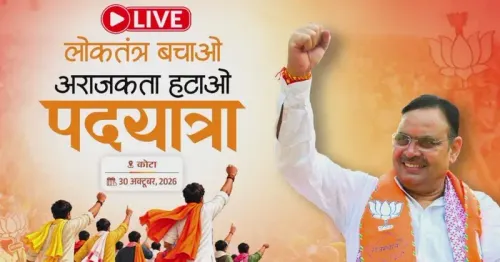
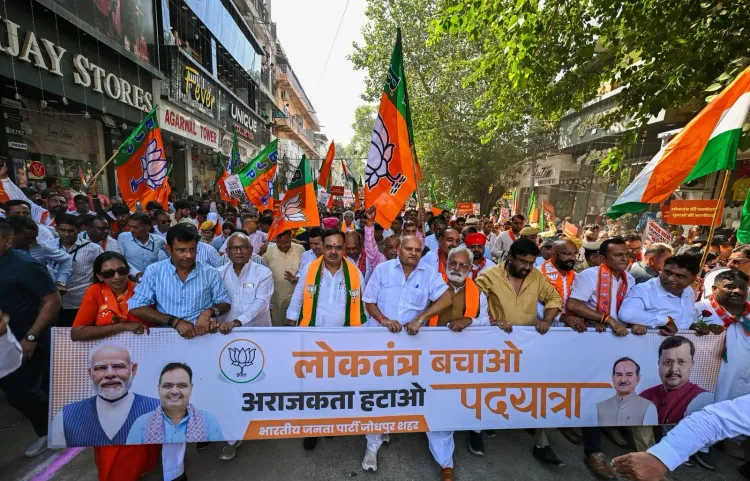
Rajasthan Chief Minister Bhajan Lal Sharma led the 'Loktantra Bachao – Anarajkata Hatao' padyatra in Jodhpur on November 3, 2026, affirming commitment to democratic values, constitutional institutions, and good governance while mobilising BJP workers and public representatives against what he called anti-people politics.
Key Takeaways
CM Bhajan Lal Sharma personally participated in the Loktantra Bachao – Anarajkata Hatao padyatra in Jodhpur on November 3, 2026 .
The march aimed to build public awareness against 'anarchy, disorder, and anti-people politics' while affirming constitutional values.
Sharma declared the party's resolve to protect democratic dignity, end anarchy, and advance Rajasthan on a path of good governance and development.
Elected representatives, local dignitaries, and large numbers of BJP workers participated in the padyatra.
The event follows the BJP's 2023 assembly election victory in Rajasthan, under which Sharma has led the state since December 2023 .
Jodhpur , a major political and commercial hub in western Rajasthan, was chosen as the venue, amplifying the march's symbolic and strategic reach.
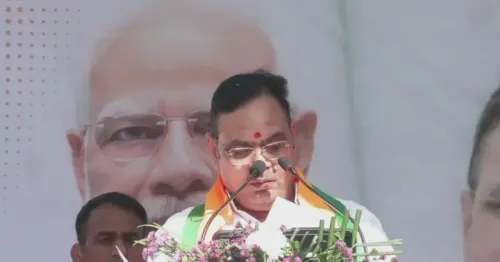
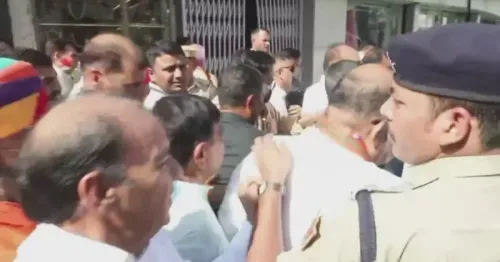
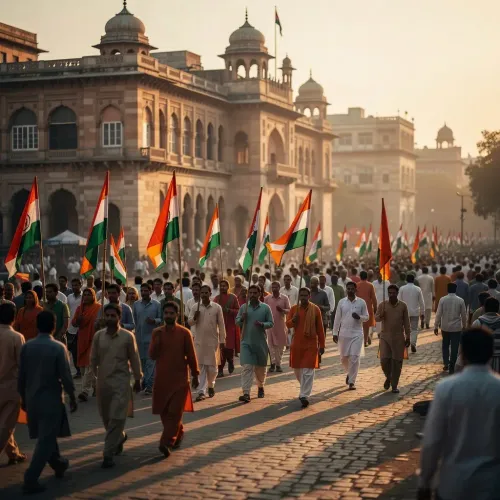
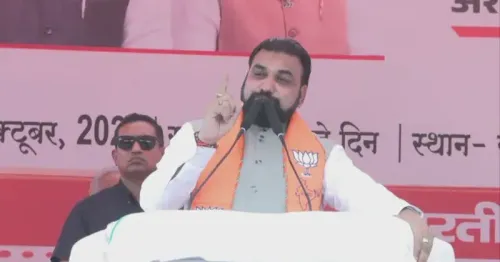
A mass street march through Jodhpur on Tuesday, November 3, 2026 put Rajasthan's ruling establishment squarely on the offensive — Rajasthan Chief Minister Bhajan Lal Sharma personally led the 'Loktantra Bachao – Anarajkata Hatao' ('Save Democracy – Remove Anarchy') padyatra, drawing elected representatives, local dignitaries, and large numbers of BJP workers to the western Rajasthan city.
'The people are supreme': Sharma's message from Jodhpur's streets
Posting on X after the march, Sharma framed the event in the language of constitutional obligation. 'In a democracy, the people are paramount,' he wrote. 'Respecting the public mandate, upholding the dignity of constitutional institutions, and maintaining an environment of peace and development in the state is our collective responsibility.' The march's stated aims — protecting democratic dignity and constitutional boundaries while building public awareness against what he called 'anarchic, disorderly, and anti-people politics' — read as a pointed mobilisation message aimed squarely at the opposition.
The CM declared the party's resolve 'unambiguous': the dignity of democracy must remain intact, anarchy must end, and Rajasthan must continue on a path of good governance and development. The strong turnout of public representatives and party workers in Jodhpur signalled that the BJP's state unit is investing in street-level visibility as a political tool.
Why Jodhpur, and why now
Jodhpur is no ordinary venue for a political show of force. The city carries deep symbolic weight in Rajasthan — it is the home turf of senior BJP leadership, a commercial hub of the state's arid west, and a constituency that has historically tracked the state's electoral pulse. Staging the march here amplifies its reach and signal value well beyond the city limits.
The broader pattern is recognisable across BJP-governed states: when the ruling party senses an opposition narrative gaining traction on law-and-order or governance, a disciplined public mobilisation is deployed to reset the frame. Since assuming office in December 2023 after the BJP's assembly election victory, Sharma's government has consistently positioned law-and-order restoration and development delivery as its twin pillars. The Jodhpur padyatra is the latest, and one of the most visible, expressions of that political posture.
What the opposition will likely say next
A march that explicitly invokes 'anarchy' and 'anti-people politics' is, by design, a provocation addressed to rivals. Watch for opposition parties in Rajasthan — particularly the Congress — to respond with counter-narratives around governance performance, price rises, or law-and-order specifics. The exchange is likely to spill into upcoming assembly sessions and any local-body or by-election cycles on the horizon.
A ruling party that takes its case to the street is also a ruling party nervous enough about the political weather to do so. Whether the Jodhpur march changes that weather — or merely photographs well against it — will be answered by the voters.
Point of View
Barely three years into his first term as CM, the march doubles as both a base-energising exercise and a pre-emptive frame-setter before any future electoral contest. The choice of 'anarchy' as the core charge — rather than a specific policy critique — is deliberate: it is broad enough to encompass any opposition activity while keeping the BJP on the high ground of democratic norms. How the Congress and other opposition parties in Rajasthan respond will determine whether this narrative gambit lands or backfires.
NationPress
3 Nov 2026
Frequently Asked Questions
What is the 'Loktantra Bachao – Anarajkata Hatao' padyatra?
It is a public march organised by the BJP in Jodhpur on November 3, 2026, led by Rajasthan Chief Minister Bhajan Lal Sharma, aimed at building awareness in defence of democratic and constitutional values and against what the party described as anarchy and anti-people politics.
Why did CM Bhajan Lal Sharma hold a march in Jodhpur?
Sharma chose Jodhpur — a major political hub in western Rajasthan — to stage a high-visibility show of force affirming his government's commitment to law, order, and constitutional governance, while framing the opposition as a source of instability.
Who participated in the Jodhpur padyatra?
Along with Chief Minister Bhajan Lal Sharma, elected representatives, local dignitaries, and large numbers of BJP workers attended the padyatra in Jodhpur on November 3, 2026.
When did Bhajan Lal Sharma become Chief Minister of Rajasthan?
Bhajan Lal Sharma became Chief Minister of Rajasthan in December 2023, after the BJP won the state assembly elections held that year.
What did CM Sharma say about democracy and Rajasthan's development?
Sharma stated that respecting the public mandate, upholding constitutional institutions, and maintaining peace and development in the state is a collective responsibility, and declared that Rajasthan must continue on the path of good governance and development.