CM Bhajan Lal marks 12 years of Make in India

Synopsis
Rajasthan Chief Minister Bhajan Lal Sharma marked the 12th anniversary of Make in India on 25 September 2026, praising PM Modi's leadership and highlighting gains in electronics, defence, semiconductors, UPI, and railways as proof of India's rise as a global manufacturing power.
Key Takeaways
Make in India completed 12 years on 25 September 2026 , having been launched by PM Narendra Modi on the same date in 2014 .
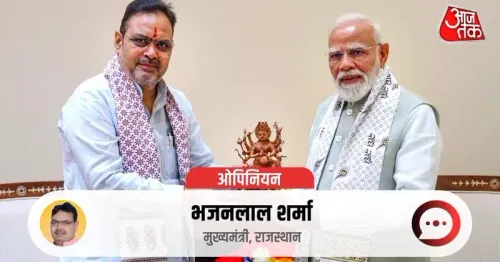
Rajasthan CM Bhajan Lal Sharma marked the anniversary with a Hindi post crediting Modi's 'visionary leadership' for turning the initiative's dream into achievement.
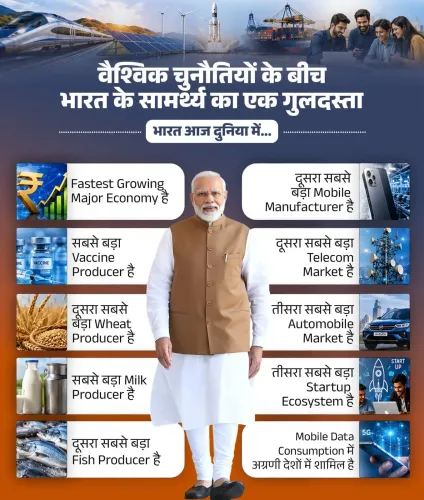
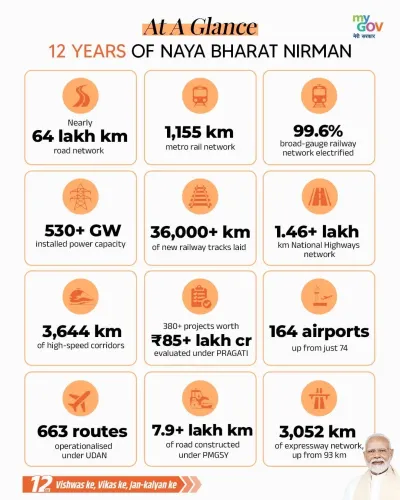
Sectors highlighted include electronics, defence, semiconductors, automobiles, UPI, and railways — spanning both physical manufacturing and digital infrastructure.
Make in India has been reinforced over 12 years by Production Linked Incentive (PLI) schemes across 14 sectors designed to attract FDI and build domestic supply chains.
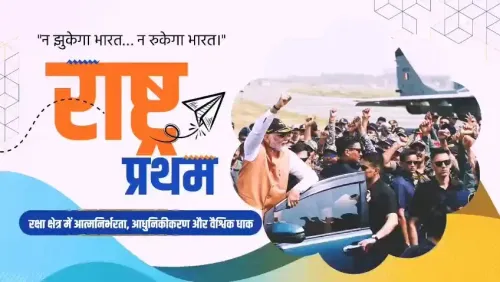
India's defence procurement policy targets 70 percent domestic sourcing , with several platforms now produced domestically under the Make in India framework.
UPI 's global adoption is cited alongside industrial sectors, reflecting how 'manufacturing power' now includes technology systems built and exported by India.
Twelve years after Prime Minister Narendra Modi stood in New Delhi and dared India to stop being the world's marketplace and start being its factory, Rajasthan Chief Minister Bhajan Lal Sharma marked the anniversary with a pointed reminder of how far that ambition has travelled.
Posting on 25 September 2026 — exactly 12 years to the day since the initiative's launch — CM Sharma wrote in Hindi: 'Kabhi Bharat ne sapna dekha tha ki woh keval duniya ka baazaar nahin, balki duniya ki nirmaan shakti bane.' ('Once India dreamed of becoming not just the world's market, but the world's manufacturing power.') He credited PM Modi's 'visionary leadership' for moving that dream from resolve to achievement, and listed electronics, defence, semiconductors, automobiles, UPI, and railways as sectors where the 'Made in India' echo now resonates globally.
A programme born from a single ambition
Make in India was launched by Prime Minister Narendra Modi on 25 September 2014 with a straightforward proposition: raise manufacturing's share in India's GDP, attract foreign direct investment, and build the domestic supply chains that would make the country genuinely self-reliant — not just in rhetoric but in output. The lion-emblem logo, designed to project industrial strength, quickly became one of the most recognised symbols of the government's economic identity. The initiative did not arrive in isolation. It became the trunk from which a family of manufacturing-support policies branched out: Production Linked Incentive (PLI) schemes in 14 sectors, including mobile electronics, defence components, and pharmaceuticals, were explicitly designed to translate Make in India's ambitions into plant-level investment decisions. The semiconductor mission, which India has pursued with growing urgency given global supply-chain disruptions, sits directly in that lineage.Rajasthan's stake in India's manufacturing story
CM Sharma's tribute is not merely ceremonial. Rajasthan has been positioning itself as a destination for defence manufacturing, renewable energy equipment, and electronics assembly — all sectors that the Make in India framework has prioritised with policy incentives and streamlined approvals. State governments across India have competed to attract the FDI and PLI-linked projects that the central programme unlocks, and Sharma's post signals Rajasthan's continued alignment with that national-level push. The mention of UPI alongside physical manufacturing sectors is deliberate and revealing. Make in India's evolution has come to encompass digital infrastructure — India's homegrown payments stack has become one of the country's most visible exports of technological credibility, adopted or studied by dozens of countries. Lumping UPI with semiconductors and railways signals that 'manufacturing power' is now understood to include the engineering of systems, not just of goods.Twelve years on: what the milestone means
A twelve-year anniversary in policy terms is a moment of genuine reckoning. Programmes launched with fanfare often fade within a budget cycle or two; Make in India has survived three general elections, a global pandemic that scrambled every supply chain on earth, and a geopolitical realignment that has made 'friend-shoring' a boardroom priority worldwide. That durability is itself a data point. The sectors CM Sharma cites — especially defence and semiconductors — reflect where India's manufacturing story is most consequential and most contested. India has moved from near-total import dependence in defence hardware toward a stated goal of 70 percent domestic procurement, with several platforms now being produced domestically. The semiconductor ambition is newer and more fragile, but the policy scaffolding is in place. The world's growing trust in products made and innovations developed in India, as Sharma frames it, is a source of pride for every Indian — and a benchmark the next twelve years will be measured against.Point of View
Not just rhetoric; the government's challenge is to match the emotional energy of these anniversaries with hard output and employment data. For state leaders like Sharma, the programme's longevity is also a political asset: it creates a durable framework under which every new factory, every new investment, can be claimed as a local chapter of a national story.
NationPress
25 Sept 2026
Frequently Asked Questions
When was Make in India launched and by whom?
Make in India was launched on 25 September 2014 by Prime Minister Narendra Modi in New Delhi, with the goal of raising manufacturing's share in India's GDP and attracting foreign investment.
What did CM Bhajan Lal Sharma say about Make in India's 12th anniversary?
CM Sharma posted in Hindi that India's dream of becoming a global manufacturing power — not just a marketplace — is being realised under PM Modi's leadership, and congratulated all on the 12th anniversary of Make in India .
Which sectors has Make in India focused on?
The programme has prioritised sectors including electronics, defence, semiconductors, automobiles, railways, and pharmaceuticals , supported by Production Linked Incentive (PLI) schemes across 14 industries.
What is the connection between Make in India and PLI schemes?
Production Linked Incentive (PLI) schemes, covering 14 sectors , were designed as the financial mechanism to operationalise Make in India's goals by rewarding companies for incremental domestic production above set thresholds.
Why is UPI mentioned in the context of Make in India?
UPI, India's homegrown digital payments platform, represents the programme's expanded scope to include technology infrastructure — it is cited as evidence that 'Made in India' now covers world-class systems and innovations, not just physical goods.