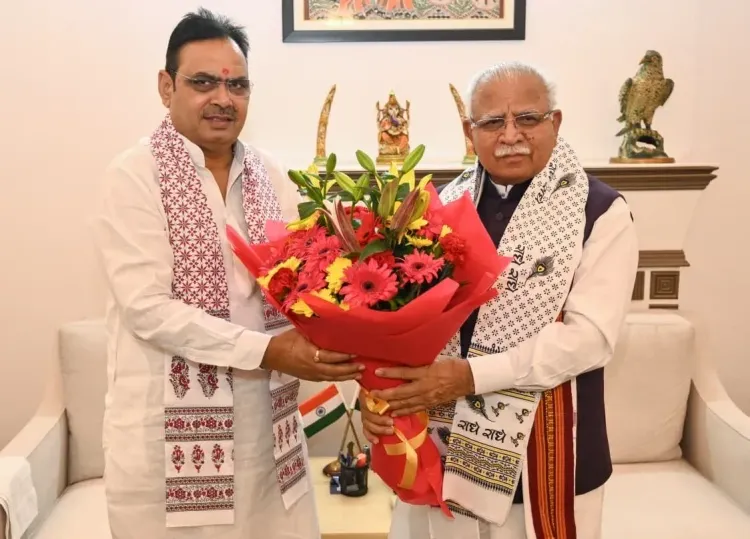
CM Bhajan Lal meets Union Minister Khattar on Rajasthan energy, urban projects
Synopsis
Rajasthan CM Bhajan Lal Sharma met Union Minister Manohar Lal Khattar in New Delhi on July 7, 2026, holding talks on energy sector strengthening, housing schemes, PM e-Bus Sewa deployment, and Jaipur Metro network expansion under central urban missions.
Key Takeaways
CM Bhajan Lal Sharma met Union Minister Manohar Lal Khattar in New Delhi on July 7, 2026 .
Discussions covered energy sector strengthening, housing, urban development, e-bus services, and metro expansion in Rajasthan.
The PM e-Bus Sewa scheme, launched in 2023 , is a key central initiative for electric bus deployment in Rajasthan cities.
Jaipur Metro Phase 1C and Phase 2 planning is aligned with central metro policy guidelines advanced since 2023-24 .
AMRUT 2.0 , approved in 2021 , provides the funding framework for urban infrastructure and housing projects across Rajasthan.
Project sanction timelines and state budget allocations for e-bus fleets and metro works are expected to follow the consultation.
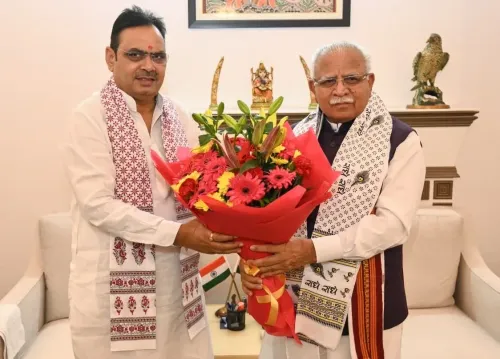
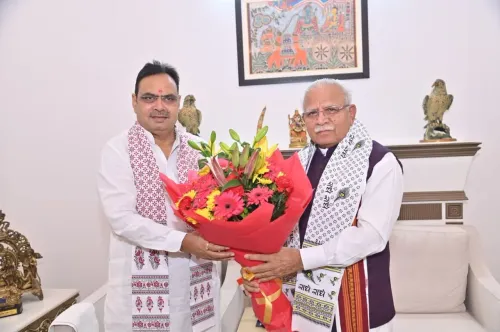
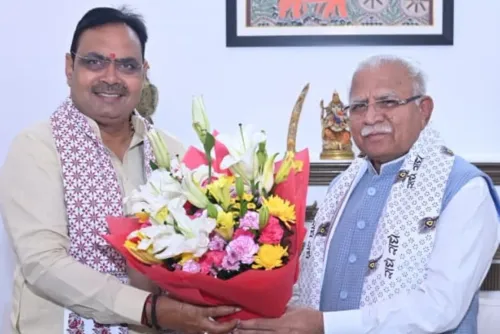
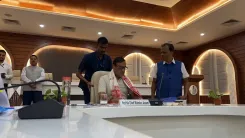
Rajasthan Chief Minister Bhajan Lal Sharma met Union Minister for Power and Housing and Urban Affairs Manohar Lal Khattar in New Delhi on Tuesday, July 7, 2026, to discuss a range of central schemes and infrastructure projects for the state. The talks covered energy sector strengthening, housing and urban development, e-bus services, and metro network expansion in Rajasthan.
Context
In the post, CM Sharma wrote: 'आज नई दिल्ली में केंद्रीय ऊर्जा, आवासन एवं शहरी कार्य मंत्री श्री @mlkhattar जी से भेंट की' ['Today I met Union Minister for Energy, Housing and Urban Affairs Shri Khattar in New Delhi']. He described the discussion as 'meaningful' (सार्थक चर्चा), covering welfare projects and people-centric schemes alongside urban mobility infrastructure.
The meeting addressed implementation of centrally sponsored schemes in Rajasthan, with the state government seeking coordination on project approvals and funding. Khattar, who previously served as Chief Minister of Haryana, holds the dual portfolio of Power and Housing and Urban Affairs at the Union level.
Policy Backdrop
Several central missions form the backbone of what was discussed. The PM e-Bus Sewa scheme, launched in 2023, targets deployment of electric buses in cities across states including Rajasthan, aiming to shift urban commuters to cleaner public transport. The AMRUT 2.0 mission, approved in 2021, provides a funding framework for urban infrastructure and housing projects in Rajasthan's cities.
On the metro front, Rajasthan advanced planning for Jaipur Metro Phase 1C and Phase 2 in 2023-24, aligned with central metro policy guidelines. Expansion of the metro network beyond the existing corridor is a key urban mobility priority for the state government under its development agenda.
Energy sector discussions likely touched on strengthening distribution networks and integrating renewable capacity, areas where Rajasthan — one of India's leading states for solar and wind potential — depends on central coordination for grid upgrades and scheme-linked financing.
Stakeholders and Impact
Urban commuters in Jaipur and other major Rajasthan cities stand to benefit most directly from progress on e-bus fleets and metro extensions. Faster sanction of PM e-Bus Sewa allocations would reduce dependence on ageing diesel bus fleets and cut emissions in dense city corridors.
Residents across the state benefit from housing and urban development funding under AMRUT 2.0, which supports water supply, sewerage, and urban green spaces. Energy distribution companies operating in Rajasthan are also stakeholders in any grid-strengthening measures agreed through central-state coordination.
The meeting reflects the broader pattern of BJP-governed states engaging directly with Union ministries to move centrally sponsored projects from approval to implementation, bypassing bureaucratic delays through political-level intervention.
What's Next
Observers will watch for state budget allocations and tendering timelines for e-bus procurement and metro extension works in the coming months. Project sanction orders under PM e-Bus Sewa and progress reports on AMRUT 2.0 for Rajasthan cities are expected to follow such high-level consultations.
The pace at which central approvals translate into on-ground contracts will be the real measure of Tuesday's discussions. With urban mobility and clean energy increasingly central to Rajasthan's development pitch, the state's ability to draw down central funds efficiently will shape outcomes for millions of residents across its growing cities.
Point of View
Where state chief ministers use direct ministerial access to accelerate approvals for large-ticket urban infrastructure. For Rajasthan, securing timely sanctions under PM e-Bus Sewa and metro expansion schemes is tied to the BJP government's urban development narrative ahead of future electoral cycles. Khattar's dual portfolio — covering both power and urban affairs — made this a high-value single meeting for Sharma, allowing two critical infrastructure verticals to be addressed simultaneously. The broader pattern signals that BJP-ruled states continue to leverage political alignment with the Union government as an implementation accelerator for centrally sponsored schemes.
NationPress
6 Oct 2026
Frequently Asked Questions
Why did Rajasthan CM Bhajan Lal Sharma meet Manohar Lal Khattar?
CM Bhajan Lal Sharma met Union Minister Manohar Lal Khattar on July 7, 2026 in New Delhi to discuss energy sector strengthening, housing and urban development schemes, e-bus services, and metro network expansion in Rajasthan.
What is PM e-Bus Sewa and how does it affect Rajasthan?
PM e-Bus Sewa is a central government scheme launched in 2023 to deploy electric buses in cities across India, including Rajasthan, aimed at providing cleaner and more sustainable urban public transport.
What is the status of Jaipur Metro expansion?
Rajasthan advanced planning for Jaipur Metro Phase 1C and Phase 2 in 2023-24, aligned with central metro policy guidelines, and funding coordination with the Union government is ongoing.
What is AMRUT 2.0 and what does it fund in Rajasthan?
AMRUT 2.0, approved in 2021, is a central urban mission that funds water supply, sewerage, urban green spaces, and broader urban infrastructure projects in Rajasthan's cities.
Who is Manohar Lal Khattar?
Manohar Lal Khattar is the Union Cabinet Minister holding the portfolios of Power and Housing and Urban Affairs. He previously served as Chief Minister of Haryana.