CM Bhajanlal meets Khattar on Rajasthan energy, urban plans
Synopsis
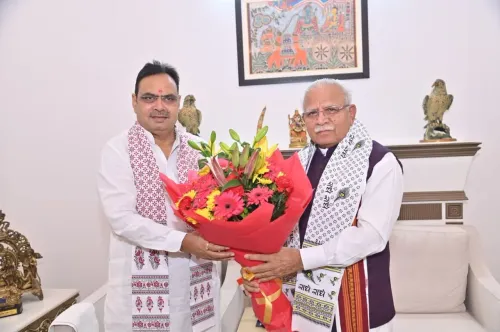
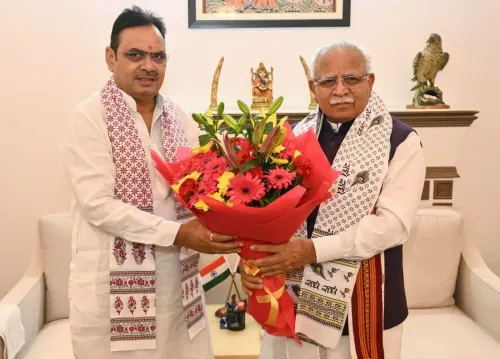
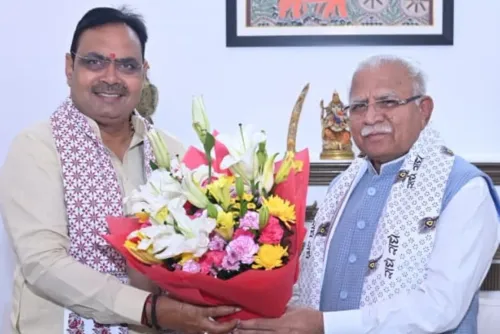
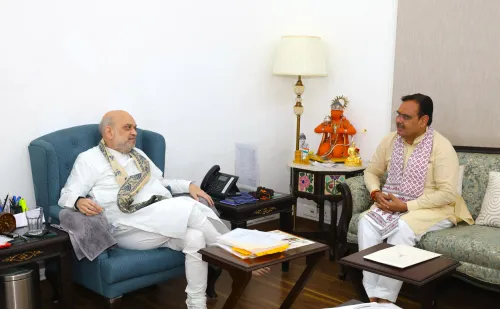
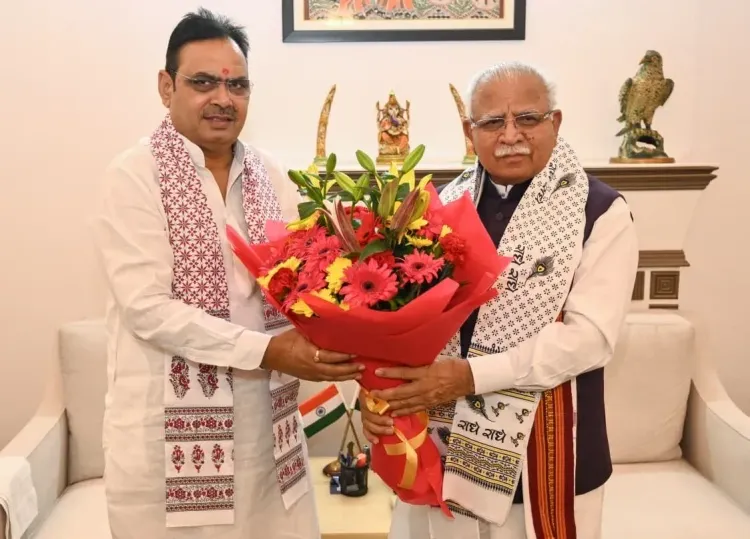
Chief Minister Bhajanlal Sharma met Union Minister Manohar Lal Khattar in New Delhi on 7 July 2026, discussing Rajasthan's energy sector, housing and urban welfare schemes, e-bus services, and metro network expansion under the state's development vision.
Key Takeaways
CM Bhajanlal Sharma visited New Delhi on 7 July 2026 and met Union Minister Manohar Lal Khattar .
Discussions covered strengthening of Rajasthan's energy sector and public-welfare schemes in housing and urban development.
Expansion of e-bus services and the metro network in Rajasthan were key agenda items.
Manohar Lal Khattar holds the central portfolios of Energy and Housing & Urban Affairs , making him the nodal minister for both topics discussed.
The meeting aligns with national frameworks including AMRUT 2.0 and FAME-II , under which Rajasthan seeks central funding for urban mobility.
Jaipur Metro extensions and e-bus fleet procurement are among the projects likely to benefit from such central-state coordination.
The Chief Minister's Office of Rajasthan announced on Tuesday, 7 July 2026 that Chief Minister Bhajanlal Sharma met Union Minister Manohar Lal Khattar — who holds the portfolios of Energy and Housing & Urban Affairs — during a visit to New Delhi, with discussions spanning the strengthening of Rajasthan's energy sector, housing and urban development schemes, e-bus services, and metro network expansion.
Context
The Chief Minister's Office posted that Sharma held talks with Khattar on 'ऊर्जा क्षेत्र के सुदृढ़ीकरण' ('strengthening of the energy sector') and a range of public-welfare schemes related to housing and urban development. The meeting also covered 'ई-बस सेवाओं और मेट्रो नेटवर्क के विस्तार' ('expansion of e-bus services and the metro network'), signalling the state government's push to accelerate urban mobility infrastructure. The discussions were held under the banner of the state's development vision tagged #AapnoAgrani Rajasthan ('Our Leading Rajasthan').
Policy Backdrop
Rajasthan is among India's foremost states in renewable energy, home to the Bhadla Solar Park — one of the world's largest solar installations — developed in phases since 2015. The state has actively participated in centrally-sponsored frameworks including AMRUT 2.0 (launched 2021) for urban infrastructure and the FAME-II scheme for electric bus deployment, making coordination with the Union Ministry of Energy and Housing a recurring necessity. Jaipur Metro Phase-1 commenced operations in 2015, with further extensions and new phases discussed in successive state budgets since 2022.
Manohar Lal Khattar, a former Chief Minister of Haryana, now oversees two critical central portfolios directly relevant to Rajasthan's infrastructure ambitions. His dual mandate over energy and urban affairs makes him a key interlocutor for states pursuing simultaneous renewable and urban mobility targets.
Stakeholders and Impact
Urban commuters in cities such as Jaipur stand to benefit most immediately from any forward movement on e-bus fleets and metro extensions, which would ease congestion and reduce carbon emissions. Housing beneficiaries across the state are stakeholders in the urban development schemes discussed, while energy consumers — both industrial and domestic — have a stake in the sector-strengthening agenda. Central-state alignment on funding shares and project approvals is typically the decisive factor in how quickly such initiatives move from planning to implementation.
What's Next
Observers will watch for central approvals or revised cost-sharing arrangements for Rajasthan's metro extensions and e-bus procurement, as well as any announcements in state or Union budget reviews that reference outcomes of this engagement. The meeting is part of a broader pattern of coordination between Chief Minister Sharma and central ministers since he assumed office in December 2023, aimed at channelling national-mission funding into the state's development pipeline. Progress on Rajasthan's energy and urban agenda will be a key marker of the BJP government's delivery record ahead of future electoral cycles.
Point of View
Where state and central leaders from the same party use direct bilateral channels to fast-track project approvals outside routine bureaucratic cycles. For Rajasthan, which holds enormous renewable energy potential and has stalled metro expansion plans, securing ministerial attention at the centre is a prerequisite for unlocking funds under national missions. The emphasis on e-buses and metro expansion also signals that the Sharma government is positioning urban mobility as a visible deliverable for the electorate in Jaipur and other cities. How quickly tangible project clearances follow this meeting will determine whether such engagements translate into governance outcomes or remain part of the routine optics of central-state coordination.
NationPress
6 Oct 2026
Frequently Asked Questions
Why did CM Bhajanlal Sharma meet Manohar Lal Khattar in New Delhi?
CM Bhajanlal Sharma met Union Minister Manohar Lal Khattar on 7 July 2026 to discuss strengthening Rajasthan's energy sector, housing and urban development schemes, expansion of e-bus services, and the extension of the metro network in the state.
What is Manohar Lal Khattar's role in the central government?
Manohar Lal Khattar is the Union Minister holding the portfolios of Energy and Housing & Urban Affairs in the central government, making him the key minister for both topics discussed with CM Bhajanlal Sharma.
What is the status of the Jaipur Metro expansion?
Jaipur Metro Phase-1 began operations in 2015, and further extensions have been discussed in state budgets since 2022. The latest meeting between CM Sharma and Minister Khattar indicates the state is actively pursuing central support for further expansion.
How does Rajasthan plan to expand e-bus services?
Rajasthan is seeking to expand e-bus services under central frameworks such as FAME-II, which provides funding for electric bus deployment. The CM's meeting with the Union Minister of Energy is part of efforts to secure approvals and funding for this initiative.
What is the AMRUT 2.0 scheme and how does it relate to Rajasthan?
AMRUT 2.0 is a centrally-sponsored urban infrastructure scheme launched in 2021 that provides funding for water, sanitation, and urban mobility projects. Rajasthan participates in this scheme, and the discussions with Minister Khattar are aimed at advancing projects under this framework.