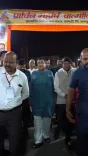
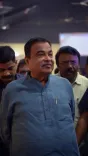
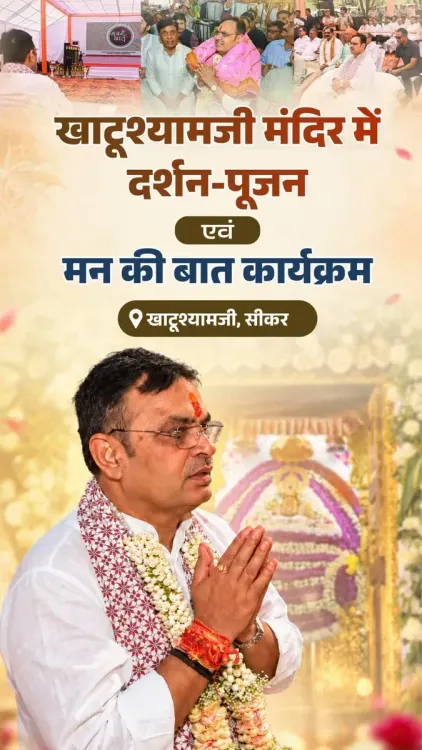
CM Bhajan Lal visits Khatushyam Ji, listens to Mann Ki Baat
Synopsis
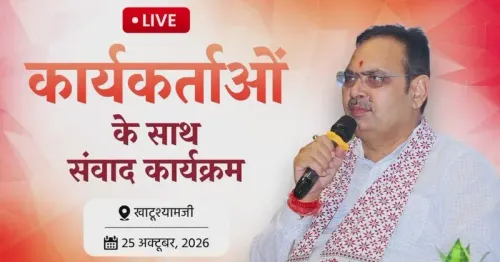
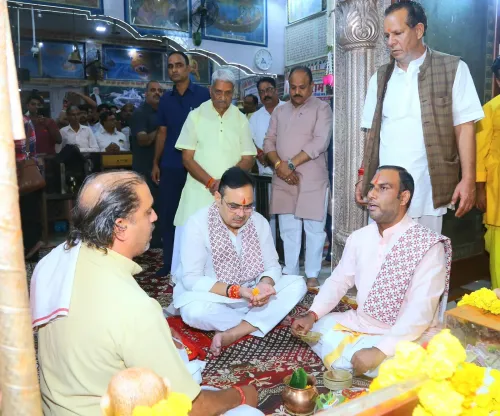
Rajasthan Chief Minister Bhajan Lal Sharma offered prayers at the Khatushyam Ji temple in Sikar on 25 October 2026, seeking prosperity for the state, then joined BJP workers to listen to PM Modi's Mann Ki Baat and discussed welfare efforts and organisational priorities.
Key Takeaways
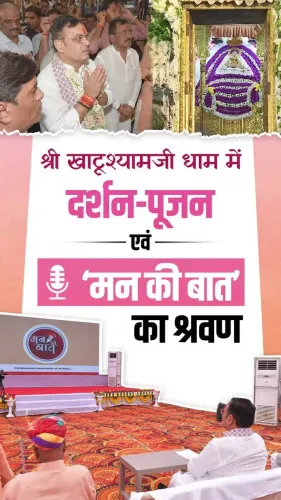
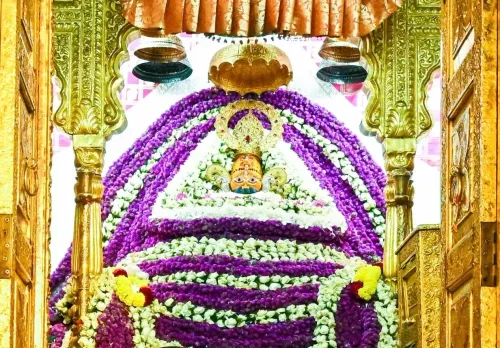
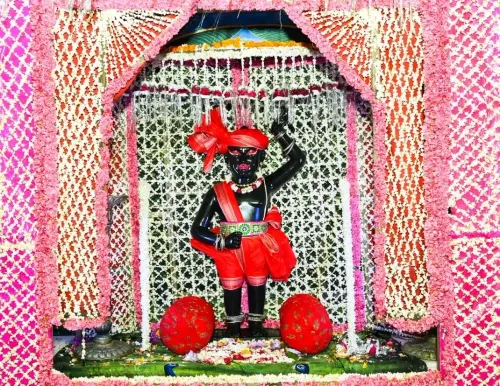
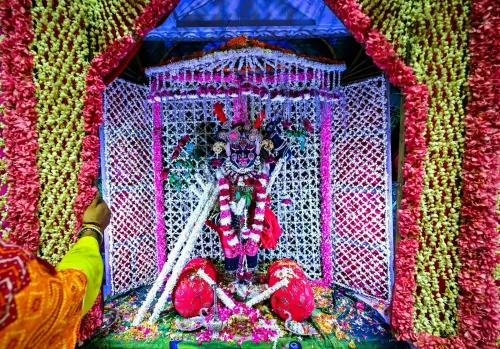
CM Bhajan Lal Sharma visited Shri Khatushyam Ji temple , Sikar district, on 25 October 2026 for prayers and darshan.
He prayed for the happiness, prosperity and well-being of Rajasthan .
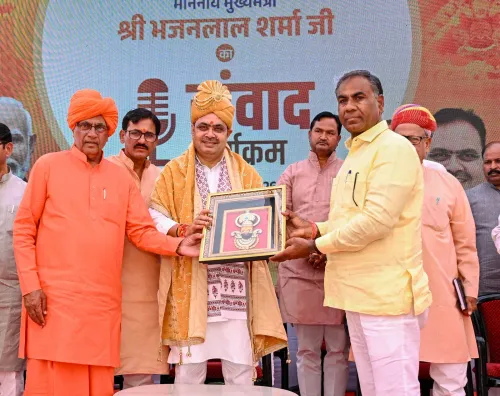
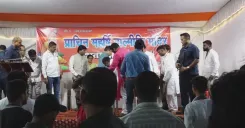
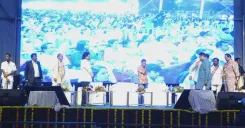
The CM listened to PM Narendra Modi's monthly Mann Ki Baat radio programme alongside BJP workers.
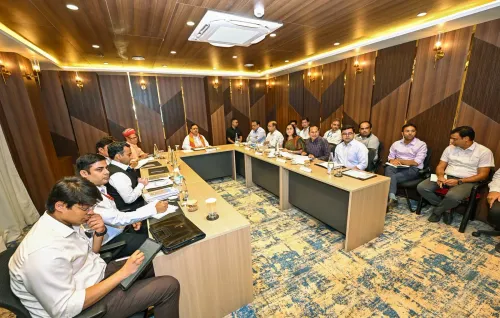
Workers engaged in discussions on organisational matters and people's welfare efforts .
Mann Ki Baat was launched by PM Modi in October 2014 as a direct public-communication platform.
The visit follows a recurring BJP pattern of combining temple darshan, central party messaging, and ground-level organisational work.
Rajasthan Chief Minister Bhajan Lal Sharma combined spiritual observance with party work on Sunday, 25 October 2026, offering prayers at the revered Shri Khatushyam Ji temple in Sikar district and invoking blessings for the state's prosperity — then sitting down with BJP workers to tune into PM Narendra Modi's monthly radio address and discuss welfare priorities on the ground.
Sharing the visit on X, the Chief Minister wrote: 'Aaj Shri Khatushyam Ji ke pawan dham mein darshan-pujan kar pradesh ki sukh-samridhi evam khushhali ki kamna ki' — 'Today, after offering prayers at the holy shrine of Shri Khatushyam Ji, I prayed for the happiness, prosperity and well-being of the state.' He added that he also listened to Prime Minister @narendramodi's popular programme 'Mann Ki Baat' and engaged with party workers present on organisational matters and people's welfare efforts.
A shrine that draws millions — and a CM's prayer for Rajasthan
The Khatushyam Ji temple, dedicated to the warrior-deity Barbarika, draws pilgrims from across north India each year, making it one of Rajasthan's most visited religious sites. For a BJP Chief Minister, a darshan here carries both devotional and political resonance — the faithful crowd represents the very constituency the party prizes across the Hindi heartland. Sharma's expressed wish for sukh-samridhi (happiness and prosperity) for the state frames the visit as an act of public service, not merely personal piety.
Mann Ki Baat as an organisational anchor
Mann Ki Baat, launched by PM Modi in October 2014, is a monthly All India Radio broadcast in which the Prime Minister speaks directly to citizens about government schemes, social initiatives and public feedback. Over twelve years it has grown into a nationwide listening event, with BJP units across states routinely organising communal listening sessions. Sunday's gathering in Sikar followed that pattern — turning the radio programme into a platform for workers to hear central priorities and then align local welfare messaging accordingly.
The blend of temple visit, central programme, and party-level discussion reflects a broader rhythm in BJP-governed Rajasthan: cultural-religious observance, governance communication, and organisational engagement compressed into a single outing. The conversations with workers on jankalayanakari prayas — welfare efforts — signal that ground-level feedback channels remain active between such visits and formal policy cycles.
Point of View
Layered with a Mann Ki Baat listening session that ties state workers directly to the Prime Minister's messaging cycle. For Sharma — a first-term Chief Minister navigating the expectations of a state the BJP recaptured in December 2023 — visible alignment with Modi's communication apparatus signals both ideological continuity and organisational discipline. The welfare-discussion element suggests the party is keen to show that ground-level feedback loops are functioning, a reassurance the BJP typically amplifies ahead of local-body elections or scheme rollouts. Taken together, the visit is less a news event than a ritual of political maintenance.
NationPress
25 Oct 2026
Frequently Asked Questions
Why did CM Bhajan Lal Sharma visit Khatushyam Ji temple?
CM Bhajan Lal Sharma visited the Khatushyam Ji temple in Sikar on 25 October 2026 to offer prayers and seek divine blessings for the happiness, prosperity and well-being of Rajasthan.
Where is the Khatushyam Ji temple located?
The Khatushyam Ji temple is located in Sikar district, Rajasthan. It is dedicated to Barbarika and is one of the most visited pilgrimage sites in north India, drawing millions of devotees every year.
What is Mann Ki Baat and who hosts it?
Mann Ki Baat is a monthly radio programme hosted by Prime Minister Narendra Modi on All India Radio. It was launched in October 2014 and is used to discuss government schemes, social issues and citizen feedback directly with the public.
What did Bhajan Lal Sharma discuss with BJP workers after Mann Ki Baat?
After the Mann Ki Baat listening session, CM Bhajan Lal Sharma engaged with BJP workers present at the event on organisational matters and ongoing welfare efforts for the people of Rajasthan.
When did Bhajan Lal Sharma become Chief Minister of Rajasthan?
Bhajan Lal Sharma became the Chief Minister of Rajasthan in December 2023, following the BJP's victory in the state assembly elections.