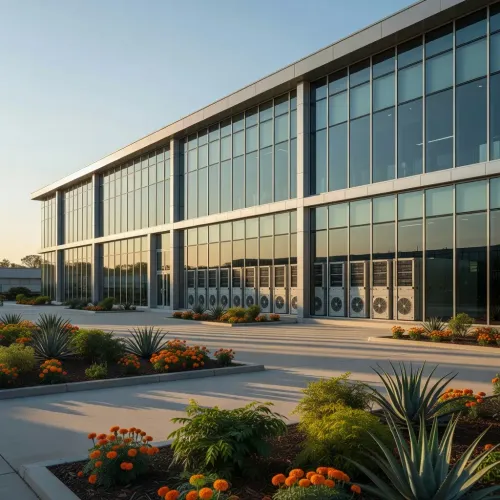
RBI Data Centre Inaugurated in Bhubaneswar by PM Modi
Synopsis
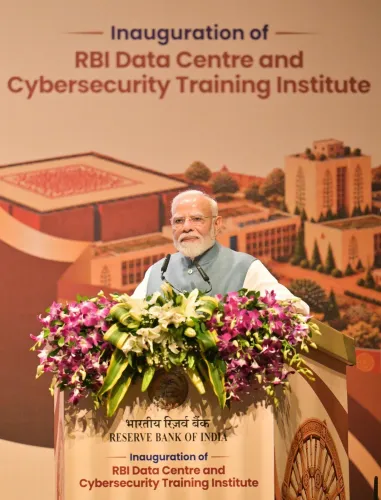
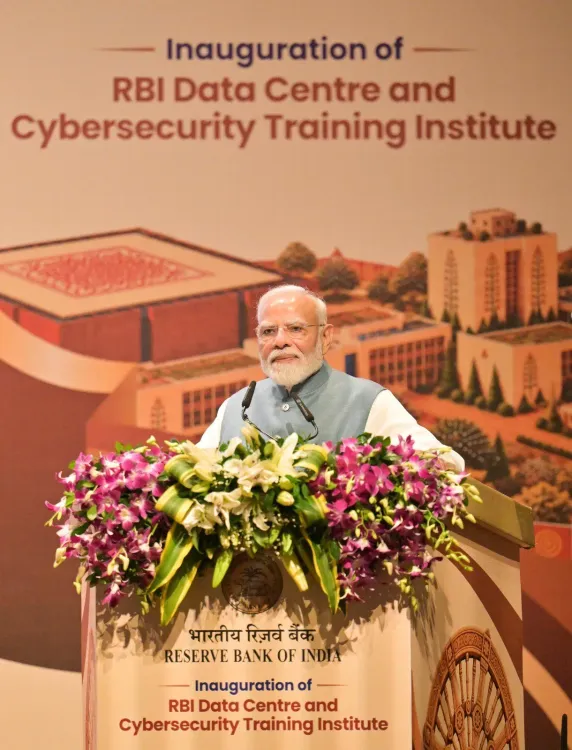
PM Modi inaugurated the RBI's Data Centre and Cybersecurity Training Institute in Bhubaneswar on Kumar Purnima. Union Minister Dharmendra Pradhan hailed the move as Odisha's pivot from mining to advanced technology under the Purvodaya Mission, with benefits projected for the BFSI sector, small entrepreneurs, and Odisha's youth.
Key Takeaways
PM Modi inaugurated the RBI Data Centre and Cybersecurity Training Institute in Bhubaneswar on 25 October 2026 , coinciding with the Kumar Purnima festival.
The institute will train professionals in Quantum Computing, AI, and Advanced Technology for India's BFSI sector.
The inauguration sits under the Purvodaya Mission , the Union government's eastern-states development framework.
Union Education Minister Dharmendra Pradhan framed the move as Odisha's shift from a mining economy to a microchip and data economy .
The Digital India programme (launched 2015) provides the policy backbone; the Bhubaneswar facility deepens its eastern-India footprint.
Beneficiaries cited include small entrepreneurs , rural women accessing bank credit, and Odisha's youth seeking tech-sector employment.
Odisha just signalled a civilisational shift — from ore belts to optical fibre, from pit-heads to processing power. On Sunday, 25 October 2026, the occasion of the auspicious Kumar Purnima festival, Prime Minister Narendra Modi inaugurated the Reserve Bank of India's new Data Centre and Cybersecurity Training Institute in Bhubaneswar, planting a high-technology flag in a state long defined by its mineral wealth. Union Education Minister Dharmendra Pradhan, a senior BJP leader and Odisha's most prominent voice in the Union Cabinet, welcomed the development with an effusive post on X, framing it as the opening chapter of a new growth story for the state.
What Opens in Bhubaneswar — and Why It Matters
The twin facilities — a state-of-the-art RBI Data Centre and a Cybersecurity Training Institute — are designed to make India's banking and digital financial infrastructure 'more secure, stable and trustworthy', as Pradhan described it in his post. The training institute is specifically oriented toward building expertise in Quantum Computing, AI, and Advanced Technology for the BFSI (Banking, Financial Services and Insurance) sector. That combination — hardened data storage paired with specialised human capital — is precisely what central banks globally are scrambling to build as cyber threats against financial systems escalate.
The RBI has progressively expanded its data centre footprint in prior years to support secure banking operations. Bhubaneswar's selection adds geographic and institutional diversity to that infrastructure, reducing single-point vulnerability in the national financial grid.
Purvodaya Mission and Odisha's Pivot from Mines to Microchips
Pradhan explicitly anchored the inauguration within the Purvodaya Mission, the government's framework for accelerating economic development across India's eastern states — Odisha, Jharkhand, West Bengal, Bihar, and Andhra Pradesh. The mission's logic is straightforward: the eastern belt holds a disproportionate share of India's natural resources but has historically lagged in services-sector and technology employment. The Bhubaneswar Data Centre represents exactly the kind of high-skill, high-wage investment the mission is designed to catalyse.
'Mines se Microchip tak' — from mines to microchips — was the compact, vivid phrase Pradhan used to crystallise Odisha's intended trajectory. It is a politically resonant formulation in a state where mining royalties have long dominated fiscal conversations, and where a younger, urban-educated generation is actively seeking tech-sector pathways.
Digital India's Long Arc Reaches Eastern India
The Digital India programme, launched in 2015, set the architectural ambition: nationwide digital infrastructure as a foundation for governance, commerce, and financial inclusion. More than a decade on, the Bhubaneswar inauguration represents a deepening of that ambition — not just connectivity pipes, but secure sovereign data infrastructure and the human expertise to defend it.
Pradhan pointed to tangible beneficiaries beyond the tech sector: small entrepreneurs and rural women who access government scheme loans through banks. A more resilient, cyber-secure banking backbone directly protects those thin-margin, high-trust transactions. 'Ease of Living', he argued, flows downstream from digital infrastructure investment — a framing that ties an elite data-centre opening to a kitchen-table outcome.
His post closed with the Sanskrit injunction 'Nagarik Devo Bhava' — the citizen is divine — positioning the infrastructure push within the BJP's 'good governance' ideological register and signalling that more data centre and advanced computing investments under Purvodaya are expected to follow.
The question now is how quickly the Cybersecurity Training Institute scales up — and whether Odisha's youth can fill the high-skill pipeline before the next phase of investment arrives.
Point of View
Aspirational voter base. The pairing of a data centre with a Cybersecurity Training Institute also signals that the government understands infrastructure alone is insufficient — institutional capacity to defend and operate it is the harder, longer challenge. How fast the training institute generates industry-ready graduates will determine whether this inauguration becomes a genuine inflection point or a ribbon-cutting without follow-through.
NationPress
25 Oct 2026
Frequently Asked Questions
What was inaugurated in Bhubaneswar on Kumar Purnima 2026?
PM Narendra Modi inaugurated the Reserve Bank of India's new Data Centre and Cybersecurity Training Institute in Bhubaneswar on 25 October 2026, the occasion of Kumar Purnima.
What is the Purvodaya Mission?
The Purvodaya Mission is a Union government initiative to accelerate economic development in India's eastern states — including Odisha, Bihar, Jharkhand, West Bengal, and Andhra Pradesh — through infrastructure and technology investments.
What will the RBI Cybersecurity Training Institute in Bhubaneswar do?
The institute will build expertise in Quantum Computing, AI, and Advanced Technology for the BFSI (Banking, Financial Services and Insurance) sector, aiming to strengthen India's digital financial infrastructure and create skilled jobs for Odisha's youth.
Why was Bhubaneswar chosen for the RBI data centre?
Bhubaneswar was selected as part of efforts to diversify India's digital financial infrastructure geographically and to support the Purvodaya Mission's goal of driving high-tech investment in eastern India.
What did Dharmendra Pradhan say about the RBI Data Centre inauguration?
Union Education Minister Dharmendra Pradhan welcomed the inauguration on X, describing it as Odisha's move from a mining economy to a 'microchip' economy and highlighting benefits for the BFSI sector, small entrepreneurs, rural women, and Odisha's youth.