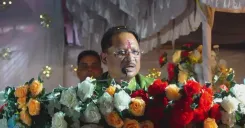
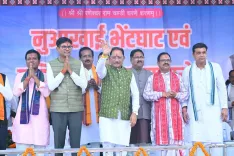
CM Bhajan Lal echoes Modi's sports vision for India
Synopsis
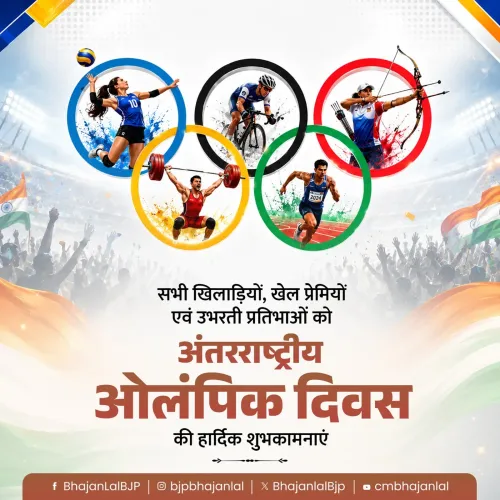
Rajasthan Chief Minister Bhajan Lal Sharma echoed PM Narendra Modi's vision of a sport-proud India on 15 October 2026, invoking the tricolour on every field and pledging new champions and records — underscoring the BJP's alignment between state and central sports policy.
Key Takeaways
Rajasthan CM Bhajan Lal Sharma posted on 15 October 2026 quoting PM Narendra Modi's vision for Indian sport.
The Hindi verse celebrates the tricolour's pride on every sporting field and India's emerging identity as a multi-sport nation.
The post aligns with the central government's twin pillars: Khelo India (launched 2017 ) for grassroots development and TOPS (launched 2014 ) for elite athlete support.
Rajasthan hosts Khelo India centres that feed into national-level competition pipelines.
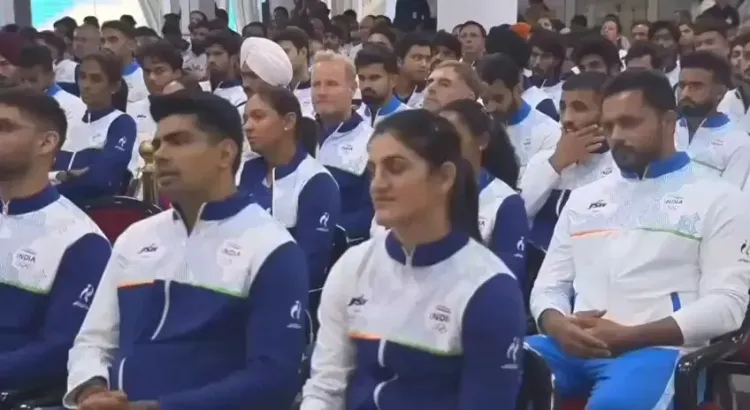
India's expanding competitive footprint — across disciplines from athletics to para-sports — underpins the 'new records' narrative referenced in the post.
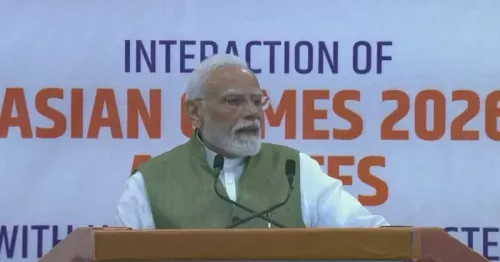
From Rajasthan's state secretariat to the national conversation on sport, Rajasthan Chief Minister Bhajan Lal Sharma amplified Prime Minister Narendra Modi's rallying cry for Indian athletics on Thursday, 15 October 2026 — channelling the moment into a bilingual declaration of intent that landed squarely in the country's growing sports-pride narrative.
Quoting PM Modi directly, Sharma's post captured the essence of the national ambition in verse: 'हर मैदान पर तिरंगे की शान / खेलों में भारत की नई पहचान' — 'The tricolour's pride on every field / A new identity for India in sport.' The sign-off — a plain, emphatic 'WE WILL DO IT!' — was less political rhetoric and more dressing-room resolve.
Modi's sports push and the policy machine behind the slogan
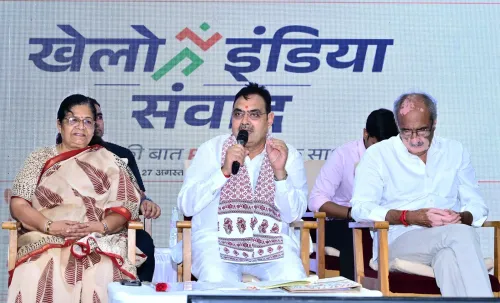
The words carry institutional weight. Since 2014, the central government has run the Target Olympic Podium Scheme (TOPS), a programme that identifies elite athletes and funds their preparation for Olympic and Paralympic competition. Three years later, the Khelo India programme widened the net — building grassroots infrastructure, seeding talent identification academies across every state, and funding scholarships for young athletes who would otherwise fall through the cracks.
Together, these two pillars have reshaped India's approach to competitive sport: elite excellence at the top, mass participation at the base. The compound effect has been visible in successive Asian Games and Commonwealth Games cycles, where Indian athletes have broken national records and climbed medal tables with a consistency the country had not previously managed.
Rajasthan's role in the Khelo India network
Rajasthan sits squarely inside this architecture. The state has hosted Khelo India centres that serve as feeder academies for national-level competition, and Sharma's government has consistently aligned state sports policy with the centre's youth-development agenda. The CM's amplification of Modi's message is both a political signal and a practical one — a reminder to state administrators and athletes alike that Jaipur's priorities are in step with New Delhi's.
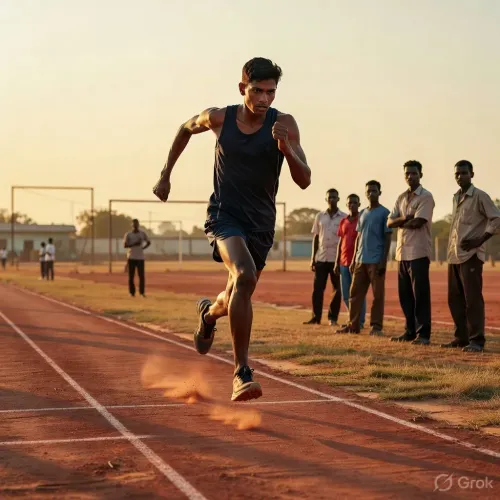
What Sharma's post gestures at — 'new champions in every sport, new records in our name' — reflects a documented pattern: Indian athletes competing in a broader range of disciplines than at any previous point in the country's sporting history, from athletics and wrestling to shooting, badminton, and para-sports.
If the trajectory holds, the question is no longer whether India will produce champions. It is how many, and how soon.
Point of View
Echoing Modi's sports vision costs nothing and earns alignment credit in the BJP's centre-state ecosystem. More substantively, the post reflects a genuine policy arc — India's sports medal count and athlete depth have measurably grown since 2014 — which gives the optimism a factual foundation even when no specific result is cited. The 'WE WILL DO IT!' close is worth noting: it frames sport as collective national aspiration, a framing both governments have used to build public investment in athletic outcomes.
NationPress
15 Oct 2026
Frequently Asked Questions
What did Rajasthan CM Bhajan Lal Sharma post about sports?
On 15 October 2026, CM Sharma quoted PM Narendra Modi's vision in Hindi and English, celebrating India's new champions and records and pledging continued ambition with the phrase 'WE WILL DO IT!'
What is the Khelo India scheme?
Khelo India is a central government programme launched in 2017 to build grassroots sports infrastructure, identify young talent across India, and fund athlete development at state and national levels.
What is the Target Olympic Podium Scheme (TOPS)?
TOPS, introduced in 2014, provides targeted financial and logistical support to elite Indian athletes who are credible medal contenders at the Olympics and Paralympics.
How is Rajasthan involved in India's sports development?
Rajasthan hosts Khelo India centres that serve as feeder academies, and the state government under CM Bhajan Lal Sharma has aligned its sports policy with the central government's youth and athlete development agenda.
Why does PM Modi promote sports as a national priority?
Since 2014, PM Modi's government has positioned sports as a vehicle for national pride, youth employment, and global standing, backing rhetoric with policy schemes like TOPS and Khelo India that have expanded India's competitive footprint across multiple disciplines.