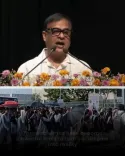
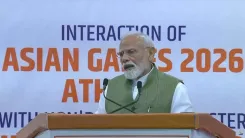
CM Bhajan Lal shares PM Modi's address to Asian Games 2026 contingent
Synopsis
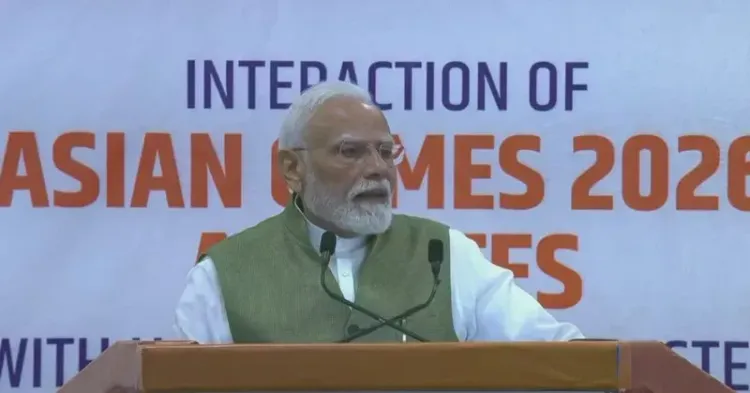
PM Modi addressed India's Asian Games 2026 contingent in New Delhi, with Rajasthan CM Bhajan Lal Sharma sharing the live broadcast. The interaction underscores India's growing state-backed sports infrastructure ahead of the Aichi-Nagoya Games.
Key Takeaways
PM Narendra Modi held a live address with India's Asian Games 2026 contingent in New Delhi on 15 October 2026 .
Rajasthan CM Bhajan Lal Sharma shared the live broadcast on X, amplifying the event statewide.
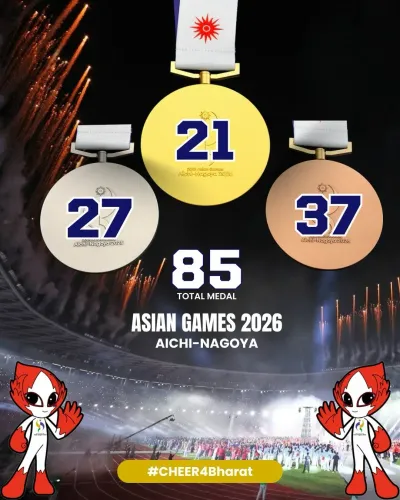
The Asian Games 2026 are scheduled for Aichi-Nagoya, Japan , and follow India's record performance at the 2023 Hangzhou edition .
The Khelo India programme (launched 2017 ) and the Target Olympic Podium Scheme (TOPS) form the policy backbone supporting the contingent.
Performance at Aichi-Nagoya will directly influence India's preparation cycle for the 2028 Los Angeles Olympics .
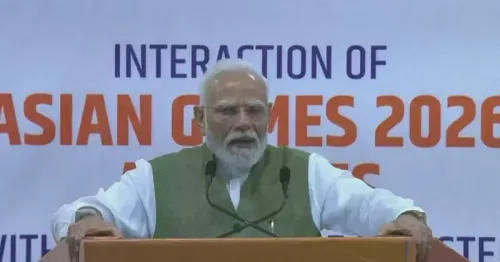
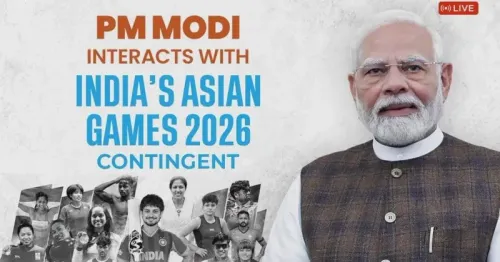
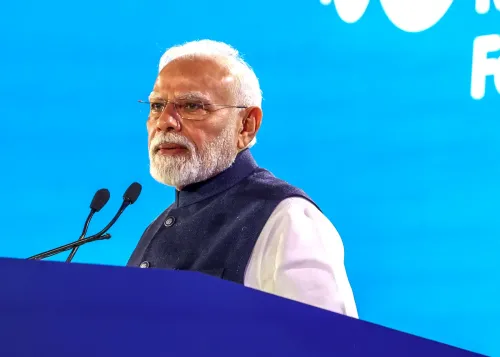
With India's Asian Games 2026 campaign taking shape, Prime Minister Narendra Modi addressed the national contingent in New Delhi on Thursday, 15 October 2026 — a pre-tournament ritual that has become one of Indian sport's most-watched moments. Rajasthan Chief Minister Bhajan Lal Sharma amplified the live broadcast on X, signalling state-level enthusiasm for the athletes heading to Aichi-Nagoya, Japan.
A prime-time send-off from Lutyens' Delhi
The interaction follows a now-established pattern: ahead of every major multi-sport cycle, the Prime Minister convenes with athletes, coaches, and support staff to underscore the government's backing. The setting — New Delhi — frames the moment as a national, not merely administrative, occasion. CM Sharma's decision to share the live stream reflects the political premium placed on sports diplomacy at the state level as well.
Khelo India and TOPS: the infrastructure behind the send-off
The address does not happen in a vacuum. Since the Khelo India programme was launched in 2017, the central government has invested in grassroots talent pipelines that feed directly into Asian Games squads. Alongside it, the Target Olympic Podium Scheme (TOPS) — expanded after 2016 — provides individualised funding for athletes navigating the continental competition cycle. Together, the two schemes represent a structural shift: India no longer sends athletes hoping for the best; it sends athletes who have had financial, coaching, and logistical support calibrated to peak performance.
The Sports Authority of India (SAI) has run dedicated training camps ahead of the Aichi-Nagoya edition, continuing a trend of professionalised preparation that gathered momentum after India's record haul at the 2023 Hangzhou Asian Games.
Why Aichi-Nagoya matters for Indian sport
Japan's twin-city edition of the Games is the next major continental proving ground before the 2028 Los Angeles Olympics. Performance here will shape TOPS selections, funding renewals, and the broader narrative of whether India's sports infrastructure investments are compounding. Every medal at Aichi-Nagoya is, in effect, an argument for continued budgetary commitment — and every underperformance a pressure point. The Prime Minister's address, then, is equal parts motivation and political signal: the state is watching, and the state is invested.
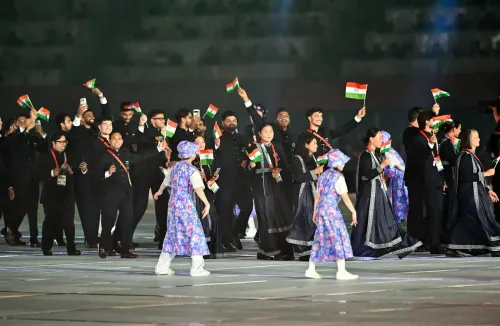
As Indian athletes prepare to compete under the national tricolour in Japan, the question is not simply how many medals they bring home — but whether the systems built over the last decade hold up on the grandest continental stage.
Point of View
Part political ownership of the country's athletic ambitions. By sharing the livestream, CM Sharma reinforces the BJP's effort to align state-level leadership with central government narratives on sports development. With the 2028 Olympics on the horizon, Aichi-Nagoya carries outsized strategic weight: a strong medal tally would validate a decade of Khelo India and TOPS investment, while a poor showing would invite hard questions about whether grassroots spending is translating at the elite level. The address, in that sense, is also a bet.
NationPress
15 Oct 2026
Frequently Asked Questions
When and where are the Asian Games 2026 being held?
The Asian Games 2026 are scheduled to be held in Aichi-Nagoya, Japan , following the previous edition hosted in Hangzhou, China in 2023.
Why did PM Modi address the Indian contingent ahead of the Asian Games?
PM Modi has made it a practice to interact with India's national contingents before major multi-sport events to boost morale and signal government support for athletes.
What is the Khelo India programme?
The Khelo India programme , launched in 2017 , is a central government initiative to develop grassroots sports talent and provide a pipeline of elite athletes for events like the Asian Games and Olympics.
What is TOPS and how does it help Indian athletes?
The Target Olympic Podium Scheme (TOPS) , expanded after 2016, provides targeted financial and logistical support to elite Indian athletes preparing for Olympic and Asian Games cycles.
Why did Rajasthan CM Bhajan Lal Sharma share the PM's address?
CM Bhajan Lal Sharma shared the live broadcast on X to amplify the central government's engagement with the sports contingent and show state-level solidarity with India's athletes ahead of the 2026 Asian Games .