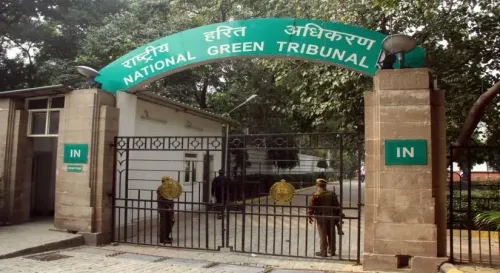
NGT disposes of Khari River sand mining case after compliance reports clear violations
Synopsis
The NGT has closed a sand mining case on Rajasthan's Khari River — but not without teeth. Despite disposing of the application after compliance reports cleared current violations, the Tribunal has bound authorities to Supreme Court guidelines, Rajasthan High Court directions, and national sand mining frameworks, with the RSPCB on continuous monitoring duty.
Key Takeaways
The NGT Central Zone Bench, Bhopal disposed of O.A.
74/2026 (CZ) on 14 October 2026 concerning sand mining irregularities on the Khari River , Rajasthan.
A Joint Committee inspection on 3 January 2025 had flagged missing boundary pillars, mining pits up to 2.3 metres deep , uncovered transport vehicles, and riverbed obstruction.
The Mining Department imposed a penalty of ₹13,09,735 in February 2024 over sand stock irregularities at three storage points.
Compliance inspections in December 2025 and February 2026 reportedly found no continuing violations, prompting the Tribunal to dispose of the case.
Authorities have been directed to follow Supreme Court and Rajasthan High Court sand mining directions, the 2016 Sustainable Sand Mining Guidelines , and the 2020 Enforcement and Monitoring Guidelines .
The RSPCB has been mandated to periodically monitor plantation survival rates and address any deficiencies within the mining area.
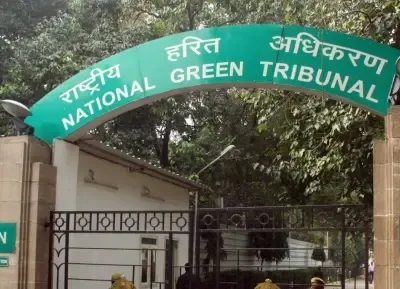
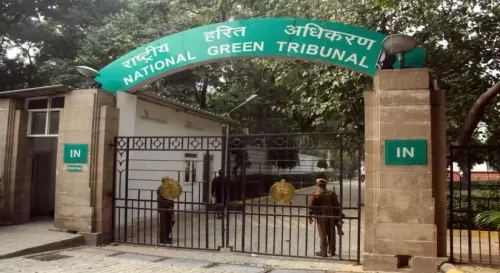
The Central Zone Bench of the National Green Tribunal (NGT), Bhopal, has disposed of a case involving alleged irregularities in sand mining along the Khari River near Gulgaon village in Rajasthan, after successive compliance reports confirmed no continuing violations at the site. The order was passed on 14 October 2026 in Original Application No. 74/2026 (CZ), Neeraj Choudhary v. State of Rajasthan & Ors.
Background and Original Allegations
The application, initially registered as O.A. No. 1145/2024 before the NGT's Principal Bench, raised concerns over alleged mining beyond the permitted lease area and depth, obstruction of the river's natural flow, damage to riverbank vegetation, and irregularities in the transportation and storage of mined sand. The case was subsequently transferred to the Central Zone Bench comprising Judicial Member Justice Sheo Kumar Singh and Expert Member Sudhir Kumar Chaturvedi.
What the Joint Committee Found
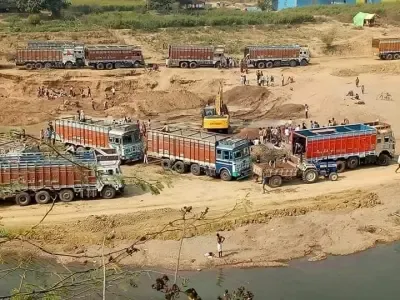
A Joint Committee constituted under the Tribunal's earlier directions inspected the site on 3 January 2025 and flagged several environmental compliance concerns. These included the absence of boundary pillars, mining pits measuring approximately 1.5 metres at some locations and up to 2.3 metres at others, inadequate dust-control measures, transportation of sand in uncovered vehicles, and large stones obstructing the riverbed near Gulgaon.
The committee also noted that conditions imposed by the Rajasthan State Pollution Control Board (RSPCB) under its Consent to Operate — covering plantation activities, control of fugitive emissions, and preservation of the river's natural flow — were not being met at the time of inspection. Separately, the Mining Department had imposed a penalty of ₹13,09,735 in February 2024 following irregularities in sand stocks identified at three storage points.
Subsequent Compliance and the NGT's Findings
During later proceedings, state authorities informed the Tribunal that the stones obstructing the river's flow had been removed. Inspection reports from December 2025 and February 2026 reportedly found no continuing obstruction or violations. The RSPCB's compliance report dated 10 March 2026 confirmed that inspections conducted on 31 December 2025 and 11 February 2026 found the mining lease compliant with applicable norms.
Taking note of these reports, the Tribunal observed that no violation was currently evident and that the project proponent held valid Environmental Clearance along with the requisite pollution-control consents. It accordingly concluded that no further action was warranted and disposed of the application along with all pending interlocutory applications.
Directions Issued Despite Disposal
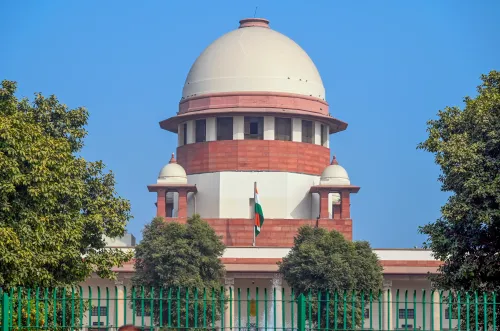
While closing the case, the NGT emphasised that disposal does not reduce the obligation for ongoing environmental compliance. The respondents were directed to strictly follow the Supreme Court of India's directions on sand mining — including relevant recommendations of the Central Empowered Committee — as well as the directions of the Rajasthan High Court at Jaipur.
The Tribunal additionally directed adherence to the Sustainable Sand Mining Management Guidelines, 2016, and the Enforcement and Monitoring Guidelines for Sand Mining, 2020. The RSPCB has been specifically instructed to periodically monitor plantation activities within the mining area, assess tree-survival rates, and ensure deficiencies are addressed through appropriate remedial action.
Significance for Sand Mining Oversight
This comes amid broader national concerns over illegal sand mining and its impact on river ecosystems. The NGT's explicit reminder — that case disposal does not equal a clean chit from future scrutiny — signals the Tribunal's intent to keep environmental safeguards operative even after formal proceedings conclude. The RSPCB's continued monitoring mandate ensures the Khari River site remains under regulatory watch.
Point of View
Penalties are levied, compliance is eventually demonstrated, and the case is closed — but the structural conditions that enabled the original breach, chiefly inadequate real-time oversight of active mining leases, remain largely unaddressed. The ₹13,09,735 penalty, modest by any measure, raises questions about whether financial deterrence is calibrated to the scale of potential ecological damage. With national sand mining governance still fragmented across multiple guidelines and tribunals, the RSPCB's periodic monitoring mandate is only as strong as the political will behind it.
NationPress
15 Oct 2026
Frequently Asked Questions
Why did the NGT dispose of the Khari River sand mining case?
The NGT disposed of the case because compliance reports from December 2025 and February 2026 found no continuing violations at the Khari River mining site in Rajasthan. The Tribunal noted that the project proponent held valid Environmental Clearance and pollution-control consents, and concluded no further action was required.
What violations were originally found at the Khari River mining site?
A Joint Committee inspection on 3 January 2025 found several concerns, including absent boundary pillars, mining pits up to 2.3 metres deep, uncovered sand transport vehicles, inadequate dust-control measures, and large stones obstructing the riverbed near Gulgaon. The RSPCB's conditions on plantation and preservation of natural river flow were also not being met at the time.
What penalty was imposed on the sand mining operator?
The Mining Department imposed a penalty of ₹13,09,735 in February 2024 following irregularities in sand stocks identified at three storage points. The penalty predates the Joint Committee inspection and was part of a broader pattern of compliance failures at the site.
What directions has the NGT issued alongside the disposal?
Despite closing the case, the NGT directed authorities to comply with Supreme Court directions on sand mining, Rajasthan High Court orders, the Sustainable Sand Mining Management Guidelines 2016, and the Enforcement and Monitoring Guidelines for Sand Mining 2020. The RSPCB has been specifically tasked with periodically monitoring plantation survival within the mining area.
What is the significance of the NGT's disposal order for future monitoring?
The NGT explicitly stated that disposal of the case does not diminish the obligation for sustained environmental monitoring and compliance with statutory and judicial directions. The order keeps the RSPCB under a continuing duty to inspect, report, and remedy deficiencies — meaning the site remains under regulatory oversight even though formal proceedings have ended.